live_tv
Livestream Starting Soon
00
Hours
:
00
Minutes
:
00
Seconds
Up next in 10


Gymnosperms Explained: Characteristics, Life Cycle, and Economic Importance
In this comprehensive video, we delve into the fascinating world of gymnosperms, a group of seed-producing plants that play a crucial role in our ecosystem. Discover the defining characteristics that set gymnosperms apart from other plant groups, including their unique reproductive structures and adaptations to various environments. We will also explore the intricate life cycle of gymnosperms, highlighting key stages such as pollination and seed development. Additionally, we will discuss the economic importance of gymnosperms, from timber production to their use in medicine and landscaping. Join us as we uncover the vital contributions of these remarkable plants to both nature and human society. #Gymnosperms #PlantBiology #Ecology
Website: https://biologynotesonline.com/
Facebook: https://www.facebook.com/biologynotesonline
Instagram: https://www.instagram.com/biologynotesonline/?hl=en
gymnosperms economic importance,gymnosperms,gymnosperms characteristics,gymnosperms and angiosperms,gymnosperms life cycle,class 11 ncert economic importance of gymnosperms,economic importance of gymnosperms class11,economic importance of gymnosperms,economics importance of gymnosperms,neet notes economic importance of gymnosperms,reproduction and life cycle of gymnosperms,general characters of gymnosperms,what is gymnosperm
Show More Show Less View Video Transcript
0:00
gymnosperms are a diverse group of
0:02
plants with several distinct
0:03
characteristics that set them apart from
0:06
other plant groups the most defining
0:08
characteristic of gymnosperms is their
0:10
naked seeds unlike flowering plants
0:13
gymnosperm seeds develop without the
0:16
protection of an ovary sitting exposed
0:18
on the surface of cone scales
0:21
gimnosperms are predominantly woody
0:23
perennials meaning they live for many
0:25
years and typically grow as trees or
0:27
shrubs with substantial woody
0:30
tissue instead of producing flowers
0:33
gymnosperms develop cones as their
0:35
reproductive structures these cones are
0:37
relatively simple compared to the
0:39
complex flowers of
0:40
angioperms most species have separate
0:43
male and female cones on the same plant
0:47
gimnosperms have highly specialized
0:49
vascular tissue primarily consisting of
0:52
tracheids these elongated cells
0:54
transport water throughout the plant and
0:56
provide structural support their
0:58
ligignified cell walls with pits allow
1:01
for efficient water movement while
1:03
maintaining
1:05
strength gymnosperms exhibit a reduced
1:08
gitaphy generation in their life cycle
1:10
the female gitaphyte develops entirely
1:13
within the ovule while the male
1:14
gitaphyte is reduced to just a few cells
1:17
within the pollen grain this represents
1:20
an evolutionary adaptation that allows
1:22
reproduction without standing
1:25
water gimnosperms display remarkable
1:28
adaptations to dry environments their
1:30
needle-like leaves have a reduced
1:32
surface area which minimizes water loss
1:35
a thick waxy cuticle prevents
1:37
evaporation while sunken stamata create
1:39
small pockets of humid air further
1:41
reducing water loss during gas
1:45
exchange gymnosperms have a global
1:48
distribution but they're most dominant
1:50
in specific regions and ecosystems these
1:53
plants are especially prevalent in
1:55
northern temperate and boreal forests
1:57
forming vast coniferous woodlands across
2:00
North America and Eurasia
2:03
gimnosperms also thrive in mountainous
2:05
regions across the globe including the
2:07
Rocky Mountains Andes Alps and Himalayas
2:10
these plants are uniquely adapted to
2:13
thrive in harsh conditions where
2:15
flowering plants often struggle
2:17
gimnosperms form several distinct
2:19
ecosystem types across the globe the
2:21
tiga or boreal forest is the largest
2:24
terrestrial biome on Earth forming a
2:26
continuous belt of coniferous trees
2:28
across the northern hemisphere temperate
2:31
coniferous forests occur in regions with
2:33
mild winters and adequate rainfall
2:36
featuring some of the world's tallest
2:38
trees like sequoas and redwoods in
2:40
alpine and montaine regions specialized
2:43
gymnosperms form the tree line adapting
2:46
to extreme conditions including heavy
2:48
snowfall and short growing
2:50
seasons while gymnosperms are most
2:52
dominant in temperate and cold regions
2:55
several specialized groups also thrive
2:57
in tropical and subtropical climates
3:00
scychikads are ancient gymnosperms that
3:02
resemble palms but are not closely
3:05
related to them they're found in
3:07
tropical and subtropical regions across
3:09
multiple continents the arocaria family
3:12
includes distinctive trees like the
3:13
monkey puzzle tree from South America
3:15
and the Norfolk Island
3:17
pine pocarpaci is a diverse family of
3:20
southern hemisphere conifers that have
3:22
adapted to tropical forest conditions
3:25
the remarkable adaptability of
3:27
gymnosperms has allowed them to colonize
3:30
diverse habitats across six continents
3:33
making them one of the most successful
3:34
plant groups on
3:40
Earth gymnoperms like all plants undergo
3:43
alternation of generations in their life
3:45
cycle in gymnosperms the sporopy
3:48
generation is dominant and easily
3:50
visible as the main plant body this is
3:53
the diploid phase with two sets of
3:55
chromosomes the gitaphyte generation is
3:57
highly reduced and develops within the
4:00
reproductive structures this is the
4:02
hloid phase with a single set of
4:04
chromosomes the sporopy produces spores
4:07
through meiosis which develop into male
4:09
and female gitapytes after fertilization
4:12
the resulting zygote develops into a new
4:14
sporophyte completing the cycle
4:19
now let's examine the reproductive
4:21
process in gymnosperms gynosperms
4:24
produce both male and female
4:25
reproductive structures called cones or
4:28
strobelly male cones produce pollen
4:30
grains containing microspores which
4:32
develop into male gitaphytes female
4:35
cones contain ovules that house
4:37
megaspores which develop into female
4:40
gitapy pollination in gymnosperms is
4:43
primarily accomplished through wind
4:45
transport the male cones release pollen
4:47
grains which are carried by the wind to
4:49
female
4:52
cones a unique feature of gymnosperms is
4:55
that fertilization can occur months
4:57
after pollination this time gap is an
5:00
adaptation that allows the female
5:02
gitaphyte to fully develop before
5:04
fertilization when fertilization finally
5:06
occurs the male gameamt from the pollen
5:09
grain fertilizes the egg cell in the
5:11
female
5:13
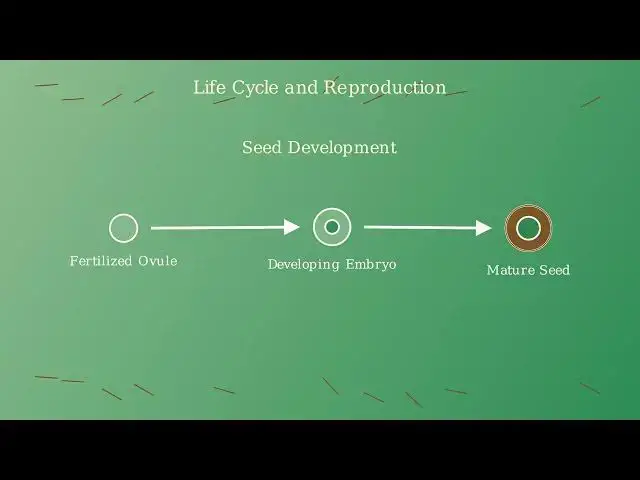
gitaphyte after fertilization seed
5:15
development begins the fertilized ovule
5:18
is the first stage of seed development
5:20
the embryo develops within the ovule
5:22
surrounded by nutrative tissue finally a
5:25
mature seed forms with a protective seed
5:28
coat surrounding the
5:29
embryo the gymnosperm reproductive
5:32
strategy represents a key adaptation to
5:34
terrestrial life unlike more primitive
5:37
plants gymnosperms do not require water
5:39
for fertilization instead pollen is
5:42
transported by wind the seed coat
5:44
protects the developing embryo from
5:46
drying out in the terrestrial
5:47
environment wind pollination is
5:50
particularly advantageous in dry
5:51
environments where gymnosperms often
5:54
thrive the time gap between pollination
5:56
and fertilization allows reproduction to
5:59
synchronize with favorable seasonal
6:01
conditions finally seeds provide
6:03
nutrients that support the young sporopy
6:06
until it can photosynthesize another key
6:08
terrestrial adaptation
6:12
pinus commonly known as pine trees forms
6:15
the largest genus of conifers with
6:17
approximately 120 species
6:20
worldwide pine trees have several
6:23
distinctive features that set them apart
6:25
from other gymnosperms first they have
6:27
needle-like leaves arranged in bundles
6:30
called facasacles typically containing
6:32
two to five needles per bundle second
6:35
pines produce distinctive woody seed
6:37
cones that take 2 to 3 years to mature
6:40
fully third pines are known for their
6:42
extensive resin production which helps
6:45
protect the trees from insects and
6:48
pathogens ecologically pine trees serve
6:51
as important pioneer species often among
6:53
the first to establish after
6:55
disturbances like forest
6:58
fires pines are broadly categorized into
7:01
two main groups hard pines and soft
7:03
pines which differ in several key
7:06
characteristics hard pines typically
7:08
have two or three needles per bundle
7:10
with tough thick needles and dense wood
7:13
soft pines usually have five needles per
7:15
bundle with softer more flexible needles
7:18
and lighter
7:20
wood several pine species hold
7:22
substantial economic importance in
7:24
forestry and timber production worldwide
7:27
pinus radiata the Monterey pine is one
7:30
of the most widely planted pine species
7:32
for softwood production pinus Strobus
7:35
the eastern white pine was historically
7:37
important for ship masts and remains
7:39
valuable for construction and
7:43
furniture these economically important
7:45
species demonstrate the significant role
7:48
pine trees play in both natural
7:50
ecosystems and human
7:53
industries let's compare gymnosperms and
7:55
angioperms across several key
7:57
characteristics
8:01
gimnosperms produce cones as their
8:03
reproductive structures while angioperms
8:05
have flowers gimnosperm seeds are naked
8:08
typically on cone scales while angioperm
8:10
seeds are enclosed within fruits
8:12
gimnosperms rely primarily on wind
8:14
pollination whereas angioperms utilize
8:17
various vectors including insects birds
8:19
and mammals
8:21
regarding vascular tissue gymnosperms
8:24
have tracheids only while angioperms
8:26
possess both vessels and tracheids for
8:28
more efficient water transport
8:30
gymnosperm leaves are typically
8:32
needleike or scale-like while angioperms
8:35
generally have broad leaves with complex
8:37
venation in terms of evolutionary
8:40
history gymnosperms are older appearing
8:42
about 305 million years ago while
8:44
angioperms evolved more recently around
8:47
145 million years
8:50
ago while angioperms are more diverse
8:53
and numerous today with over 300,000
8:56
species compared to around 1,000
8:58
gymnosperm species gymnosperms remain
9:01
ecologically crucial in many
9:03
environments particularly in northern
9:05
forests and high altitude
9:09
ecosystems gymnosperms face serious
9:12
conservation challenges in the modern
9:14
world many species are under threat from
9:17
various human activities and
9:18
environmental changes deforestation is
9:21
eliminating gymnosperm habitats
9:23
worldwide particularly in temperate and
9:25
tropical mountain regions climate change
9:28
is altering temperature and rainfall
9:30
patterns affecting the specialized
9:32
habitats many gymnosperms require
9:35
invasive pests and pathogens are
9:37
devastating certain gymnosperm
9:39
populations with some species losing
9:41
resistance to these
9:43
threats many gymnosperm species now face
9:46
extinction with some groups particularly
9:48
vulnerable the Wamy pine from Australia
9:51
was thought extinct until its
9:53
rediscovery in 1994 today fewer than 100
9:56
wild trees remain growing in a single
9:59
remote canyon scychikads are among the
10:02
most endangered plant groups on Earth
10:04
over 40% of all psychicad species are
10:07
threatened with extinction due to
10:08
habitat loss and illegal collection for
10:10
ornamental
10:12
use multiple strategies are being
10:15
employed to protect the remaining
10:16
gymnosperm diversity seed banks like the
10:19
Millennium Seedbank Project are
10:21
preserving gymnosperm seeds to safeguard
10:24
genetic diversity for future restoration
10:27
efforts protected areas and national
10:29
parks have been established to preserve
10:31
remaining gymnosperm habitats
10:33
particularly for endangered species
10:36
sustainable forestry practices are being
10:38
developed to ensure commercial
10:40
gymnosperm species can be harvested
10:43
while maintaining ecosystem health and
10:45
biodiversity
10:47
despite conservation challenges
10:49
gymnosperms continue to offer valuable
10:52
opportunities for science and
10:54
sustainable technologies gymnosperms are
10:56
crucial for understanding plant
10:58
evolution as living representatives of
11:00
ancient lineages they provide invaluable
11:03
models for studying how plants adapt to
11:05
changing climates over evolutionary time
11:09
these ancient plants also offer exciting
11:11
applications in biotechnology including
11:14
unique compounds for pharmaceuticals
11:16
potential bofuel sources and sustainable
11:19
materials for construction and
11:21
manufacturing the future of these
11:23
ancient plant lineages depends on our
11:25
conservation actions today with proper
11:27
protection and sustainable management
11:30
gymnosperms will continue to benefit
11:32
humanity and ecosystems for generations
11:34
to come
#Science
#Biological Sciences
#Ecology & Environment