live_tv
Livestream Starting Soon
00
Hours
:
00
Minutes
:
00
Seconds
Up next in 10


Communicable Diseases Explained - Types, Transmission, and Prevention
In this informative video, we delve into the world of communicable diseases, exploring their various types, modes of transmission, and effective prevention strategies. Understanding how these diseases spread is crucial for public health and personal safety. We will cover common communicable diseases such as influenza, tuberculosis, and COVID-19, providing insights into their symptoms and the populations most at risk. Additionally, we will discuss the importance of vaccination, hygiene practices, and community health initiatives in controlling outbreaks. Join us as we equip you with the knowledge to protect yourself and your loved ones from these infectious threats. #PublicHealth #InfectiousDiseases #DiseasePrevention
Website: https://biologynotesonline.com/
Facebook: https://www.facebook.com/biologynotesonline
Instagram: https://www.instagram.com/biologynotesonline/?hl=en
communicable diseases,communicable disease,communicable disease cure and prevention,communicable disease transmission,communicable disease explained,disease prevention,types of communicable disease,communicable disease and non communicable disease,communicable and noncommunicable diseases for class 5,infectious diseases,infectious disease,diseases,how to prevent communicable disease,non communicable diseases,communicable disease nursing
Show More Show Less View Video Transcript
0:00
what are communicable diseases
0:02
communicable diseases are illnesses
0:04
caused by infectious agents that can
0:06
spread from person to
0:08
person these infectious agents include
0:10
bacteria viruses fungi and prozzoa these
0:13
diseases can spread through various
0:15
transmission methods including direct
0:17
contact respiratory routes and
0:20
waterborne
0:21
transmission disease transmission
0:23
involves four key components first there
0:26
must be a source of infection such as
0:28
infected humans animals or contaminated
0:31
environments second there must be a mode
0:34
of transmission which is how the
0:35
infectious agent travels from the source
0:38
to a new host third there must be a
0:41
susceptible host someone who lacks
0:43
immunity or has vulnerable health status
0:46
finally there must be a conducive
0:48
environment that allows the pathogen to
0:50
survive and spread
0:53
let's see how these components interact
0:56
to cause disease spread it starts with a
0:58
source of infection such as a person
1:00
carrying a pathogen the pathogen is
1:03
transmitted through a specific mode of
1:05
transmission and reaches a susceptible
1:07
host who lacks immunity all of this
1:10
occurs within an environment that
1:12
supports the survival and spread of the
1:14
pathogen when all four components are
1:17
present communicable diseases can spread
1:19
through populations
1:22
understanding these components is
1:24
crucial for developing effective
1:26
prevention and control
1:28
strategies communicable diseases can be
1:31
categorized in multiple ways helping us
1:33
understand their transmission and
1:36
characteristics first let's look at
1:38
categories based on transmission methods
1:41
interic diseases affect the intestinal
1:43
tract and include conditions like
1:45
chalera and hepatitis A foodborne
1:48
illnesses are transmitted through
1:49
contaminated food with common examples
1:51
being salmonella and ecoli infections
1:54
waterbornne diseases spread through
1:56
contaminated water including giardiosis
1:59
and cryptoperidiosis bloodborne
2:01
pathogens are transmitted through blood
2:03
and other body fluids such as HIV and
2:06
hepatitis B sexually transmitted
2:08
diseases are primarily spread through
2:10
sexual contact including chlamyia and
2:13
syphilis
2:15
now let's examine how diseases are
2:17
categorized based on the type of
2:18
pathogen viral diseases are caused by
2:21
viruses which require host cells to
2:23
replicate common examples include
2:25
influenza and co 19 bacterial diseases
2:29
are caused by bacteria single-sellled
2:31
microorganisms examples include
2:33
tuberculosis and strep throat fungal
2:36
diseases are caused by fungi including
2:38
yeasts and molds examples include
2:40
candidasis and athletes foot protozoal
2:43
diseases are caused by single-sellled
2:45
protozoans malaria and toxoplasmosis are
2:48
common examples parasitic diseases are
2:50
caused by larger parasitic organisms
2:53
examples include infections from
2:54
tapeworms and
2:56
roundorms it's important to note that
2:59
many diseases fall into multiple
3:01
categories they can be classified by
3:03
both their transmission method and the
3:06
type of pathogen for example hepatitis A
3:09
is both a viral disease based on its
3:11
pathogen and an entic or foodborne
3:13
disease based on how it spreads
3:15
understanding these categories helps
3:17
medical professionals diagnose treat and
3:20
prevent the spread of communicable
3:23
diseases direct contact transmission is
3:26
a common way for communicable diseases
3:28
to spread from person to person direct
3:30
contact transmission occurs when
3:32
disease-causing pathogens transfer
3:35
directly from an infected person to
3:37
someone who is susceptible to
3:40
infection there are several types of
3:42
direct contact transmission including
3:44
touching kissing sexual contact and
3:46
exposure to bodily
3:48
fluids when physical contact occurs
3:51
between an infected person and a
3:53
susceptible individual pathogens can
3:55
transfer from one person to another
3:59
several diseases spread through direct
4:01
contact cold sores caused by the herpes
4:04
virus can spread through skin contact or
4:06
kissing scabies is caused by tiny mites
4:09
that transfer during prolonged skin
4:11
contact many sexually transmitted
4:14
infections require intimate contact for
4:17
transmission preventing direct contact
4:20
transmission involves several strategies
4:22
wash hands frequently with soap and
4:24
water avoid contact with those who are
4:26
infected use protective barriers during
4:28
sexual contact cover wounds and skin
4:32
lesions and avoid sharing personal items
4:34
with
4:35
others direct contact transmission of
4:38
diseases can be effectively prevented
4:41
through proper hygiene and appropriate
4:43
behavioral
4:45
practices fecal oral and waterbornne
4:47
transmission occurs when pathogens in
4:49
human or animal waste contaminate food
4:52
water or surfaces the fecal oral
4:54
transmission cycle begins with an
4:56
infected person who sheds pathogens in
4:58
their feces these pathogens can then
5:00
contaminate water or food sources which
5:03
are consumed by a new host completing
5:06
the cycle of infection poor sanitation
5:09
infrastructure creates ideal conditions
5:11
for feal oral disease transmission
5:14
communities with inadequate toilets
5:16
contaminated drinking water limited
5:18
handwashing facilities and crowded
5:20
living conditions face the highest risk
5:23
several critical diseases spread through
5:25
the fecal oral route cholera causes
5:27
severe watery diarrhea and rapid
5:29
dehydration typhoid fever presents with
5:32
high fever and is caused by salmonella
5:34
typhi hepatitis A infects the liver
5:37
causing inflammation and jaundice
5:39
rotoirus is a leading cause of severe
5:42
childhood diarrhea
5:44
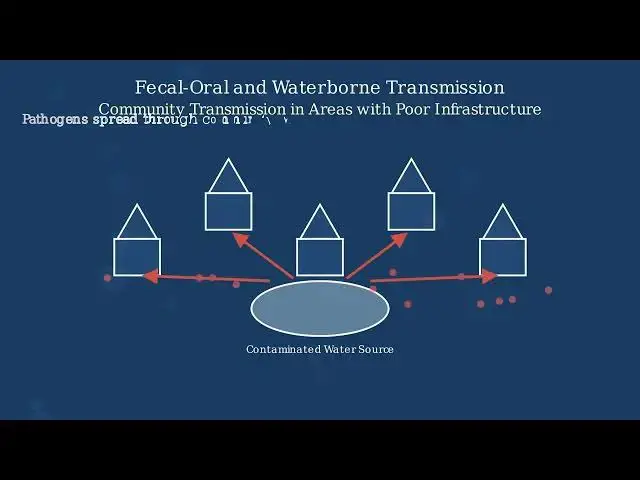
worldwide in communities with poor
5:46
infrastructure waterbornne diseases
5:48
spread rapidly when multiple households
5:50
share contaminated water sources
5:53
pathogens cycle through the community
5:55
inadequate sewage treatment and waste
5:57
disposal further contaminate water
5:59
supplies while limited clean water makes
6:02
proper hygiene difficult prevention of
6:05
fecal oral diseases focuses on several
6:07
key areas improving access to clean
6:10
water through proper treatment systems
6:12
developing adequate sanitation
6:14
infrastructure promoting handwashing
6:16
with soap and ensuring safe food
6:18
handling
6:21
practices vectorbor and foodborne
6:24
transmission represent two significant
6:26
ways that infectious diseases spread
6:28
vectorbor diseases are transmitted by
6:30
living organisms primarily insects that
6:33
carry pathogens from one host to another
6:36
the most common vectors include
6:37
mosquitoes ticks and flies each can
6:40
transmit different types of
6:42
pathogens vectorborn diseases are
6:45
responsible for over 700,000 deaths
6:47
annually major examples include malaria
6:50
deni fever lyme disease and zika
6:54
virus the vector transmission process
6:57
involves three main steps first a vector
7:00
such as a mosquito feeds on an infected
7:02
host ingesting the pathogen the pathogen
7:05
then multiplies or develops within the
7:07
vector finally when the vector feeds on
7:10
a new host it transmits the pathogen
7:12
potentially causing
7:18
infection now let's examine food born
7:20
transmission where pathogens spread
7:22
through contaminated food and beverages
7:25
three major foodborne pathogens are
7:27
salmonella found in raw eggs and poultry
7:30
ecoli common in undercooked beef and
7:33
lististeria which can contaminate dairy
7:35
products and deli
7:37
meats food contamination can occur at
7:40
multiple points from farm to table
7:43
initial contamination often occurs at
7:45
the source where pathogens from soil
7:47
water or animal waste can enter the food
7:50
supply during processing and
7:51
distribution improper handling
7:54
crosscontamination or inadequate
7:56
cleaning can introduce or spread
7:57
pathogens in food preparation areas poor
8:00
hygiene inadequate cooking temperatures
8:03
or crosscontamination between raw and
8:05
ready to eat foods can allow pathogens
8:08
to survive and multiply finally when
8:10
contaminated food is consumed it can
8:12
cause foodborne illness with symptoms
8:14
ranging from mild discomfort to severe
8:17
life-threatening conditions both
8:20
vectorbor and foodborne transmission
8:22
routes present significant public health
8:24
challenges and require specific
8:26
prevention strategies which we'll
8:29
explore in the next
8:34
section proper hand hygiene is one of
8:37
the most effective ways to prevent
8:38
disease
8:40
transmission follow these six key steps
8:42
for effective handwashing first wet your
8:45
hands with clean water then apply soap
8:48
and create a good lather scrub all
8:50
surfaces for at least 20 seconds make
8:53
sure to clean between your fingers and
8:54
under your nails rinse thoroughly with
8:56
clean water finally dry with a clean
8:59
towel studies show that proper
9:01
handashing can reduce respiratory
9:03
illnesses by 16 to
9:07
21% respiratory etiquette prevents the
9:09
spread of droplets when coughing or
9:11
sneezing always cover your mouth and
9:14
nose with your elbow when coughing or
9:16
sneezing using tissues to catch
9:18
respiratory droplets is also effective
9:21
if you're sick wearing a mask protects
9:23
others around you research indicates
9:26
proper respiratory etiquette can reduce
9:28
droplet spread by up to
9:31
80% vaccination is one of the most
9:34
effective preventive health measures
9:35
ever
9:36
developed vaccines provide individual
9:39
immunity against specific diseases they
9:42
also create herd immunity which protects
9:44
vulnerable community members vaccines
9:47
prevent severe disease complications and
9:49
reduce healthcare burdens ultimately
9:52
they help eradicate diseases globally
9:54
according to the World Health
9:55
Organization childhood vaccines prevent
9:58
2 to three million deaths
10:01
annually avoiding close contact with
10:03
sick individuals reduces your risk of
10:06
contracting communicable diseases
10:08
maintain distance from people showing
10:10
symptoms of illness if you're sick stay
10:12
home to protect others during disease
10:15
outbreaks avoid crowded places when
10:17
necessary practice social distancing of
10:20
1 to 2 m during the 2009 H1N1 pandemic
10:24
social distancing measures reduced
10:26
influenza transmission rates by
10:30
23% safe food preparation practices
10:32
prevent foodborne illnesses always wash
10:35
your hands before handling food
10:37
clean all food preparation surfaces and
10:40
utensils thoroughly keep raw and cooked
10:42
foods separate to prevent
10:44
crosscontamination cook foods to proper
10:46
temperatures to kill pathogens
10:48
refrigerate perishable foods promptly
10:51
according to the Centers for Disease
10:53
Control following proper food safety
10:55
practices could prevent up to 40% of
10:58
foodborne
11:00
illnesses let's look at the overall
11:02
effectiveness of these personal
11:03
prevention strategies when consistently
11:06
applied these simple prevention measures
11:08
work together to significantly reduce
11:10
disease transmission studies show they
11:13
can lower overall transmission risk by
11:15
50 to
11:17
70% by incorporating these strategies
11:20
into your daily routine you can protect
11:23
yourself and help prevent the spread of
11:25
communicable diseases community level
11:28
prevention strategies are crucial for
11:29
controlling the spread of communicable
11:32
diseases across populations
11:35
key community prevention strategies
11:37
include proper shelter and site planning
11:40
clean water supply systems adequate
11:42
sanitation facilities vector control
11:44
programs and environmental
11:47
management proper shelter and site
11:50
planning prevents disease transmission
11:52
by reducing overcrowding ensuring
11:54
adequate ventilation and separating
11:56
waste disposal areas from living spaces
11:59
and water sources
12:02
clean water supply systems are essential
12:04
for preventing waterbornne diseases
12:07
effective systems include water source
12:09
protection treatment facilities that
12:11
kill pathogens and distribution networks
12:14
that prevent
12:16
recontamination adequate sanitation
12:18
facilities break the fecal oral disease
12:20
transmission cycle proper systems
12:23
include toilets connected to treatment
12:25
facilities that safely process waste
12:27
before disposal preventing environmental
12:29
contamination
12:32
vector control programs reduce disease
12:34
transmission by controlling populations
12:36
of mosquitoes flies and other disease
12:39
carrying insects effective programs
12:41
combine insecticide spraying habitat
12:43
modification through drainage and
12:45
personal protection methods like bed
12:49
nets environmental management addresses
12:52
disease risk factors in the community
12:54
environment this includes proper waste
12:56
management eliminating standing water
12:58
where vectors breed and creating cleaner
13:01
living spaces to improve overall public
13:04
health community interventions have
13:06
proven highly effective in rural
13:09
communities combined water and
13:10
sanitation improvements reduce diarrheal
13:13
diseases by up to
13:15
85% in urban settings comprehensive
13:18
vector control programs decrease deni
13:20
fever cases by 75%
13:24
community education and participation
13:26
are essential for successful disease
13:28
prevention when communities are actively
13:30
involved in identifying needs designing
13:33
interventions and implementing solutions
13:36
programs become more effective and
13:39
sustainable for maximum impact community
13:42
level prevention requires an integrated
13:44
approach when shelter planning water
13:47
systems sanitation facilities vector
13:50
control and environmental management
13:51
work together they create resilient
13:54
healthy communities with dramatically
13:56
lower disease
13:58
rates as we look to the future several
14:01
major challenges threaten our progress
14:03
in controlling communicable diseases
14:06
antimicrobial resistance occurs when
14:08
bacteria viruses and other pathogens
14:10
evolve to resist treatments this
14:13
threatens our ability to treat common
14:15
infections climate change alters the
14:18
patterns of disease transmission as
14:20
temperatures rise disease carrying
14:22
vectors like mosquitoes and ticks expand
14:25
into new
14:26
regions over the past two decades we've
14:29
witnessed the emergence and spread of
14:31
several new infectious diseases these
14:34
outbreaks remind us of the constant
14:36
threat posed by emerging pathogens
14:40
human activities significantly
14:42
contribute to disease emergence
14:44
deforestation brings humans into contact
14:46
with new pathogens global travel allows
14:49
diseases to spread rapidly and
14:51
urbanization creates dense populations
14:53
where diseases can easily
14:56
transmit despite these challenges there
14:58
is hope continuing research and
15:01
innovation help us develop new tools to
15:03
fight disease global surveillance
15:05
systems provide early warnings of
15:07
outbreaks and coordinated action between
15:10
countries strengthens our collective
15:12
response by addressing these challenges
15:14
together we can build more resilient
15:17
health systems capable of detecting
15:19
preventing and responding to future
15:22
disease threats
#Health Conditions
#AIDS & HIV
#Infectious Diseases
#Public Health
#Covid-19