0:07
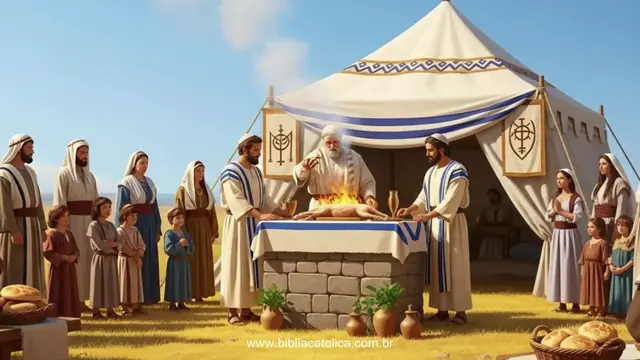
Reading from the book of Leviticus. The
0:10
Lord spoke to Moses, saying, "These are
0:12
the Lord's semies on which you shall
0:14
proclaim holy assemblies at their
0:16
appointed times. On the 14th day of the
0:19
first month, at twilight is the Lord's
0:21
Passover. On the 15th day of the same
0:24
month is the feast of unleavened bread
0:26
to the Lord. For seven days you shall
0:29
eat unleavened bread. On the first day
0:32
you shall have a holy assembly. You
0:34
shall do no serval work. You shall offer
0:37
sacrifices by fire to the Lord for 7
0:39
days. On the seventh day there shall be
0:42
a holy assembly. You shall do no servil
0:45
work. The Lord spoke to Moses, saying,
0:48
"Speak to the Israelites and say to
0:50
them, when you have entered the land I
0:52
am giving you and reaped its harvest,
0:54
you shall bring a sheath of grain to the
0:55
priest as the first fruits of your
0:57
harvest. The priest shall offer this
0:59
sheath of grain before the Lord, that he
1:01
may be gracious to you. He shall do this
1:04
on the day after the Sabbath. From the
1:06
day after the Sabbath, from the day you
1:09
brought the sheath of grain to be
1:10
presented, you shall count off seven
1:12
full weeks. You shall count off 50 days
1:15
to the day after the seventh Sabbath,
1:18
and you shall present a new offering to
1:19
the Lord. The 10th day of the seventh
1:22
month is the day of atonement. On it,
1:24
you shall have a holy assembly, fast,
1:27
and offer a fire offering to the Lord.
1:30
On the 15th day of the seventh month is
1:32
the 7-day festival of tabernacles to the
1:35
Lord. On the first day, there shall be a
1:37
holy assembly, and you shall do no
1:40
serval work. For seven days you shall
1:43
offer fire offerings to the Lord. On the
1:46
eighth day you shall have a holy
1:47
assembly and you shall offer a sacrifice
1:50
by fire to the Lord. It is a day of
1:53
solemn assembly. You shall do no serval
1:56
work. These are the Lord's feasts in
1:58
which you shall proclaim holy assemblies
2:00
to offer sacrifices by fire to the Lord.
2:03
Burnt offerings and grain offerings,
2:06
sacrifices and drink offerings, each on
2:08
its own day. The word of the Lord.
2:21
Proclamation of the Gospel of Jesus
2:23
Christ according to St. Matthew. Glory
2:26
to you, Lord. At that time Jesus came to
2:29
his own town and taught in their
2:31
synagogue so that the people were
2:33
astonished. And they said, "Where did
2:36
this man get this wisdom and these
2:38
mighty works? Isn't this the carpenter's
2:40
son? Isn't his mother called Mary? And
2:43
aren't his brothers James, Joseph,
2:46
Simon, and Judas? And don't his sisters
2:49
live with us? Then where did this man
2:52
get all these things? And they were
2:54
scandalized by him. But Jesus said, "A
2:58
prophet is not without honor except in
3:00
his own country and in his own house."
3:03
And Jesus did not perform many mighty
3:05
works there because they had no faith.
3:08
Word of salvation. Glory to you, Lord.
3:20
Dear brothers and sisters in Christ,
3:23
imagine for a moment that you are
3:24
artists working on a masterpiece. Every
3:27
brush stroke is carefully planned. Every
3:30
color is chosen with purpose. Every
3:32
detail contributes to the greater
3:34
meaning of the work. But then the people
3:36
who see his creation say it's nothing
3:39
special. We've known this artist since
3:41
he was a child. It can't be anything
3:46
This frustrating situation helps us
3:48
understand both the beauty of the sacred
3:50
feasts described in Leviticus and the
3:52
tragedy of Jesus rejection in his
3:54
hometown. In the first reading, God
3:57
speaks to Moses about the sacred feasts,
3:59
the appointed times of the Lord. These
4:03
are not just casual celebrations or
4:05
empty traditions. They are sacred
4:07
moments carefully orchestrated by God to
4:10
teach his people about his nature, his
4:12
plans, and his relationship with us.
4:15
Consider Passover. In the first month,
4:18
on the 14th day of the month at twilight
4:21
shall be the Lord's Passover.
4:23
How precise. God leaves nothing to
4:26
chance. This feast commemorated Israel's
4:29
deliverance from Egypt, but it also
4:31
pointed to a greater liberation that
4:33
would come through the lamb of God who
4:35
takes away the sin of the world. Next
4:37
comes the feast of unleavened bread. For
4:40
7 days, you shall eat unleavened bread.
4:43
In biblical tradition, leaven often
4:45
symbolizes corruption and sin. For seven
4:49
days, the number of perfection, the
4:51
people were to live without levaven,
4:53
symbolizing a purified life, free from
4:56
the corrupting influence of evil. And
4:58
then there is the offering of the first
5:00
fruits. When you reap your harvest, you
5:02
shall bring the first sheath of your
5:04
harvest to the priest. What a beautiful
5:07
image of gratitude and trust. Even
5:10
before knowing whether the rest of the
5:11
harvest would be abundant, they offered
5:13
God the first and best of their fruits.
5:16
It was an act of faith, recognizing that
5:19
every blessing comes from God. The feast
5:21
of Pentecost comes 50 days later. You
5:24
shall count 50 days until the day after
5:26
the seventh Sabbath, and then you shall
5:28
offer a new offering to the Lord. This
5:31
feast celebrated the complete harvest.
5:33
But it also became the moment when the
5:35
Holy Spirit descended upon the apostles,
5:38
marking the birth of the church. And
5:40
what about the day of atonement? On the
5:43
10th day of the seventh month shall be
5:45
the day of atonement. A solemn day of
5:47
fasting and purification when the high
5:50
priest entered the Holy of Holies to
5:52
make atonement for the sins of the
5:53
people, a prefigurement of Christ's
5:56
perfect sacrifice. Finally, the feast of
5:59
tabernacles. The feast of tabernacles
6:01
shall last 7 days. During this feast,
6:05
the people lived in temporary tents,
6:07
remembering their journey through the
6:08
wilderness and recognizing that
6:11
ultimately we are all pilgrims on this
6:13
earth. Each of these feasts was a brush
6:15
in the hands of the divine artist,
6:18
creating a masterpiece of spiritual
6:20
significance. They taught about
6:22
redemption, purification, gratitude,
6:25
dependence on God, atonement, and our
6:28
spiritual journey. Together, they formed
6:31
a sacred calendar that kept God's people
6:33
focused on eternal truths amidst the
6:35
temporal concerns of life. But here's
6:38
the paradox. When the ultimate reality
6:40
these feasts prefigured finally arrived
6:42
in the person of Jesus Christ, many
6:45
failed to recognize it. In today's
6:47
gospel, we see Jesus returning to his
6:50
hometown of Nazareth. He teaches in the
6:53
synagogue with the same wisdom that had
6:55
amazed crowds elsewhere. But the
6:57
reaction is completely different. Where
7:00
did this man get this wisdom and these
7:02
powers? His fellow villagers ask, "Isn't
7:06
this the carpenter's son? Isn't his
7:08
mother called Mary and his brothers
7:11
James, Joseph, Simon, and Judas? And
7:15
aren't his sisters all with us?" Where
7:18
then did this man get all these things?
7:20
Familiarity had bred not admiration, but
7:24
skepticism. They knew Jesus as the
7:26
carpenter's son, the boy who had grown
7:29
up among them. How could he be someone
7:31
special? How could he be the promised
7:34
Messiah? Their limited expectations
7:37
blinded them to the extraordinary
7:38
reality before them. And the result was
7:41
tragic. And he did not do many mighty
7:44
works there because of their unbelief.
7:46
Their lack of faith not only deprived
7:48
them of the blessing of witnessing Jesus
7:50
miracles, it limited God's own work
7:53
among them. My dear brothers and
7:55
sisters, what profound lessons these
7:57
readings offer us for our lives today.
8:00
First, we are called to recognize the
8:03
sacred in the familiar. Just as the
8:05
feasts of Leviticus transformed ordinary
8:07
moments into sacred encounters with God,
8:10
we must learn to see the divine presence
8:12
in our daily lives. Family dinner can
8:15
become a domestic eukarist. Daily work
8:18
can be offered as an oblation to God.
8:21
Moments of rest can be Sabbaths.
8:23
transformed into opportunities for
8:25
communion with the creator. Second, we
8:28
must cultivate a sense of gratitude and
8:30
dependence on God. Just as the
8:33
Israelites offered the first fruits of
8:34
their harvest, we are called to
8:36
recognize that everything we have comes
8:38
from God. Before enjoying our blessings,
8:41
we must first recognize and honor the
8:43
one who gives them. Third, we must guard
8:47
against the blindness of familiarity.
8:49
How often do we fail to recognize God's
8:52
work because it comes through people or
8:53
circumstances we consider common or
8:58
How often does our unbelief limit what
9:00
God can do in our lives and communities?
9:03
The story of Jesus rejection in Nazareth
9:05
is particularly relevant to us as a
9:08
community of faith. It's easy for us who
9:10
hear the same readings week after week,
9:12
who participate in the same rituals, who
9:15
sit in the same pews to develop a kind
9:17
of familiarity that prevents us from
9:19
truly experiencing the transformative
9:21
power of the gospel. But God desires our
9:24
faith to be always fresh, always
9:26
vibrant. He wants each celebration of
9:29
the Eucharist to be for us like those
9:30
sacred feasts in Leviticus. Moments of
9:33
genuine encounter with the divine,
9:35
opportunities for spiritual renewal,
9:38
occasions of wonder and worship. Imagine
9:40
if we approached each mass as the
9:42
Israelites approached the feast of
9:44
Passover with careful preparation,
9:46
reverent expectation, and hearts open to
9:49
God's redemptive work. Imagine if we
9:51
offered our lives to God like the first
9:53
fruits of the harvest with generosity,
9:56
faith, and recognition of his provision.
9:59
And imagine if we saw each other not
10:01
through the lens of familiarity that can
10:03
blind us, but with the eyes of faith
10:05
that recognize the presence and power of
10:07
God working through seemingly ordinary
10:09
people. The great theologian Carl Roner
10:12
once said that the Christian of the
10:13
future will either be a mystic or not a
10:15
Christian at all. What he meant is that
10:17
we need to cultivate a capacity to
10:19
encounter God not only in extraordinary
10:21
moments but in the ordinary, the
10:23
familiar, the everyday. The feasts of
10:26
Leviticus teach us that God wants to
10:28
meet with us regularly in moments marked
10:30
by the sacred amidst the secular. Jesus
10:33
experience in Nazareth warns us of the
10:35
danger of allowing familiarity to blind
10:37
us to the miraculous. So my dear
10:40
brothers and sisters, today we are
10:42
called to renew our spiritual vision. We
10:45
are challenged to see our daily lives as
10:48
a series of sacred feasts. Each moment
10:50
an opportunity to encounter God. We are
10:53
invited to approach our faith not with
10:55
the indifference of familiarity but with
10:57
the wonder of those who constantly find
10:59
new depths in God's infinite love. May
11:02
we have eyes to see Jesus not just as
11:04
the familiar carpenter but as the risen
11:06
Christ who continues to work miracles in
11:08
our lives. May we have ears to hear not
11:11
just familiar words but the living word
11:14
of God that has the power to transform
11:16
our hearts. And may our faith always be
11:18
like those first fruits offered in the
11:20
temple. the first and best of who we
11:22
are. Offered in gratitude and trust to
11:25
the one who is the source of every
11:26
blessing and the author of every
11:27
transformation. May the grace of our
11:30
Lord Jesus Christ, the love of God the
11:32
Father, and the fellowship of the Holy
11:34
Spirit be with you all today and always.
11:48
St. Michael the Archangel, defend us in
11:50
battle. Be our protection against the
11:53
wickedness and snares of the devil. May
11:55
God rebuke him, we humbly pray. And do
11:59
thou, O prince of the heavenly host by
12:02
the power of God, cast into hell Satan
12:05
and all the evil spirits who prowl
12:07
throughout the world seeking the ruin of