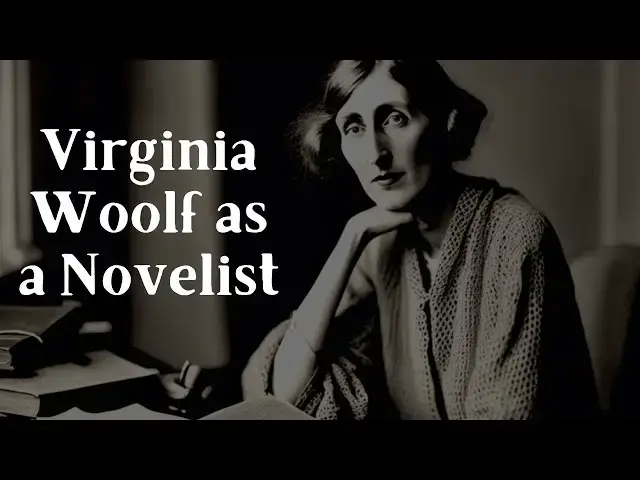

Virginia Woolf as a Novelist | Exploring Her Artistic Legacy
Jun 14, 2024

Join us as we dive into the artistic legacy of Virginia Woolf, one of the most influential writers of the 20th century. From her groundbreaking modernist techniques to her impactful feminist themes, we'll explore Woolf's achievements and how her childhood shaped her as a novelist. Discover the lasting impact of Virginia Woolf on literature and beyond in this video.
Virginia Woolf, a pioneering novelist of the modernist era, left an indelible mark on literature by unraveling the depths of human consciousness and addressing gender roles. With her innovative narrative techniques and profound insights, Woolf's legacy continues to captivate readers and inspire contemporary writers.
Modernist Pioneer and Stream of Consciousness:
At the heart of Woolf's artistry lies her role as a modernist trailblazer. Her novels, such as "Mrs. Dalloway" and "To the Lighthouse," exemplify her revolutionary narrative approach—stream of consciousness. Through this technique, she takes readers on an intimate journey into characters' minds, offering a glimpse into their inner monologues and emotional landscapes. This unique storytelling method allows for a deeper connection with characters and an enhanced understanding of their motives and fears.
Feminist Perspective and Gender Roles:
Woolf's literary prowess extended beyond narrative innovation. Her feminist perspective and exploration of gender roles are underscored in her essay "A Room of One's Own." This work, a seminal piece in feminist literature, emphasizes the importance of women having both physical and mental space for creative expression. In her novels, she portrays female characters with agency and complexity, shedding light on the challenges they faced within a patriarchal society.
Unveiling Human Consciousness and Time-Memory Nexus:
Woolf's exploration of human consciousness remains a defining aspect of her novels. By delving into the inner thoughts and emotions of her characters, she dissects the intricacies of human experience. Her manipulation of time and memory further enriches her narratives. Events and emotions intermingle in a non-linear fashion, mimicking the way our own memories and experiences are interconnected. This invites readers to contemplate the fluid nature of time and its impact on individual perceptions.
Social Commentary and Character Psychology:
Beyond personal introspection, Woolf's works are mirrors reflecting societal norms and class distinctions of her time. Her characters become vessels through which she subtly critiques these societal constructs. Moreover, Woolf's mastery in portraying characters' psychological landscapes offers readers a psychological exploration of human nature. Their anxieties, desires, and fears become windows into the universal human condition, fostering empathy and introspection.
Legacy and Continuing Influence:
Virginia Woolf's legacy as a novelist extends far beyond her lifetime. Her narrative innovations, feminist insights, and exploration of human consciousness have left an indelible mark on literature. Contemporary authors continue to draw inspiration from her works, carrying forward her legacy of pushing literary boundaries and illuminating the intricate facets of human experience.
Conclusion:
Show More Show Less #Romance Films
#Other