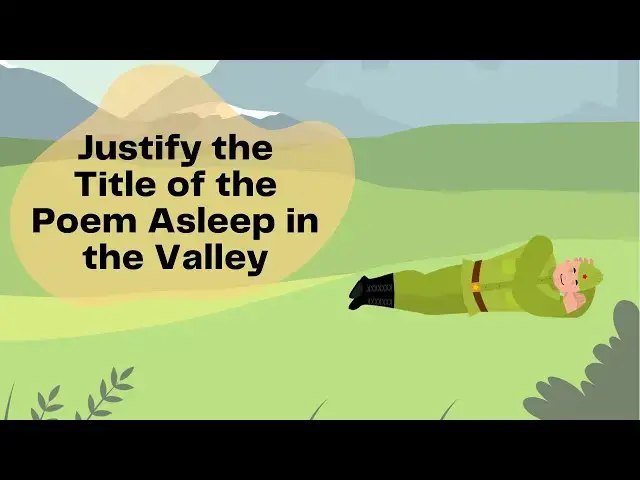

Justify the Title of the Poem Asleep in the Valley
Jun 14, 2024

In this video, we'll dive into the analysis of the poem "Asleep in the Valley" and explore the significance of its title. We'll discuss themes of war, death, and beauty and how they connect to the title of this powerful poem. Stay tuned for a thought-provoking exploration of this famous work by Arthur Rimbaud.
The poem "Asleep in the Valley" was written by the French poet Arthur Rimbaud in 1870. The poem is often interpreted as an anti-war poem and a reflection on the senselessness and tragedy of war. Thus, the content and themes of the poem “Asleep in the Valley” justify its title.
The poem starts with a description of a pastoral scene. The poet sketches a valley where a young soldier is sleeping. The valley is idyllic but filled with lush grass and a peaceful river. The soldier is described as lying on his back, his head on his elbow and his hand resting on his breast. He appears serene and at ease as if he is peacefully sleeping.
The poem progresses and it becomes clear that the soldier is not simply asleep in a beautiful landscape. In fact, it is a dead body of a soldier. His uniform is tattered and the cold has turned his lips blue. Despite all this sadness, its effect is unseen in nature. The poet shows that the birds are still singing and the river is flowing as usual. It seems as if nothing has happened to nature.
The poem compares the natural world with the world of war. In this poem, the poet contrasts the beauty and serenity of the natural world with the harsh reality of war and death. It suggests that war is a senseless and tragic waste of young lives. The soldier's death is a stark contrast to the peacefulness of the valley.
In this way, the poem conveys the futility and tragedy of war using vivid imagery and a stark juxtaposition between the soldier's death and the tranquil beauty of the natural world. Thus, the title "Asleep in the Valley" of the poem does not entirely justify the main theme that the poet wants to portray.
Symbolic Significance of the Title.
The symbols of the poem "Asleep in the Valley" may justify its title. It has some indirect references which are necessary to be elucidated to understand the poem better. The title of the poem does not become clear at once but symbolic meanings can give insight into its themes.
The poem begins with a literal description of a young soldier who appears to be peacefully asleep in a valley. The title accurately reflects this initial scene and sets the stage for the reader's understanding of the poem's content.
However, as the poem progresses, the soldier is revealed as dead. The title creates a sense of irony and contrast. This contrast highlights the harsh reality of war and its toll on young lives.
"Asleep" can be seen as a symbol in the poem. It symbolises the loss of innocence and the price paid by young soldiers in the context of war. The word "asleep" represents the soldier's eternal rest in death as well as the loss of the dreams and potential of youth that war can steal.
The title of the poem "Asleep in the Valley" is emotionally evocative to justify its themes. It draws readers into the poem with a sense of calm and serenity but at the end disrupts the tranquillity with the revelation of the soldier's death. This emotional impact is integral to the poem's message about the harsh realities of war.
Themes of the Poem “Asleep in the Valley” Justify its Title.
While the primary theme of "Asleep in the Valley" by Arthur Rimbaud is the juxtaposition of the serene natural world with the harsh realities of war and death, there are other themes and ideas that can be explored within the poem to justify its title:
The poem conveys a sense of nature's indifference to human suffering and death. The birds sing, the river flows and the sun shines as if nothing is amiss. It emphasizes that nature is oblivious to human tragedy.
The poet Arthur Rimbaud wrote this poem during a time of war (the Franco-Prussian War of 1870). His aim was to express an anti-war sentiment through the work. The poem underscores the futility and senselessness of war. It makes a powerful statement against armed conflict.
In these ways, the title "Asleep in the Valley" is rich with thematic significance to justify its use in a poem that explores not only the contrast between appearances and reality but also broader themes of innocence, nature's indifference, the irony of war, human vulnerability and the act of remembrance.
Conclusion.
In summary, it is to justify that the title "Asleep in the Valley" accurately represents the initial scene in the poem but then it conveys a sense of irony and contrast. The title serves as a symbol for the poem's themes and enhances the emotional impact. It captures the essence of the poem's exploration of the contrast between the beauty of nature and the tragedy of war.
Read Complete Article:
Show More Show Less