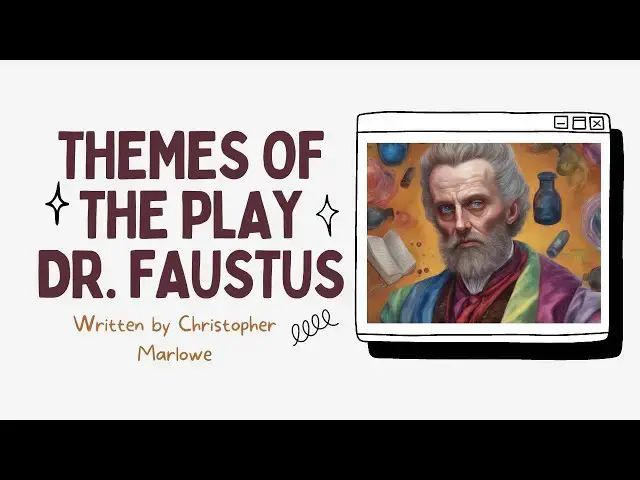

Themes of the Play Dr Faustus | Christopher Marlowe
Aug 5, 2023

In this video, we'll explore the themes of Christopher Marlowe's play, Dr Faustus. From ambition to temptation to morality, this play raises thought-provoking questions about the human condition. Discover the deeper messages behind this classic work and gain a deeper understanding of its timeless themes. Don't miss out on this analysis of Dr Faustus, one of Marlowe's most famous and enduring plays.
"Dr Faustus" is a famous play written by Christopher Marlowe. It tells the story of a smart but dissatisfied man named Dr Faustus who sells his soul to the devil in exchange for power and knowledge. The play "Dr Faustus" is filled with exciting and thought-provoking themes.
The Temptation of Power and Knowledge.
One of the main themes in the play is the temptation of power and knowledge. Dr Faustus is a brilliant scholar, but he feels unfulfilled with his life. He desires more than what conventional knowledge can offer him. This discontentment leads him to make a deal with the devil Mephistopheles. The devil promises him unlimited power and knowledge in exchange for his soul. This theme highlights the dangers of being lured by the allure of greater abilities and losing sight of the consequences.
The Struggle Between Good and Evil.
Another significant theme in "Dr Faustus" is the struggle between good and evil. Throughout the play, Faustus battles with his conscience. He knows what he is doing is wrong, but the temptation is too strong for him to resist. This struggle reflects the human internal conflict between making the right choices and succumbing to temptation. It serves as a cautionary tale about the consequences of giving in to our darker impulses.
The Fragility of Human Life.
The play also explores the theme of the fragility of human life. Faustus's pursuit of power and knowledge makes him forget the limitations of his existence. He becomes obsessed with achieving greatness and forgets about the mortality of human life. This theme reminds us that life is fleeting and that our actions in the pursuit of ambition can have severe consequences.
The Role of Free Will and Divine Intervention.
"Dr Faustus" raises questions about free will and divine intervention. Faustus willingly chooses to enter into the pact with the devil, but he also seeks forgiveness and salvation from God. The play raises philosophical dilemmas about whether humans have control over their destinies or if there are higher powers shaping their fates.
Regret and Redemption.
Regret and redemption are central to the play's message. As Faustus nears the end of his life, he realizes the gravity of his actions and feels deep remorse. He seeks redemption from God but is ultimately unable to find it. This theme emphasizes the importance of making ethical choices throughout life and understanding that there might not always be a chance for redemption.
Conclusion.
"Dr Faustus" is a play that explores profound themes in a way that everyone can grasp. It delves into the dangers of seeking power and knowledge without considering the consequences, the struggle between good and evil within ourselves, the fragility of human life, the interplay of free will and divine intervention, and the significance of making ethical choices. Through this gripping tale, we are reminded of the importance of being mindful of our actions and the impact they can have on our lives and the lives of others.
00:00 - Introduction
00:18 - The Temptation of Power and Knowledge
00:54 - The Struggle Between Good and Evil
01:26 - The Fragility of Human Life
01:52 - The Role of Free Will and Divine Intervention
02:17 - Regret and Redemption
02:44 - Conclusion
Show More Show Less