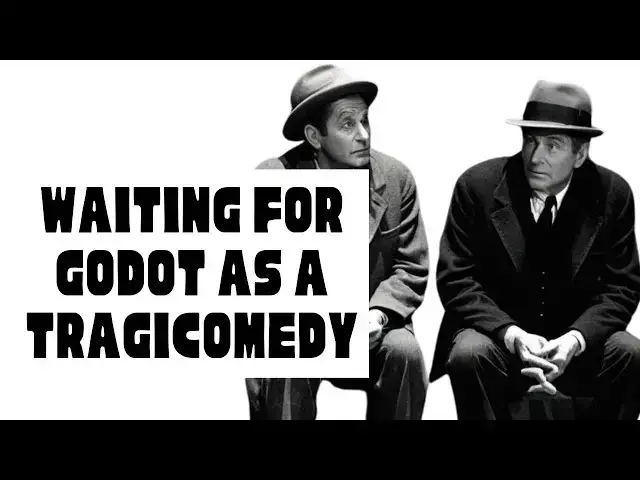

Waiting for Godot as a Tragicomedy | Not Even a Tragedy
Oct 18, 2022

Explore the unique genre of tragicomedy in Samuel Beckett's iconic play, Waiting for Godot. This video delves into the elements of tragedy and comedy within the play, and how they come together to create a profound and thought-provoking piece of theatre. If you're a fan of Theatre of the Absurd or just curious about this classic play, be sure to watch and discover why Waiting for Godot is not just a tragedy, but so much more.
A play that feels comic to the audience but ends in despair is called a tragicomedy and “Waiting for Godot” perfectly fits this genre. In the whole play, the audience enjoys the absurdity of Vladimir and Estragon yet in the conclusion, the audience realises that the play was thought comic yet it hit the feelings of pity and fear. Aristotle asserts in “Poetics” that a poet’s duty is to present either better people on stage or worse. If he presents better, he wants to write a tragedy but if he chooses the second option it means that he wants the audience to enjoy a comedy.
What is Tragicomedy?
A play that combines elements of misery and facetiousness falls in the category of tragicomedy. We have also seen Shakespeare practising the same in his many plays. “A Winter’s Tale” is a remarkable example of it. In that play, he creates a tragic atmosphere but he ends the play happily. Shakespeare has unquestionably seen tragedy from a new angle due to which he mingles tragedy with comedy. In concise words, blending two types of poetry, as defined by Aristotle in his book Poetics, “Comedy” and “Tragedy” is called tragicomedy as is crystal clear in “Waiting for Godot”. Hence, it should be called the third genre of poetry. There are some who refer to tragicomedy as a bastard of tragedy.
Dispute on the Genre of “Waiting for Godot”:
It is obvious from the definition of tragedy that if a play contains both the elements of poetry then it should be regarded as a tragicomedy, however, “Waiting for Godot” is a play about the suffering of humanity. How can it be called a tragicomedy if there is no comedy in it? Even if tragic elements are not available in this play then too, we should add it to the list of tragicomedies. Let’s analyse “Waiting for Godot” from both perspectives to prove that it is truly a tragicomedy.
Comic Elements and Laughter in “Waiting for Godot”
“Waiting for Godot” contains many exciting and comic elements but everything is dependent on the suffering of the characters, hence, laughter in this play is bitter which is one of the fundamentals of a tragicomedy. Samuel Becket has also defined two types of laughter; one is bitter and the second is ethical. Bitter laughter is when someone is sad yet he laughs. It does not give that person any excitement. On the other hand, the second type i.e. ethical laughter contains happiness. There is emotional relief in that sort of laughter. “Waiting for Godot” falls in the first category and most of the plays that are based on the genre of tragicomedy contain a bitter laugh, as mentioned supra.
The comedy in this play is in reverse order. In Act II, there is less comedy as compared to Act I of the play. Hence, despair increases as the play proceeds towards the conclusion because of the unending wait Vladimir and Estragon do for Godot, who never appears on stage nor has the playwright introduced it to the audience. Laughter is better observed before it is revealed to the audience that the folks are waiting for someone. Vladimir suggests that they should repent, however, Estragon cannot find any reason to repent except for their birth. Both of them along with the audience laugh at this joke. Certainly, it is comic for the audience but the very next moment Vladimir suppresses his laugh because he remembers the pains of life from his unconsciousness.
The laugh of every character in this play is mirthless (laughter that contains sorrow).
Read more at:
https://askliterature.com/drama/waiting-for-godot-as-a-tragicomedy/
Show More Show Less