Up next in 10


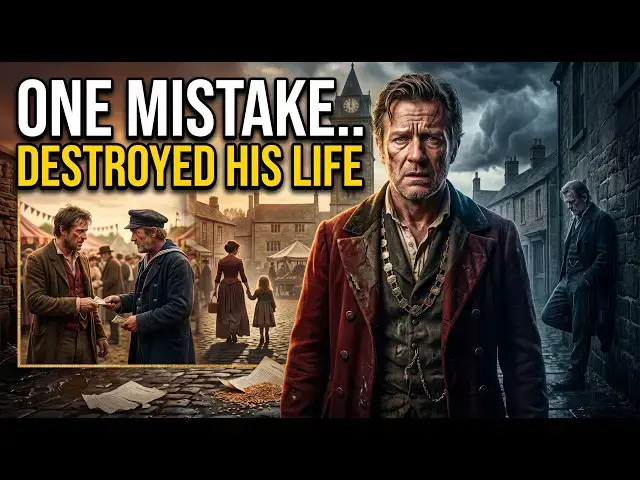
What happens when a single mistake follows a person for the rest of their life?
In this detailed video, Thomas Hardy's The Mayor of Casterbridge is Explained. We will explore the tragic story of Michael Henchard, a man whose impulsive decision changes the course of his entire future. From his shocking wife-selling incident to his rise as the Mayor of Casterbridge and his heartbreaking downfall, this video examines every major event, character, theme, symbol, and literary device in the novel.
This complete analysis covers:
✔ Full plot summary
✔ Michael Henchard character analysis
✔ Donald Farfrae analysis
✔ Elizabeth-Jane analysis
✔ Major themes and symbolism
✔ Fate vs Free Will
✔ Pride and Tragic Flaw
✔ Social Change in Victorian England
✔ Important examination points
✔ Ending explained
✔ Literary significance of the novel
Whether you're preparing for exams, studying English literature, or simply interested in Thomas Hardy's greatest works, this video provides a comprehensive and engaging guide to The Mayor of Casterbridge.
📚 Author: Thomas Hardy
🎓 Perfect for:
English Literature Students
GCSE Literature
A-Level Literature
University Literature Courses
Competitive Exam Preparation
Novel Analysis and Revision
#TheMayorOfCasterbridge #ThomasHardy #EnglishLiterature #NovelAnalysis #LiteratureExplained #VictorianLiterature #SummaryAndAnalysis #MichaelHenchard #ClassicLiterature #BookSummary
Show More Show Less View Video Transcript
0:00
There are stories in literature where a
0:01
single mistake changes an entire life.
0:05
Not for a day.
0:07
Not for a year.
0:10
But forever.
0:12
Thomas Hardy's The Mayor of Casterbridge
0:14
is one of those stories.
0:17
Imagine a man standing in a crowded
0:19
fair.
0:21
He is poor, frustrated, and angry.
0:25
In a moment of reckless drunkenness, he
0:27
does something almost impossible to
0:29
believe.
0:31
He sells his wife and child to a
0:33
stranger.
0:35
It sounds shocking.
0:38
It sounds unreal.
0:40
Yet this single act becomes the
0:42
foundation of one of the most powerful
0:44
tragedies in English literature.
0:47
What makes this novel unforgettable is
0:49
not simply what happens.
0:52
It is the painful question that follows.
0:56
Can a person ever escape the
0:57
consequences of a terrible mistake?
1:01
Can hard work, success, and sincere
1:03
regret erase the past?
1:06
Or does the past await patiently for the
1:08
moment when it can return and demand its
1:10
price?
1:12
These questions lie at the heart of The
1:14
Mayor of Casterbridge.
1:16
It is a novel about guilt and pride.
1:20
About chance and destiny.
1:23
About love, loneliness, and human
1:25
weakness.
1:27
Above all, it is the story of a man who
1:29
rises to greatness and then slowly
1:31
watches everything he has built collapse
1:33
around him.
1:35
To understand this novel fully, we must
1:37
first enter the world of Michael
1:39
Henchard.
1:40
At the beginning of the story, Michael
1:42
Henchard is a young hay trusser.
1:45
He earns a living by agricultural work.
1:49
He travels with his wife Susan and their
1:51
little daughter Elizabeth Jane.
1:54
The family arrives at a country fair in
1:56
the town of Weydon Priors.
1:59
Henchard is tired, dissatisfied, and
2:01
bitter about his life.
2:04
He feels trapped by poverty and
2:06
responsibility.
2:08
While drinking heavily, he begins
2:10
complaining about marriage.
2:13
What starts as careless talk becomes
2:15
something far more serious.
2:18
In front of other people at the fair, he
2:20
offers to sell his wife.
2:22
At first, everyone treats the matter as
2:25
a joke.
2:27
Then a sailor named Newson agrees to pay
2:29
money.
2:31
To the horror of modern readers, Susan
2:33
leaves with Newson, taking Elizabeth
2:35
Jane with her.
2:37
This scene is one of the most famous
2:39
openings in Victorian literature.
2:42
It shocks readers immediately.
2:45
But Hardy is not interested in shock
2:47
alone.
2:49
He wants us to understand how one
2:50
reckless decision can shape an entire
2:52
life.
2:55
Henchard is not presented as a monster.
2:58
He is presented as a flawed human being
3:00
whose weakness destroys everything
3:02
around him.
3:05
The next morning, Henchard realizes what
3:07
he has done.
3:09
The reality of his actions strikes him
3:11
with terrible force.
3:14
Filled with guilt, he searches for his
3:16
family but cannot find them.
3:19
He then enters a church and makes a
3:21
solemn promise.
3:24
For 21 years, he will never drink
3:26
alcohol again.
3:28
This moment is important because it
3:30
reveals a central aspect of Henchard's
3:32
character.
3:34
He is capable of great wrongdoing.
3:37
Yet, he is also capable of deep remorse.
3:41
Throughout the novel, he constantly
3:43
swings between extremes.
3:46
He loves intensely.
3:49
He hates intensely.
3:51
He regrets intensely.
3:54
He never lives in moderation.
3:57
Years pass.
4:00
When the story moves forward, Henchard
4:02
has transformed his life.
4:05
Through determination and hard work, he
4:07
has become a wealthy grain merchant in
4:09
the town of Casterbridge.
4:12
Even more impressively, he has become
4:14
the mayor of the town.
4:17
At first glance, this appears to be a
4:19
story of redemption.
4:22
The poor laborer who once sold his wife
4:24
has rebuilt himself into a respected
4:26
public figure.
4:28
Society sees him as successful and
4:30
honorable.
4:32
But Hardy immediately introduces a
4:34
powerful theme that runs throughout the
4:36
novel.
4:38
The past is never truly dead.
4:42
One day Susan returns to Casterbridge
4:44
with Elizabeth Jane.
4:47
She believes Newson has been lost at sea
4:49
and is probably dead.
4:52
She hopes to reconnect with Henchard and
4:54
restore their family.
4:56
This return marks the beginning of the
4:58
tragedy.
5:00
Susan does not reveal the truth
5:02
immediately.
5:04
Instead, she carefully approaches
5:06
Henchard.
5:08
When he learns who she is, he is
5:10
shocked.
5:12
He sees an opportunity to repair his old
5:14
mistake.
5:16
Since people believe Susan is a widow,
5:18
they decide to remarry quietly.
5:21
On the surface, the family appears
5:23
reunited.
5:25
Yet beneath this appearance lies tension
5:27
and uncertainty.
5:30
Elizabeth Jane admires Henchard and
5:32
wishes to build a relationship with him.
5:35
She is intelligent, kind, and
5:37
thoughtful.
5:40
However, Henchard often struggles to
5:42
express affection properly.
5:45
His emotions are powerful but unstable.
5:49
At this stage, another major character
5:51
enters the novel.
5:54
Donald Farfrae.
5:56
Farfrae is a young Scotsman with
5:58
intelligence, charm, and practical
6:00
skills.
6:02
He arrives in Casterbridge almost by
6:04
accident.
6:06
Henchard quickly recognizes his
6:08
abilities and hires him.
6:11
The relationship between Henchard and
6:13
Farfrae is one of the most fascinating
6:15
aspects of the novel.
6:17
At first, Henchard treats Farfrae almost
6:20
like a son.
6:22
He admires his intelligence and enjoys
6:24
his company.
6:26
Farfrae introduces modern business
6:28
methods and helps improve Henchard's
6:30
trade.
6:32
Yet hidden beneath this friendship is a
6:34
dangerous force.
6:36
Pride is perhaps the most important
6:38
theme in The Mayor of Casterbridge.
6:41
Henchard cannot bear competition.
6:44
He wants loyalty.
6:47
He wants admiration.
6:50
He wants control.
6:52
When Farfrae's popularity begins to
6:54
grow, Henchard becomes jealous.
6:58
Notice how Hardy creates a contrast
7:00
between the two men.
7:02
Henchard represents passion, instinct,
7:05
and old traditions.
7:07
He acts according to emotion.
7:11
He often makes decisions quickly and
7:13
impulsively.
7:15
Farfrae represents reason, calculation,
7:18
and modern progress.
7:20
He remains calm under pressure.
7:24
He thinks before acting.
7:26
This contrast reflects larger social
7:28
changes in 19th century England.
7:32
Traditional ways of life were gradually
7:34
giving way to modern business practices
7:36
and scientific thinking.
7:39
Eventually, tension develops between the
7:41
two men.
7:43
Farfrae leaves Henchard's business and
7:45
establishes his own enterprise.
7:48
Soon he becomes a successful competitor.
7:52
For Henchard, this feels like betrayal.
7:56
What makes the situation tragic is that
7:58
Farfrae never intends to harm him.
8:01
Much of the conflict exists because of
8:03
Henchard's own personality.
8:06
His pride transforms friendship into
8:08
rivalry.
8:10
As the story continues, another painful
8:13
revelation emerges.
8:15
Susan dies, leaving behind a letter.
8:19
Henchard opens it and discovers a
8:21
devastating truth.
8:24
Elizabeth Jane is not actually his
8:26
biological daughter.
8:29
His real daughter died long ago.
8:32
The Elizabeth Jane he has been living
8:34
with is Newson's child.
8:37
This revelation changes everything.
8:41
Henchard's affection for Elizabeth Jane
8:43
immediately cools.
8:45
He becomes distant and cold.
8:49
This reaction reveals another weakness
8:51
in his character.
8:54
His love is often tied to possession and
8:56
personal connection.
8:59
He struggles to value people simply for
9:01
who they are.
9:03
Yet Elizabeth Jane remains one of the
9:05
moral centers of the novel.
9:08
She responds to disappointment with
9:10
dignity and patience.
9:13
Her character serves as a contrast to
9:15
Henchard's emotional instability.
9:18
Hardy frequently uses Elizabeth Jane to
9:20
represent quiet endurance.
9:23
She does not dominate scenes with
9:25
dramatic actions.
9:28
Instead, she demonstrates resilience,
9:30
kindness, and maturity.
9:34
As Henchard's relationship with
9:35
Elizabeth Jane weakens, another figure
9:37
from his past appears.
9:40
Her name is Lucetta Templeman.
9:43
Years earlier, Lucetta and Henchard had
9:46
shared a romantic relationship.
9:49
She now arrives in Casterbridge
9:50
expecting Henchard to marry her.
9:54
For Henchard, Lucetta seems like a
9:56
chance for happiness.
9:59
He hopes she will help repair the
10:00
loneliness that increasingly surrounds
10:02
him.
10:05
But events take another turn.
10:09
Lucetta becomes attracted to Donald
10:11
Farfrae instead.
10:14
Eventually, they marry.
10:18
Again, Hardy places Henchard in a
10:20
painful position.
10:22
The man he once treated as a friend now
10:24
possesses both commercial success and
10:26
personal happiness.
10:30
This deepens Henchard's bitterness.
10:34
Yet, Hardy never portrays Farfrae as a
10:36
villain.
10:38
In fact, one reason the novel feels so
10:40
realistic is that many tragedies
10:42
occurred not because of evil intentions,
10:44
but because of human weakness,
10:45
misunderstanding, and circumstance.
10:50
Meanwhile, Lucetta's past relationship
10:53
with Henchard becomes a source of
10:54
danger.
10:57
Old letters written by Henchard threaten
10:59
her reputation.
11:01
In Victorian society, reputation was
11:04
extremely important, especially for
11:06
women.
11:08
Social respectability often determined a
11:10
person's opportunities and status.
11:14
Eventually, local people discover enough
11:17
information to mock Lucetta publicly.
11:21
This leads to one of the most memorable
11:23
scenes in the novel.
11:26
The Skimmington Ride.
11:30
A Skimmington Ride was a form of public
11:32
humiliation.
11:34
Townspeople create crude representations
11:37
of Henchard and Lucetta and parade them
11:39
through the streets.
11:42
The event is cruel and humiliating.
11:46
Lucetta is deeply shocked by the
11:48
spectacle.
11:50
The emotional strain becomes too much
11:52
for her.
11:54
The shock and humiliation of the
11:56
skimming ton ride cause Lucetta to
11:58
suffer a severe collapse and she dies
12:00
shortly afterward.
12:04
This episode reveals Hardy's criticism
12:06
of society.
12:08
Communities can provide support and
12:10
belonging, but they can also become
12:12
instruments of cruelty.
12:15
Public judgment often ignores
12:16
compassion.
12:20
The tragedy now accelerates.
12:24
Henchard's business suffers serious
12:26
losses.
12:28
His decisions become increasingly poor.
12:32
Farfrae's success continues to grow.
12:36
Gradually, the balance of power
12:38
completely reverses.
12:42
The former mayor falls into poverty.
12:45
The former employee rises to prominence.
12:51
Hardy carefully constructs this reversal
12:53
to emphasize the instability of fortune.
12:57
Success is never guaranteed.
13:00
Status can disappear.
13:03
Human beings often believe they control
13:05
their lives more than they actually do.
13:09
At this point, another important
13:11
question emerges.
13:15
Is Henchard destroyed by fate?
13:18
Or is he destroyed by himself?
13:23
This question is central to
13:24
understanding the novel.
13:28
Hardy frequently explores the
13:29
interaction between chance,
13:31
circumstance, and human choice, which
13:33
often creates the impression of fate
13:35
operating in his novels.
13:38
Chance events certainly influence the
13:39
story.
13:41
Coincidences occur.
13:44
Unexpected encounters change lives.
13:49
However, fate alone does not explain
13:51
Henchard's downfall.
13:54
Again and again, his own pride,
13:56
jealousy, impulsiveness, and inability
13:59
to forgive contribute to his suffering.
14:04
In literary terms, Henchard resembles a
14:06
tragic hero.
14:09
A tragic hero is not purely good or
14:12
purely bad.
14:14
Instead, he possesses admirable
14:16
qualities alongside a fatal flaw.
14:20
Henchard's strengths are real.
14:23
He is hardworking.
14:26
He is courageous.
14:28
He can be generous.
14:31
He genuinely experiences guilt and
14:33
regret.
14:36
Yet his fatal flaw is equally real.
14:39
His pride prevents emotional growth.
14:43
His impulsive nature repeatedly leads
14:45
him into disaster.
14:49
The novel therefore becomes a
14:50
psychological study of character.
14:54
Hardy seems to suggest that our greatest
14:56
enemy may not be external circumstances.
15:00
It may be aspects of ourselves that we
15:02
refuse to control.
15:06
The final stages of the story are deeply
15:08
moving.
15:11
Newson, who was believed dead, returns.
15:15
He wants to reunite with Elizabeth Jane.
15:20
Instead of telling the truth, Henchard
15:22
lies.
15:24
He falsely claims that Elizabeth Jane is
15:26
dead.
15:29
This decision reveals how desperate and
15:31
lonely he has become.
15:34
He fears losing the one person whose
15:36
presence still gives meaning to his
15:37
life.
15:40
Eventually, the deception is discovered.
15:45
Elizabeth Jane learns the truth.
15:48
The trust between them is damaged.
15:53
Soon afterward, she develops a closer
15:55
relationship with Farfrae and eventually
15:57
marries him.
16:00
For most people, this would be a happy
16:02
ending.
16:04
For Henchard, it represents complete
16:06
isolation.
16:09
He has lost his family.
16:12
He has lost his wealth.
16:15
He has lost his position.
16:18
He has lost his friendships.
16:21
Most importantly, he has lost the
16:23
opportunity to repair the mistakes that
16:25
have haunted him for years.
16:28
Near the end of the novel, Henchard
16:30
quietly leaves.
16:34
His final days are marked by loneliness
16:36
and reflection.
16:38
Eventually, he dies alone.
16:42
Before his death, he leaves a
16:44
heartbreaking written request.
16:47
He asks that nobody mourn him.
16:50
Nobody remember him.
16:53
Nobody mark his grave.
16:57
These final words reveal the depth of
16:59
his despair.
17:01
Yet, they also reveal something else.
17:05
A lifetime of regret.
17:08
Henchard never fully escapes the
17:10
consequences of his actions.
17:13
The weight of the past remains with him
17:15
until the very end.
17:19
From an examination perspective, several
17:21
themes are essential.
17:25
The first is fate versus free will.
17:29
Throughout the novel, chance events
17:31
influence outcomes.
17:33
Yet personal choices matter just as
17:35
much.
17:38
Hardy creates a complex world where
17:39
destiny and individual responsibility
17:42
constantly interact.
17:46
The second major theme of Hardy's, The
17:48
Mayor of Casterbridge, is pride.
17:52
Nearly every stage of Henchard's
17:53
downfall is connected to pride.
17:57
His inability to accept competition,
17:59
admit weakness, or forgive perceived
18:01
insults repeatedly damages his
18:03
relationships.
18:06
The third theme is the power of the
18:08
past.
18:11
The wife-selling incident occurs at the
18:13
beginning, yet its effects continue
18:14
throughout the story.
18:17
Hardy demonstrates that actions can
18:19
create consequences far beyond the
18:21
moment in which they occur.
18:25
Another important theme is social
18:26
change.
18:29
The contrast between Henchard and
18:31
Farfrae reflects a changing society.
18:35
Traditional methods give way to modern
18:37
efficiency.
18:39
Emotional leadership gives way to
18:41
rational management.
18:45
The theme of isolation is equally
18:46
important.
18:49
As the novel progresses, Henchard
18:51
becomes increasingly alone.
18:55
His inability to maintain healthy
18:56
relationships ultimately leaves him cut
18:58
off from human connection.
19:03
Symbolism also plays a significant role.
19:08
The town of Casterbridge itself
19:10
functions almost like a living presence.
19:13
It watches, judges, remembers, and
19:16
influences the characters.
19:19
Hardy transforms the setting into an
19:21
active force within the narrative.
19:25
Weather often reflects emotional
19:27
conditions.
19:29
Changing seasons mirror changes in
19:31
fortune.
19:33
Hardy's style deserves attention as
19:35
well.
19:38
He combines detailed realism with tragic
19:40
intensity.
19:43
His descriptions create a vivid sense of
19:45
place.
19:47
At the same time, he explores profound
19:49
psychological and philosophical
19:51
questions.
19:54
Unlike writers who divide characters
19:56
into heroes and villains, Hardy creates
19:58
complex individuals.
20:01
Even when readers disagree with
20:02
Henchard's actions, they often
20:04
understand his emotions.
20:07
This complexity gives the novel lasting
20:09
power.
20:12
The historical context is also
20:14
important.
20:17
Victorian society placed great
20:19
importance on reputation, social status,
20:22
marriage, and respectability.
20:25
Understanding these values helps explain
20:27
why certain events have such powerful
20:29
consequences within the story.
20:33
Yet despite its Victorian setting, the
20:35
novel remains surprisingly modern.
20:40
People still struggle with regret.
20:43
People still make impulsive decisions.
20:46
People still damage relationships
20:48
through pride.
20:50
People still wonder whether they can
20:52
escape their past.
20:56
That is why readers continue returning
20:58
to this novel more than a century after
21:00
it was written.
21:03
At its deepest level, The Mayor of
21:05
Casterbridge is not merely the story of
21:07
a mayor.
21:10
It is the story of a human being
21:11
wrestling with himself.
21:15
Michael Henchard spends his life
21:17
fighting circumstances, rivals, and bad
21:19
luck.
21:22
But the greatest battle takes place
21:23
inside his own character.
21:27
Thomas Hardy understood something
21:29
profound about human nature.
21:32
A single mistake does not define a
21:34
person completely.
21:37
Yet neither can it simply be erased.
21:40
We carry our choices with us.
21:43
They shape our futures in ways we cannot
21:45
always predict.
21:49
The tragedy of Henchard is not that he
21:51
was born evil.
21:54
It is that he repeatedly allows pride
21:56
and impulse to overpower wisdom and
21:58
compassion.
22:00
His downfall feels painful because it
22:02
feels possible.
22:05
We recognize parts of ourselves in his
22:07
weaknesses.
22:09
And that is why the novel remains so
22:11
powerful.
22:15
In The Mayor of Casterbridge, Thomas
22:17
Hardy reminds us that character shapes
22:19
destiny.
22:21
Wealth can vanish.
22:24
Reputation can fade.
22:27
Fortune can change overnight.
22:30
But the choices we make, especially in
22:32
moments of weakness, can echo through an
22:34
entire lifetime.
22:38
That is the enduring lesson of this
22:39
remarkable novel.
22:42
Not that fate controls everything.
22:45
Not that people cannot change.
22:49
But that every decision matters.
22:52
Every action leaves a mark.
22:55
And the struggle between who we are and
22:57
who we wish to become may be the most
22:58
important story of all.
Literary Classics
Jobs & Education