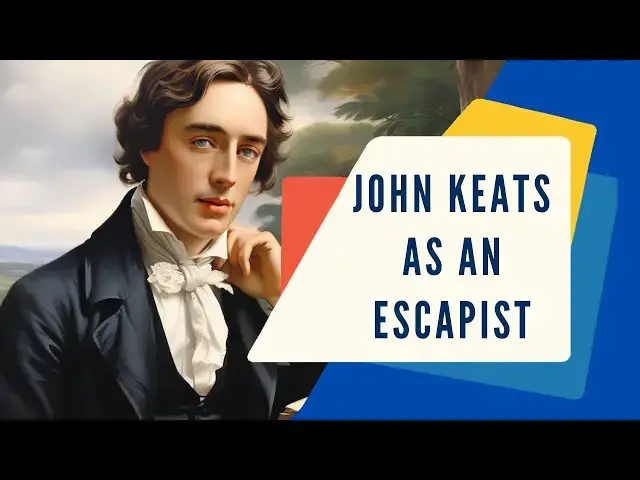

John Keats as an Escapist
Feb 24, 2024

Discover the escapism in John Keats' poetry as he explores the concept of negative capability. This presentation examines how Keats uses his Romantic ideals to transport readers to another world. Learn more about the influential poet in this presentation on John Keats as an Escapist.
Escapism in poetry is a desire to break away from the harsh realities of life and seek refuge in an alternate imaginary realm. Poets use language to create vivid and imaginative landscapes that offer an escape from the complexities and challenges of the everyday world. John Keats is known as an escapist as he is unable to face the harsh realities of life.
John Keats as an Escapist.
John Keats, being one of the prominent poets of the Romantic era, is often regarded as an escapist in his approach to poetry. He often sought refuge in the contemplation of beauty. He uses art and nature as a means of escape from the harsh realities of his own life and the world around him.
The theme of idealized love is prevalent in Keats's poetry, such as in "Bright Star" and "Ode to Psyche." By exploring the theme of love in a heightened and idealized manner, Keats engages in escapism. He creates a realm where love is eternal and untainted by the challenges of reality.
Keats frequently incorporates classical and mythological elements in his poems, like in "Endymion" and "Hyperion." By drawing on ancient myths and classical references, Keats transports his readers to a world removed from the contemporary issues of his time.
John Keats emphasizes the power of the imagination in his poetry. It is evident in lines like "A thing of beauty is a joy forever" from "Endymion."
The exaltation of the imagination as a source of joy and inspiration suggests Keats's inclination toward escaping the limitations of reality through the creative and transformative capacities of the mind.
In his famous poems "To Autumn" and "Ode to a Nightingale," John Keats illustrates themes of mortality and the fleeting nature of existence. These themes are a form of escapism.
In "Ode to a Nightingale" and "Ode on a Grecian Urn," Keats expresses a desire for immortality through the creation of enduring works of art. Keats engages in escapism and transcends the limitations of his mortality.
In summary, John Keats is an escapist as he is often found living in an imaginary world. His poetry emphasises beauty, idealizes love, illustrates classical imagery, celebrates the imagination, contemplates death, and desires immortality. These elements collectively suggest his inclination to escape the harsh realities of his time and find solace in the realms of beauty, imagination, and timeless themes.
Show More Show Less