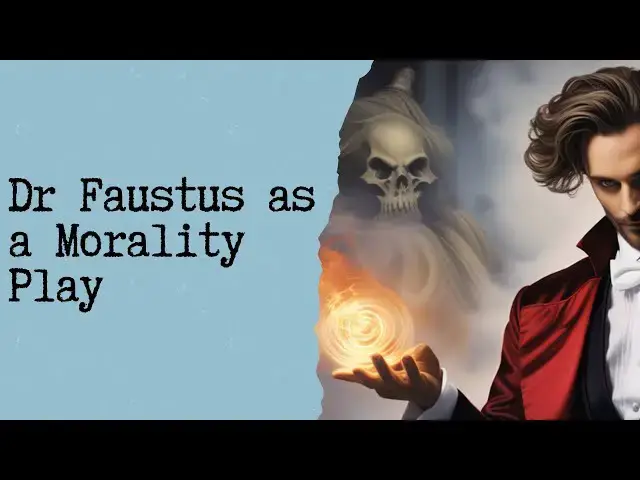

Dr Faustus as a Morality Play | Unlocking Morality
Feb 24, 2024

Delve into the complex themes of morality present in Christopher Marlowe's play, Dr Faustus. In this video, we'll explore the play's structure and characters, and uncover the underlying messages about sin, redemption, and the consequences of one's actions. Join us for a deep dive into this classic morality play.
A morality play is a genre of literary work that emerged in the medieval and Renaissance periods, and the play "Doctor Faustus" by Christopher Marlowe is one of the major examples of it. These plays were designed to teach moral lessons, therefore, they exhibit moral and spiritual themes. Morality plays were often performed in the form of allegorical dramas where characters personified virtues, vices, and other moral qualities.
Key features of morality plays include.
Allegorical Characters.
Moral Lessons.
Religious Themes.
The influence of morality plays can still be seen in literary works and dramatic traditions. The allegorical and didactic elements of morality plays have left a lasting impact on the way moral and ethical themes are explored in literature and theatre.
Doctor Faustus as a Morality Play.
The play "Doctor Faustus" is often discussed in the context of morality plays. The play tells the story of a scholar, who makes a pact with the devil in exchange for magical powers and worldly pleasures.
Allegorical Characters in "Doctor Faustus".
An allegory is a literary device in which a picture is used to convey a deeper or symbolic meaning. Allegorical characters play a significant role in conveying moral and thematic elements in "Doctor Faustus".
Many characters in the play can be interpreted symbolically. Doctor Faustus, for example, represents a general human condition. He shows the conflict between intellectual aspirations and spiritual considerations. His quenchless desire for knowledge and power embodies the dangers of unchecked ambition and the pursuit of forbidden knowledge. He exhibits the consequences of succumbing to worldly desires.
Similarly, Mephistopheles is a demon and servant of Lucifer. He represents temptation and the corrupting influence of evil. He serves as an agent through which Faustus makes his pact with the devil.
The play also demonstrates the character of Lucifer. He is a fallen angel and ruler of hell. He symbolizes the ultimate representation of evil and the consequences of Faustus's choices. His presence emphasises the gravity of Faustus's decision to exchange his soul for worldly pleasures.
The Good Angel and the Evil Angel function as moral guides or conscience figures for Faustus. They represent the internal struggle within Faustus's soul. The Good Angel urges him to repent and seek salvation. The Evil Angel, on the other hand, tempts him further toward damnation.
The Old Man appears in the final moments of Faustus's life and offers him a chance at redemption. He can be interpreted as a symbol of divine mercy and grace. He represents the possibility of repentance and salvation even at the eleventh hour.
The characters in the play "Doctor Faustus" contribute to the exploration of moral, theological and existential themes which is one of the key ingredients of morality plays.
Conclusion.
In summary, "Doctor Faustus" shares some characteristics with morality plays but it also exhibits features of Renaissance tragedy. Marlowe's work reflects a transitional period in dramatic literature. This work incorporates elements from both traditions and contributes to the evolution of English drama.
00:00 - Introduction to Morality Plays
00:27 - Key Features of Morality Plays
00:53 - Doctor Faustus as a Morality Play
01:09 - Allegorical Characters in "Doctor Faustus"
03:16 - Moral Lessons in "Doctor Faustus"
04:16 - Religious Themes in "Doctor Faustus"
05:51 - Difference Between "Doctor Faustus" and Other Morality Plays
06:45 - Conclusion
Show More Show Less