Up next in 10


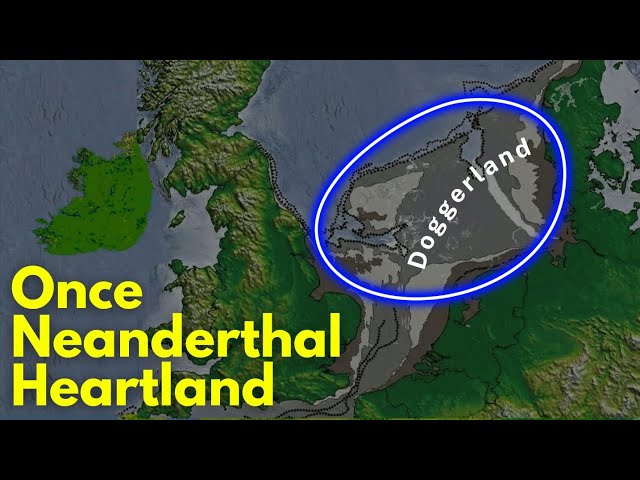
Beneath the cold waves of the North Sea lies one of the world's greatest secrets: Doggerland. It wasn't just a land bridge; it was the heart of Europe—a lush "Garden of Eden" teeming with mammoths, vast forests, and early human civilizations. But how did this massive continent vanish, and who were the people that called it home?
In this video, we dive deep into the geology and anthropology of the lost world of Doggerland. From the discovery of "Krijn"—the first Neanderthal found in the Netherlands—to the catastrophic Storegga Slide tsunami that delivered the final blow to this submerged heartland, we uncover the history buried in the seabed.
We also explore the shocking technology of the "Wood Age," revealing how Neanderthals used complex chemistry to create tools long before modern history began. Join us as we explore the real Atlantis.
In this video: 0:00 - The Lost Continent Under the North Sea 02:15 - The Geological "Seesaw": How Ice Created Doggerland 05:30 - Meet "Krijn": The Neanderthal of the Deep 08:45 - The "Wood Age" & Ancient High-Tech Glue 12:10 - The "Garden of Eden" Before the Flood 15:20 - The Storegga Slide: A Tsunami That Drowned a World 18:00 - Why Doggerland Matters Today (Climate Change & Wind Farms)
Key Topics Covered:
Geological Origins: Understanding the Last Glacial Maximum and isostatic adjustment.
Neanderthal Life: The discovery of "Krijn" and the "Middeldiep" skull fragment.
Ancient Technology: Evidence of birch bark tar distillation and the "Organic Age."
The Great Flood: How rising sea levels and the massive Storegga Slide tsunami (8,150 years ago) submerged the land.
Modern Discovery: How seismic mapping and sedaDNA (sedimentary ancient DNA) are revealing secrets without diving.
#Doggerland #Neanderthals #AncientHistory #Geology #NorthSea #LostCivilization #Archaeology
Show More Show Less View Video Transcript
0:02
The floor of the North Sea holds one of
0:04
the world's most incredible secrets. A
0:06
lost continent known as Doggerand. Far
0:09
from being just a temporary landbridge,
0:11
this vast expanse once connected Great
0:14
Britain to mainland Europe and served as
0:16
a lush inhabited heartland. For nearly a
0:20
million years, it supported diverse
0:21
human populations through the dramatic
0:23
climate shifts of the prehistoric world,
0:26
acting as a vital center of gravity for
0:28
European life rather than a mere transit
0:30
route.
0:33
The story of Dogaland is a perfect
0:34
example of how our planet changes over
0:36
vast cycles of time. Approximately
0:39
20,000 years ago during the last glacial
0:41
maximum, so much of the Earth's water
0:43
was frozen in glacias that global sea
0:45
levels were roughly 120 m lower than
0:48
they are today.
0:50
During this period, the North Sea didn't
0:52
exist. Instead, the region was a vast
0:54
frozen tundra. The weight of glaces
0:57
several kilome thick was so immense that
0:59
it actually pushed the Earth's crust
1:01
down in northern regions, creating a
1:03
geological seessaw effect. As the
1:06
climate warmed and the ice melted, the
1:08
sea rose from the influx of melt water
1:10
while the land slowly sprung back once
1:12
the weight was gone. A process known as
1:15
isoatic adjustment. The Dutch
1:18
continental shelf serves as a treasure
1:19
trove for this history, particularly
1:21
regarding our extinct cousins, the
1:23
Neanderls.
1:25
Many of our best discoveries are made
1:26
accidentally by modern industries like
1:28
fishing and sand dredging, which
1:30
frequently pull thousands of artifacts
1:32
from the seabed. One landmark find is
1:35
the middle deep neanderal skull fragment
1:37
which confirms that dogand was a
1:39
long-term viable habitat. Science helps
1:43
us tell the story of these inhabitants
1:45
even when artifacts are found out of
1:46
their original context. Stable isotope
1:49
analysis on human bones has identified a
1:52
dogland menu, showing that as the land
1:55
turned into marshes, the inhabitants
1:57
adapted with incredible flexibility,
1:59
shifting their diet toward freshwater
2:01
fish and wetland resources.
2:04
Dogland's transformation into a
2:06
submerged seabed happened in distinct
2:07
stages as the environment reacted to
2:10
warming temperatures. Around 10,000
2:13
B.CE, CE the mammoth step, a cold
2:16
grassland home to woolly mammoths and
2:18
reindeer, began to evolve into a lush
2:20
landscape of wooded valleys and massive
2:22
river systems. Interestingly, the rivers
2:25
we know today as the tempame's rine and
2:27
muse once flowed together into a single
2:29
massive drainage basin that emptied into
2:32
the Atlantic long before the English
2:34
Channel was formed. This wooded
2:36
environment featuring oak and hazel
2:38
forests drew in new wildlife and human
2:41
hunter gatherers into the heart of the
2:43
basin. By the early misaleithic, rising
2:46
sea levels began to fragment this
2:47
continuous landbridge into an
2:49
archipelago of islands. This shifting
2:52
landscape turned into expansive wetlands
2:54
and deciduous forests, providing a
2:56
garden of Eden for the people living
2:58
there. However, by 7,500 years ago, the
3:02
land was reduced to isolated spots like
3:05
Dogger Island, surrounded by mud flats
3:08
and salt marshes. Eventually, the last
3:10
shells submerged completely during the
3:12
Neolithic transition, leaving only the
3:14
shallow Dogger Bank beneath the waves as
3:17
a silent reminder of this once vibrant
3:19
world. Modern discovery of these sites
3:21
requires innovative engineering and
3:23
high-tech tools. Because many areas are
3:25
buried 20 m underwater, traditional
3:28
diving is often impossible. A
3:30
breakthrough occurred during the
3:31
Rotterdam Yangster Harbor project where
3:33
researchers used robotic grab samplers
3:36
and seismic mapping to find mealithic
3:38
river dunes hidden deep under the sand.
3:41
This effort recovered thousands of flint
3:43
tools and bone fragments, proving that
3:45
the deep ocean can still be precisely
3:47
excavated to reveal the versatile and
3:49
innovative history of our ancestors.
3:52
Dogland was far more than a temporary
3:54
landbridge. For hundreds of thousands of
3:56
years, it was a vital habitat for early
3:59
humans, particularly our extinct
4:01
cousins, the Neandertols.
4:03
The most compelling proof of this comes
4:05
from the discovery of Cre, the first
4:07
Neanderl fossil ever found in the
4:09
Netherlands. Dredged from the North Sea
4:12
floor in 2001, this fossilized browidge
4:15
dates back between 40,000 and 100,000
4:18
years.
4:19
Green's discovery is a cornerstone of
4:21
archaeological research, confirming that
4:23
Dogaland was a long-term home that
4:25
allowed Neanderal populations to move
4:27
freely across Europe and recolonize
4:30
Britain after glacial retreats. Coastal
4:32
regions like Dogaland served as critical
4:34
refugeia, stable zones where Neanderals
4:37
could survive even when inland
4:39
populations vanished due to extreme
4:41
cold. These areas acted as thermal
4:43
buffers, providing a milder climate and
4:46
rich ecotones where land met sea. Here,
4:49
Neanderls enjoyed a diverse diet,
4:52
hunting terrestrial game like deer and
4:54
mammoths, while also exploiting marine
4:56
resources like fish and shellfish.
4:58
Detailed analysis of Crane's remains
5:00
reveals he was a young male who
5:02
subsisted on a meat-heavy diet, typical
5:04
of the mammoth step. He also suffered
5:07
from a benign tumor behind his brow
5:09
ridge, likely causing him significant
5:11
pain, offering a poignant glimpse into
5:13
the biological reality of prehistoric
5:15
life. As the earth warmed and entered
5:18
the holysine period, Dogalan transformed
5:20
from a frozen tundra into a lush wetland
5:24
often described as a garden of Eden. The
5:26
landscape became a dense mosaic of pine,
5:29
oak, and hazel forest supporting herds
5:31
of orox and wild boar. This environment
5:34
was incredibly wealthy in resources,
5:37
allowing hunter gatherers to settle
5:39
permanently rather than just passing
5:41
through. The vast coastlines and lagoons
5:44
provided a constant supply of fish,
5:46
water foul, and edible plants, making it
5:49
one of the richest habitats in Northern
5:50
Europe. For a long time, this lost world
5:53
was a mystery. But a famous discovery in
5:56
1931 changed everything. A fishing
5:59
troller named the Kinda pulled up a
6:01
barbed harpoon made of bone from the
6:03
seabed 20 m off the modern coast. This
6:07
9,500y old artifact was the smoking gun,
6:11
proving that the floor of the North Sea
6:12
was once an inhabited land. Since then,
6:16
thousands of items like engraved bones
6:18
and sophisticated tools have been
6:19
recovered, showing that the people of
6:21
Dogland were technologically advanced
6:23
artisans who thrived in this now
6:26
vanished landscape. We often refer to
6:28
this period as the stone age, but many
6:31
researchers argue it should really be
6:32
called the [music] wood age or organic
6:34
age. Most of the tools used by the
6:37
inhabitants of Doggerand were likely
6:38
made from perishable materials like
6:40
wood, bone, antler, and plant fibers.
6:43
While these items usually rot away on
6:45
dry land, the oxygen-free anorobic mud
6:47
of the North Sea floor has preserved
6:49
them perfectly. This unique environment
6:52
has revealed amazing evidence of early
6:54
glue technology such as birch bark tar
6:57
which was used to secure stone blades to
6:59
handles. A discovery on the Xan motor
7:02
beach in the Netherlands has
7:03
fundamentally changed our view of
7:04
Neanderl intelligence. Archaeologists
7:07
found a 50,000y old flint flake
7:10
featuring a handle made of birch bark
7:12
tar. Creating this tar required a
7:14
complex chemical process called
7:16
destructive distillation where birch
7:19
bark is heated in an airtight container
7:21
to exactly 350°
7:24
C to 400°.
7:27
This proves that Neanderals possess
7:29
sophisticated technical knowledge and
7:30
planning skills maintaining these
7:32
complex traditions for over 150,000
7:35
years despite living in small mobile
7:38
groups. This finding challenges the idea
7:41
that complex technology requires large,
7:43
dense populations.
7:45
Instead, it suggests that Neanderal
7:47
complexity was driven by the need to
7:49
survive in harsh, unpredictable
7:51
environments. By investing significant
7:54
time and resources into even simple
7:56
domestic tools, they demonstrated a high
7:59
degree of cognitive versatility.
8:01
This reframes the Neanderals not as
8:03
primitive survivors, but as capable
8:05
innovators who mastered industrial
8:07
routines long before modern cities
8:09
existed. Until recently, our knowledge
8:12
of Dogland relied on luck, chance finds
8:14
tangled in fishing nets. This changed
8:17
with the Europe's lost frontiers
8:18
project. By repurposing 3D and 2D
8:21
seismic data originally collected by the
8:23
petroleum industry, researchers have
8:26
successfully mapped buried river
8:27
systems, ancient hills, and extinct
8:30
lakes with extraordinary detail. This
8:33
high-tech approach allowed
8:34
archaeologists to move from guessing to
8:36
precise scouting, leading to the direct
8:39
recovery of artifacts like a flint
8:40
hammerstone from an ancient estie,
8:42
proving that we can systematically
8:44
explore this lost world without ever
8:46
seeing the bottom. A revolutionary tool
8:49
in this research is sedimentary ancient
8:51
DNA. By taking core samples from the
8:54
seabed, scientists can detect
8:56
microscopic genetic signatures of entire
8:59
plant and animal communities that lived
9:01
thousands of years ago. This technology
9:04
revealed a shocking neolithication
9:06
signal, the presence of domesticated
9:08
enorn wheat in dogand sediments long
9:11
before farming was thought to have
9:12
reached Britain. This suggests that
9:14
Mesolithic hunter gatherers were already
9:16
trading with farmers on the continent or
9:18
importing crops through early exchange
9:20
networks. The submergence of Dogland was
9:24
a long, painful process of rising tides.
9:26
Between 10,000 and 7,000 years ago, sea
9:29
levels rose by more than 1 m per
9:31
century, fragmenting the land into the
9:34
Dogger Archipelago. For the inhabitants,
9:36
this was a constant minuette with the
9:39
sea. As ancestral hunting grounds
9:41
vanished within a single generation,
9:43
tribes were forced to move, likely
9:45
leading to social friction as they
9:47
entered the territories of others. The
9:49
final blow came roughly 8,150
9:52
years ago with the Sturga slide, a
9:55
colossal underwater landslide off the
9:57
coast of Norway, triggered by a powerful
9:59
earthquake. The collapse of the
10:01
continental shelf was likely accelerated
10:03
by the expansion of trapped methane gas
10:06
which liquefied the seabed and generated
10:08
a massive tsunami. Waves reached 20 to
10:11
25 m in the shetlands and swept across
10:14
the remaining lowlands of Dogland with a
10:16
3 m surge. While the wave was
10:18
catastrophic, killing up to a quarter of
10:21
the population in Britain, it was the
10:23
final exclamation point on a landscape
10:25
already being claimed by the steady,
10:27
relentless rise of the ocean. The Sturga
10:30
tsunami was a terrifying event that
10:32
potentially killed 25% of the population
10:35
in Britain. Roughly 2,500 people out of
10:38
an estimated 10,000 residents. While
10:41
catastrophic, the tsunami wasn't the
10:43
sole cause of Dogland's end. Rising
10:45
tides had already turned much of the
10:47
area into shallow banks. Fascinatingly,
10:50
genetic evidence suggests that after the
10:51
wave hit, the water briefly retreated,
10:54
allowing a short recovery for the land
10:56
before the rising sea finally reclaimed
10:57
it for good. Unlike the mythical
11:00
Atlantis, Dogland is a scientifically
11:02
proven reality. Its loss was a massive
11:05
cultural tragedy for Europe. Before the
11:08
flooding, a single shared culture
11:10
stretched from Poland to the hills of
11:12
England. When the land sank, this
11:14
cultural heartland was fractured into
11:16
isolated pockets. For instance, the
11:19
Urbil groups in Scandinavia became cut
11:21
off as the newly formed North Sea became
11:23
a barrier too wide for their small
11:25
messylithic boats to cross. The history
11:28
of Dogland serves as a stark warning for
11:30
our future. During the early hollesene,
11:33
sea levels rose by more than 1 meter per
11:35
century. Numbers strikingly similar to
11:37
the high-end projections provided for
11:39
the coming centuries. The critical
11:42
difference today is the sheer scale of
11:44
human life at risk. While the 10,000
11:46
inhabitants of Dogland could migrate to
11:48
higher ground, we now have 600 million
11:52
people living on low-lying coastal
11:54
plains with far less flexibility to
11:56
move. Dogland teaches us that humans
11:59
often cling to high-risk zones because
12:02
they are rich in resources, staying far
12:04
longer than is safely advisable. Today,
12:07
this lost world faces a new challenge,
12:09
industrial development.
12:12
The North Sea is becoming a hub for
12:13
offshore wind farms. Paradoxically, the
12:16
construction of green energy to stop
12:18
future sea level rise is occurring
12:20
directly on top of the best physical
12:22
record of past sea level rise.
12:24
Archaeologists are now in a race against
12:26
time to study these settlements before
12:28
they are covered by turbine foundations.
12:30
Dogalan was never just a landbridge. It
12:33
was a vital heartland that connected
12:35
Europe for millennia. Its history, a
12:38
saga of melting glacias and catastrophic
12:40
tsunamis, reveals how both the Earth and
12:43
human societies respond to radical
12:45
environmental shifts. Thanks to new DNA
12:48
and mapping technology, we now see it as
12:51
a sophisticated mapped landscape with
12:53
unique genetic signature. It remains a
12:56
testament to human resilience and a
12:58
sobering reminder that even the most
13:00
fertile landscapes can be reclaimed by
13:02
the sea.
13:26
>> [music]
Jobs & Education
Geology
Ecology & Environment
Paleontology