Up next in 10


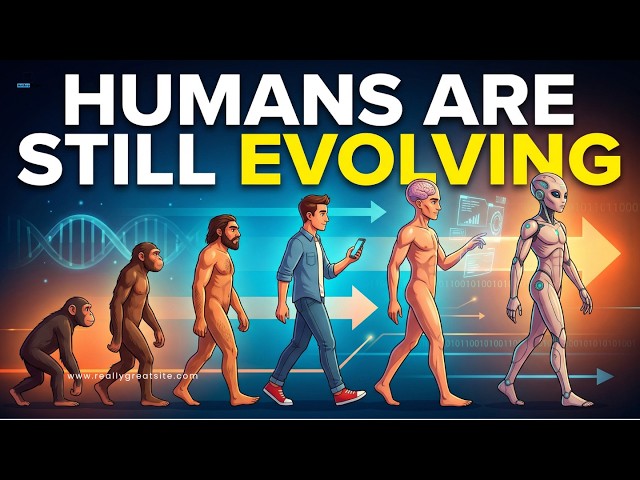
Here is a summary of the article's key points on how human evolution is still actively occurring:
The Myth of Paused Evolution
Contrary to the belief that modern technology and medicine have stopped human evolution, genetic adaptation has actually accelerated over the last 10,000 years. Instead of nature alone, our environments are now shaped by gene-culture coevolution—where our own technologies, cities, and diets create new physical stressors that force our bodies to adapt.
Observable Microevolution
Smaller anatomical and genetic shifts are happening rapidly over just a few generations:
The Median Artery: A temporary fetal artery in the forearm is increasingly sticking around into adulthood. In the 1880s, only 10% of adults retained it. By the late 1900s, it reached 30%, and today roughly 35% of the global population has it.
Surgical Impacts on Anatomy: The widespread use of Caesarean sections has bypassed the evolutionary "obstetric dilemma" (the tight fit between large infant heads and narrow human pelvises). Consequently, the biological rate of babies being too large for the birth canal has increased by up to 20% in just a few generations.
Mismatch Diseases: Modern health crises like obesity and Type 2 diabetes occur because our ancient metabolisms, which evolved for starvation and intense labor, are now subjected to highly sedentary lifestyles and processed foods.
Disease as an Evolutionary Driver
Pathogens interact with over 4,000 of our 25,000 genes, making infectious disease a ruthless driver of rapid evolution:
The Black Death: The 14th-century bubonic plague wiped out up to 60% of populations in Europe, Asia, and North Africa. Survivors often carried two copies of the ERAP2 gene variant, making them 40% more likely to survive. Today, this hyper-vigilant immune gene is a leading risk factor for autoimmune disorders like Crohn’s disease.
HIV Resistance: A genetic mutation found mostly in European populations provides natural resistance to HIV. Scientists believe it originally evolved about 2,000 years ago to fight older plagues like smallpox.
COVID-19: Susceptibility to severe respiratory infections like COVID-19 is directly influenced by immune-boosting DNA that modern humans inherited from interbreeding with Neanderthals and Denisovans roughly 50,000 years ago.
Convergent Evolution in Extreme Environments
Different populations have evolved entirely distinct biological solutions to survive the exact same threat of high-altitude hypoxia:
Show More Show Less View Video Transcript
0:01
For a large part of the 20th century,
0:03
many scientists believed that human
0:05
evolution had basically hit the pause
0:06
button. The assumption was that because
0:09
we invented modern medicine, built warm
0:12
houses, and learned to purify our water,
0:14
we had insulated ourselves from the
0:16
harsh forces of nature. Since we could
0:18
just use technology to survive, the
0:20
thinking went, our bodies no longer
0:22
needed to adapt. However, modern
0:25
genetics has completely busted this
0:27
myth. Not only are humans still
0:29
evolving, but in many ways, our rate of
0:31
genetic adaptation has actually sped up
0:33
over the last 10,000 years. Instead of
0:36
stopping evolution, our modern world has
0:38
just shifted the pressures that drive
0:39
it. We currently live in the
0:41
anthroposine, an era defined by the
0:43
massive impact humans have had on the
0:45
earth. By farming, building cities, and
0:48
changing everything from the atmosphere
0:50
to global ecosystems, we have
0:52
drastically altered the world around us.
0:54
This leads to something scientists call
0:56
gene culture co-evolution.
0:59
Basically, our cultural habits and
1:01
technologies create brand new
1:02
environments. Living in packed cities,
1:05
eating processed foods, and moving into
1:08
extreme climates introduce new physical
1:10
stresses. In response, our bodies are
1:13
forced to adapt genetically to survive
1:15
in the very world we built. When we
1:17
think of evolution, we usually picture
1:20
massive changes taking millions of
1:21
years. But micro evolution, smaller
1:24
anatomical shifts, is happening right
1:26
now, observable over just a few
1:29
generations.
1:31
The case of the extra artery, one of the
1:33
most mind-blowing examples of modern
1:35
human evolution, is happening right in
1:37
our forearms. When a human fetus is
1:40
developing in the womb, it grows a
1:41
median artery to supply blood to the
1:43
hands and arms. Historically, this
1:46
artery was temporary. It usually
1:48
disappeared entirely by the 8th week of
1:49
pregnancy, making way for other
1:51
permanent blood vessels. For most of
1:53
human history, adults simply didn't have
1:55
this artery, but that is changing
1:57
rapidly.
1:59
Back in the 1880s, only about 10% of
2:02
adults kept this extra artery. By the
2:04
late 1900s, that number had surged to
2:07
over 30%. And today, scientists estimate
2:10
that roughly 35% of the global
2:13
population retains it into adulthood.
2:15
This is a massive anatomical shift
2:17
happening in the blink of an
2:18
evolutionary eye. If this trend
2:20
continues, projections suggest that
2:23
anyone born 80 years from now will have
2:25
this extra artery. Infectious diseases
2:27
act as one of the most ruthless and
2:29
rapid drivers of human evolution.
2:31
Pathogens like viruses and bacteria
2:34
interact directly with our DNA, forcing
2:37
our bodies to adapt or die. Because
2:39
diseases can so easily bypass the
2:42
medicines and shelters we build, our
2:44
immune systems are essentially heavily
2:45
scarred battlegrounds, constantly molded
2:48
by past epidemics. To see how fast a
2:51
disease can change human genetics,
2:53
evolutionary biologists look at the
2:55
black death. In the mid-4th century, the
2:58
bubonic plague swept across Europe,
3:00
Asia, and North Africa, wiping out up to
3:03
60% of the European population in just 5
3:05
years.
3:06
This catastrophic loss of life forced a
3:09
massive rapid burst of evolution in the
3:11
human immune system. Recently,
3:13
scientists extracted ancient DNA from
3:15
the remains of people who lived before,
3:17
during, and after the plague. They
3:20
discovered something incredible, a
3:22
specific genetic variant related to the
3:24
ERA2 gene. This gene essentially acts
3:28
like an alarm system, helping the body
3:30
chop up invading pathogens and present
3:32
them to the immune system for a massive
3:34
counterattack.
3:36
People who carried two copies of this
3:37
protective gene variant were 40% more
3:39
likely to survive the black death.
3:42
Naturally, these survivors lived to pass
3:44
this highly advantageous trait onto
3:46
their children, permanently altering the
3:48
DNA of their descendants. In evolution,
3:50
there is rarely a free lunch. Scientists
3:53
call this antagonistic pleotropy, a
3:56
complex term that simply means a gene
3:58
that saves your life in one environment
4:00
might harm you in another. That
4:01
hypervigilant er2 gene variant was a
4:04
superpower against the medieval plague.
4:07
But today, without the black death to
4:09
fight, that same hyperactive immune
4:11
response is a major risk factor for
4:13
autoimmune disorders like Crohn's
4:15
disease. In these conditions, the immune
4:17
system gets confused and aggressively
4:19
attacks healthy tissue. In a very real
4:21
way, the modern rise in autoimmune
4:23
diseases is a biological echo of our
4:26
ancestors surviving medieval pandemics.
4:28
Viruses and parasites have left a
4:30
massive permanent footprint on human
4:32
genetics. In fact, out of the 25,000
4:35
total genes in the human body, over
4:38
4,000 interact directly with pathogens
4:40
since our ancestors split from other
4:42
great apes. About a third of all our
4:44
evolutionary protein changes have been
4:46
driven specifically by the need to fight
4:49
off viral infections. You can see this
4:51
ancient evolutionary arms race in how we
4:53
resist modern diseases today. For
4:56
example, certain genetic mutations that
4:58
successfully protect people from malaria
5:00
also carry a high biological cost, such
5:03
as causing cickle cell anemia.
5:06
Another fascinating example is a
5:08
specific genetic mutation found
5:09
predominantly in European populations
5:12
that provides strong natural resistance
5:14
to HIV.
5:16
Because HIV is a relatively new human
5:18
disease, scientists believe this
5:20
mutation actually evolved about 2,000
5:22
years ago to fight off much older
5:24
plagues like smallpox or historical
5:26
hemorrhagic fevers. Today, that ancient
5:29
genetic armor just happens to block HIV
5:31
from entering our cells perfectly. The
5:34
recent CO 19 pandemic gave scientists a
5:37
real-time look at how our ancient
5:38
genetics interact with brand new
5:40
viruses. The specific cellular receptors
5:43
that the CO 19 virus uses to invade our
5:46
bodies have been heavily protected by
5:47
evolution for thousands of years.
5:49
Meaning they were absolutely crucial for
5:51
our underlying survival long before this
5:54
specific pandemic emerged. But why did
5:56
some people get so much sicker from CO
5:58
19 than others? Aside from age and
6:01
pre-existing conditions, part of the
6:03
answer lies with our extinct ancestors.
6:06
When modern humans migrated out of
6:08
Africa roughly 50,000 years ago, they
6:11
interbred with Neanderthalss and
6:12
Denisven who had already been living in
6:14
Eurasia for hundreds of thousands of
6:16
years. These archaic humans had already
6:19
spent millennia adapting to local
6:21
European and Asian viruses. When we
6:23
interbred with them, we inherited
6:25
fragments of their immune boosting DNA.
6:28
Today, specific genetic variants
6:30
inherited from those ancient encounters
6:32
from 50,000 years ago directly influence
6:35
how susceptible a modern person is to
6:38
severe respiratory infections like COVID
6:40
19.
6:42
By inventing farming and altering our
6:44
diets, we actually forced our own DNA to
6:46
adapt. The domestication of animals and
6:49
the planting of starchy crops caused
6:51
massive genetic mutations to sweep
6:53
through human populations. As a direct
6:56
result, modern humans evolved the
6:58
lifelong ability to digest milk, lactase
7:00
persistence, and naturally produce up to
7:02
eight times more starch digesting
7:04
enzymes in our saliva than our closest
7:07
primate relatives. Our anatomy has
7:10
completely re-engineered itself to
7:11
support our intense need to communicate
7:13
and share ideas. Our voice boxes dropped
7:16
to create a vocal resonating chamber,
7:19
even though it wildly increased our risk
7:21
of choking. Our mouths shortened for
7:23
acrobatic tongue movement. And our
7:25
skulls literally change shape to fit the
7:27
massive nerve bundles required for
7:29
talking. Our minds and morals are also
7:32
the result of intense evolutionary
7:33
engineering. Because ancient survival
7:36
required strict teamwork, evolution
7:38
hardwired our brains to be pro-social.
7:41
Complex social emotions like guilt,
7:43
shame, and pride aren't just abstract
7:46
concepts. They're biological alarm bells
7:49
physically built into specific areas of
7:51
our brain tissue, designed to enforce
7:53
rules, encourage fairness, and keep our
7:56
communities functioning smoothly. As
7:58
ancient humans migrated out of Africa
8:00
and spread across the globe, they
8:02
encountered extreme environments that
8:04
pushed their bodies to the absolute
8:05
limit. One of the greatest survival
8:08
challenges was high altitude hypoxia,
8:11
the dangerous lack of oxygen at extreme
8:13
elevations. If an unadjusted person
8:15
climbs above 11,000 ft, they face
8:18
life-threatening conditions like acute
8:20
mountain sickness and dangerously
8:22
thickened blood as their body panics and
8:24
overproduces red blood cells. Yet
8:27
indigenous populations living in the
8:29
Tibetan plateau, the Andian Aliplano,
8:32
and the Ethiopian highlands thrive in
8:34
these zones. This is a textbook example
8:37
of convergent evolution, a phenomenon
8:39
where completely disconnected groups of
8:41
people face the exact same environmental
8:44
threat, but evolve completely different
8:46
genetic ways to survive it. The Tibetan
8:49
Highlanders adapted to thin mountain air
8:51
by evolving the ability to keep their
8:53
red blood cell counts incredibly low,
8:55
protecting their hearts from thickened
8:57
blood while naturally breathing much
8:59
faster to take in more oxygen.
9:02
Amazingly, scientists discovered that
9:04
the specific gene allowing Tibetans to
9:06
do this was inherited from an ancient
9:08
extinct human cousin called the
9:10
Dennisovvens.
9:12
On the other side of the world, Andian
9:14
Highlanders evolved the exact opposite
9:16
physical strategy. Their bodies adapted
9:19
to elevated altitudes by naturally
9:20
pumping up their hemoglobin levels to
9:23
carry more oxygen per drop of blood, and
9:25
they actually breathe slower than
9:26
average. Meanwhile, high altitude
9:29
populations in Ethiopia present a third
9:31
highly unique biological solution.
9:34
Despite living miles above sea level,
9:36
Ethiopian highlanders maintain the exact
9:38
same blood oxygen levels as someone
9:41
living on the beach in California.
9:43
Natural selection targeted the same
9:45
oxygen sensing network in all three
9:47
populations, but mutated completely
9:49
different genes to get the job done.
9:52
When we look at how modern medicine
9:53
impacts evolution, one of the most
9:56
dramatic changes happening right now
9:57
involves human childbirth. Human child
10:00
birth is notoriously difficult and
10:02
dangerous compared to that of other
10:03
animals. This is due to an evolutionary
10:05
catch 22 known as the obstetric dilemma.
10:09
Millions of years ago, our ancestors
10:11
started walking upright on two legs
10:13
which required our pelvis to become
10:15
narrow and rigid. But much later, our
10:18
brains rapidly expanded, meaning babies
10:20
were born with massive skulls. For
10:23
millennia, this tight fit was ruthlessly
10:25
controlled by natural selection. Mothers
10:28
with overly narrow hips or babies with
10:30
excessively large heads simply did not
10:33
survive childirth. This grim reality
10:36
acted as a biological ceiling,
10:38
physically stopping human heads from
10:40
getting any bigger. However, the
10:42
widespread use of the scissor section
10:44
over the last 60 years has completely
10:46
bypassed this evolutionary limit. By
10:48
using surgery, modern medicine allows
10:51
genes for larger heads and narrower hips
10:53
to be safely passed on to the next
10:55
generation. Because of this,
10:57
mathematical models estimate that the
10:59
biological rate of babies simply being
11:01
too big to fit through the birth canal
11:03
has jumped by up to 20% in just a few
11:06
generations. This is a massive,
11:08
incredibly rapid shift in human anatomy
11:11
driven entirely by surgical technology.
11:14
Our ability to cure diseases has
11:16
completely changed the human gene pool.
11:18
Historically, genetic conditions were
11:20
eliminated from the gene pool because
11:22
people who had them did not survive to
11:24
have children. Today, life-saving
11:26
treatments like insulin for type 1
11:28
diabetes allow people to survive,
11:31
thrive, and pass those genes on. While
11:33
this is an absolute moral and medical
11:35
victory, from a purely evolutionary
11:37
standpoint, it means the human species
11:39
is becoming increasingly reliant on
11:41
external medicine to survive. Finally,
11:44
evolutionary biologists point out that
11:45
many of our modern health crises like
11:48
the epidemics of obesity and type 2
11:50
diabetes [music] are actually mismatched
11:52
diseases. For hundreds of thousands of
11:54
years, the human metabolism evolved to
11:57
survive starvation and intense physical
11:59
labor. Today we live highly stressed,
12:01
sedentary lives surrounded by incredibly
12:03
calorie dense processed foods. Our
12:06
ancient bodies are simply struggling to
12:08
process the modern world we built for
12:09
ourselves. It is a very popular science
12:12
fiction trope that as global travel
12:14
increases and cultures mix, humanity
12:16
will eventually blend into one uniform
12:19
identical looking global population. But
12:22
genetics paints a much more complex and
12:24
fascinating picture. While it is true
12:26
that urban hubs in places like the
12:28
Americas and Western Europe are seeing
12:30
massive genetic mixing, global migration
12:32
is not an even worldwide blender.
12:36
Massive population centers like India
12:38
and China actually experience very low
12:40
rates of inward migration compared to
12:42
their enormous total sizes. Because
12:45
these incredibly deep genetic pools
12:47
remain highly stable, they act as a
12:49
massive mathematical barrier against
12:51
total global blending. Instead of
12:54
erasing our differences, modern
12:56
globalization is actually creating a
12:58
profound era of diversification.
13:00
As formerly isolated populations meet in
13:03
globalized hubs, they reproduce and
13:05
create entirely new, never-beforeseen
13:08
combinations of genes. Rather than
13:11
turning humanity into a single genetic
13:13
monolith, our highly connected world is
13:15
expanding our genetic diversity, giving
13:18
our species more biological tools to
13:20
survive whatever the future throws at
13:22
us.
13:23
For millions of years, human evolution
13:25
was essentially a cosmic lottery driven
13:27
by random mutations and the unforgiving
13:29
rules of survival of the fittest. But as
13:32
we dive deeper into the 21st century,
13:34
that is all changing because humanity is
13:36
about to take the steering wheel. Thanks
13:39
to a groundbreaking technology called
13:40
Crisper, which acts like a microscopic
13:43
cut and paste tool for our genes,
13:45
scientists can now edit DNA inside
13:47
living cells. Right now, this technology
13:50
is mostly used to treat sick patients.
13:52
But the future points to something much
13:54
bigger, which is editing the
13:55
foundational DNA of embryos. Once this
13:58
becomes safe and accepted, we will
14:00
literally be able to rewrite our own
14:02
evolutionary code, erasing inherited
14:04
genetic diseases before a child is even
14:06
born, or eventually boosting our
14:08
physical and mental traits to turn human
14:11
biology into a programmable canvas.
14:14
While gene editing will change how we
14:16
live on Earth, our biggest evolutionary
14:18
leap will likely happen in the
14:19
unforgiving void of space. As we gear up
14:22
to build colonies on the moon and Mars,
14:24
our bodies will face extreme
14:26
environments we were never built to
14:27
survive, like bonewasting microgravity
14:30
and DNA damaging cosmic radiation. To
14:33
survive off world, we will have to adapt
14:35
incredibly fast. And scientists believe
14:37
that living in isolated space colonies
14:39
could force us to evolve so quickly that
14:42
humans born in deep space might become
14:44
an entirely new subspecies. We will also
14:46
likely need to merge with our technology
14:49
relying on cybernetic implants,
14:51
synthetic radiation resistant skin, or
14:53
genetically tweaked metabolisms just to
14:55
survive. Down the line, space dwelling
14:58
humans might naturally develop wider
15:00
nostrils to handle different
15:01
atmospheres, larger eyes to see on dimly
15:04
lit planets, and smaller muscles since
15:06
robots will be doing all the heavy
15:08
lifting. If you think humans have
15:10
stopped evolving, the modern evidence
15:12
proves otherwise. As our bodies are
15:14
actively adapting to modern life right
15:15
now, instead of evolving to outrun
15:18
predators, we are adapting to modern
15:20
viruses, highly processed food, and the
15:22
artificial worlds we've built.
15:24
Ultimately, our evolution is permanently
15:25
tied to our technology and culture. And
15:28
for the first time in history, we are no
15:30
longer waiting for nature to decide our
15:32
fate, but are instead using advanced
15:34
tools to dictate our own biological
15:36
destiny among the stars.
15:38
>> [music]
#Infectious Diseases
#Public Health
#Genetics