Up next in 10


The Dawn of Culture: Context and Construction
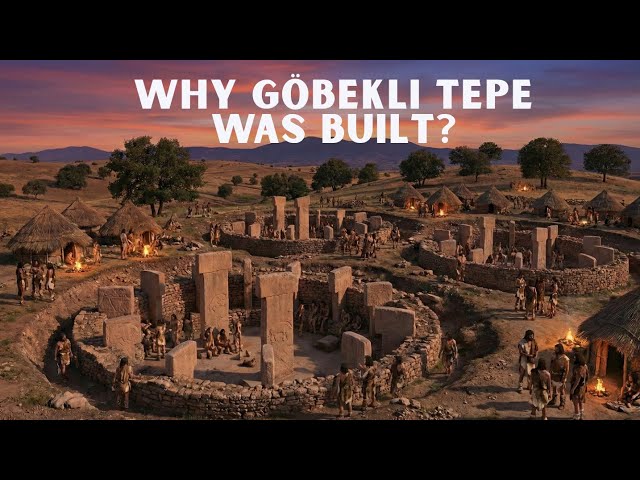
Around 10,000 BCE, amidst the harsh climate of the Younger Dryas, hunter-gatherer societies in southeastern Turkey began transitioning from nomadic life to stable communities. At Göbekli Tepe, they achieved a feat previously thought impossible for non-farming societies: the construction of massive, T-shaped limestone monoliths arranged in circular enclosures.
Engineering Marvel: The oldest enclosure (Enclosure D) is the most sophisticated, featuring pillars over five meters tall.
A Gathering Place: The site was not a village but a sacred meeting ground. It served as a hub for trade, ritual, and the exchange of ideas among far-reaching networks.
The "Stone Picture Book": The pillars are covered in high-relief carvings of predators (snakes, foxes, scorpions) and prey (gazelles, boars), alongside abstract symbols like the "H-symbol" and crescents.
Symbolic Language and Social Structure
The art of Göbekli Tepe suggests a shift in how humans viewed themselves.
Ancestors, Not Gods: The T-shaped pillars, with their carved arms and belts, likely represent monumentalized ancestors or clan founders rather than deities.
Totems and Identity: Animals like the fox or vulture functioned as emblems for specific social groups or families, creating a shared visual language of lineage and alliance.
Technological Symbols: Some symbols, like the "weaver’s snake," reflect the importance of new crafts like weaving and net-making, which bound the community together both literally and figuratively.
The Transition to the Neolithic Revolution
The cultural momentum of the "Şanlıurfa cultural horizon" eventually sparked a radical shift in human existence:
Show More Show Less View Video Transcript
0:04
As the upper Paleolithic age slowly gave
0:06
way to the Mesolithic and early
0:08
Neolithic, small groups of hunters and
0:11
traveling crafts people began to form
0:13
larger, more stable communities. Groups
0:16
we might now think of as early tribes or
0:19
clans in the highlands of southeastern
0:21
Turkey and the northern fertile crescent
0:24
along the Tigris and Euphrates rivers.
0:26
these early societies started to take
0:28
[music] shape. It was in this landscape
0:31
of rocky plains and fertile valleys that
0:34
humans first began to create symbolic
0:37
systems, ways of expressing meaning,
0:40
identity, and belief through art and
0:43
design. Around 10,000 B.CE, CE. Several
0:47
sites appeared across this region,
0:50
filled with carvings and symbols that
0:52
mark the earliest evidence of organized
0:55
spiritual life, the beginnings of what
0:57
we might now call culture. Among all
1:00
these places, one stood out. On a
1:02
limestone hilltop about 15 km northeast
1:05
of modern Shanurfa, a group of hunter
1:08
gatherers chose a barren and windy
1:10
plateau to build something
1:12
extraordinary. They began quarrying and
1:14
shaping huge stone pillars, some taller
1:17
than a person, others so heavy that it
1:20
would take many people to move them.
1:22
These T-shaped monoliths were arranged
1:25
in great circular enclosures.
1:28
Skilled craftseople, flint workers,
1:30
stone carvers, and tool makers traveled
1:33
from distant places to take part.
1:36
Even though the site was too harsh for
1:38
farming or living, it became a center
1:40
for gathering and exchange where people
1:43
shared tools, ideas, and artistic
1:46
techniques.
1:48
Inside these circles of stone, humans
1:50
and animals were carved side by side
1:53
with abstract shapes, creating a new
1:56
visual language that expressed how early
1:58
people saw themselves and the world
2:00
around them. This was Gobeclete, meaning
2:04
the belly hill or naval hill of Turkey.
2:07
What shocked archaeologists most was how
2:10
complete and sophisticated the site's
2:12
oldest enclosure was from the start.
2:15
Unlike later monuments such as
2:17
Stonehenge, which evolved over
2:19
generations, Gobeclete's enclosure D was
2:23
finished as a unified complex [music]
2:25
design.
2:26
12 enormous pillars, some over 5 m tall,
2:30
were carefully positioned in a perfect
2:33
circle, facing inward like the spokes of
2:35
a wheel. Radiocarbon dating showed it
2:38
was built around 9,700
2:41
B.CE, making it the oldest known
2:44
monumental structure in the world, built
2:46
long before farming, metal, or writing
2:49
[music] existed. Strangely, the later
2:52
enclosures were smaller and less
2:54
refined, as if the art and craftsmanship
2:57
had declined over time, an unexpected
3:00
reversal of what we usually see in
3:02
ancient architecture. To understand how
3:05
such a remarkable site came to be, we
3:07
have to look at other nearby communities
3:09
from the same period. About 90 km
3:12
southwest along the Euphrates River, the
3:15
settlement of Jerel Armar was being
3:17
built. There people were beginning to
3:20
settle down rather than move constantly.
3:23
In the center of that village stood a
3:25
large round mudbrick building three
3:27
times bigger than any nearby home.
3:31
Inside it was divided into small
3:33
compartments with wooden pillars and
3:35
walls decorated with patterns that
3:37
looked like woven textiles.
3:40
Nearby, orac wild cattle skulls were
3:43
built into the walls, hinting at early
3:45
ritual practices. The repeating zigzag
3:48
lines and animal symbols at Yer Fel Amma
3:52
would later appear again refined and
3:55
magnified in the carvings of Gobeclete.
4:01
Further north at Tel Caramel,
4:04
archaeologists discovered another early
4:05
communal complex. Huge stone towers 6 m
4:10
wide were built with crescent-shaped
4:12
benches and hearths that burned for
4:14
centuries.
4:16
These fires weren't just for warmth.
4:18
They were part of ritual gatherings
4:20
showing that fire had sacred meaning in
4:22
community life. Even hundreds of
4:24
kilometers away in Wadi Fenan, southern
4:27
Jordan, similar semi-ubteran buildings
4:30
appeared. Their snake- like lines,
4:33
massive stone mortars, and decorated
4:36
tools suggest that feasting, craft work,
4:39
and ceremony were deeply connected, and
4:43
that these early people were part of
4:45
wider networks of exchange, not isolated
4:48
groups. All of this evidence points to
4:51
one clear truth. Gobecée did not appear
4:55
out of nowhere. It was the peak of a
4:58
cultural evolution that had been
4:59
unfolding across the fertile crescent
5:01
for centuries. Its beauty, scale, and
5:05
symbolic depth reflect the creativity of
5:07
people living through a time of great
5:10
environmental change. The younger Dryus,
5:13
a sudden cold and dry period that
5:16
reshaped how humans lived. These people
5:19
weren't simply struggling to survive.
5:21
They were finding new ways to come
5:23
together, to create meaning, to express
5:26
shared beliefs, and to build spaces that
5:29
bound them as communities.
5:31
In this light, Gobeclete was never a
5:34
village. It was a gathering place, a
5:37
sacred meeting ground where early humans
5:40
came to celebrate, to remember, and to
5:43
connect. [music]
5:44
Its pillars, carvings, and circles were
5:47
not homes, but symbols. A declaration
5:50
that humans could shape both the
5:52
physical world and the world of ideas.
5:55
Here, for the first time in history,
5:58
people turned stone into story, turning
6:01
belief itself into architecture.
6:04
Imagine, if you will, being granted the
6:07
extraordinary privilege of stepping
6:09
freely among the enclosures of
6:11
Gobeclete.
6:13
We descend cautiously down a ladder,
6:15
then another, until our feet touch the
6:17
floor of enclosure D, the earliest and
6:19
most elaborately decorated of these
6:21
sanctuaries. [music]
6:23
Sunlight slants across the limestone,
6:25
revealing every incision, every curve,
6:28
every shadowed relief. Animals, abstract
6:32
symbols, and towering anthropomorphic
6:34
pillars emerge in the shifting light.
6:37
Their presence both haunting and [music]
6:39
commanding. At the heart of this
6:42
egg-shaped space lies two monumental
6:44
teaars, its unmistakable focal points.
6:48
But our exploration begins at the edge.
6:50
Pillar 22 stands before us, [music]
6:53
abstractly human, featureless, yet
6:55
unmistakably corporeal. A snake and a
6:59
fox ripple across its face in delicate
7:01
relief. Moving clockwise, pillar 21
7:05
presents a gazelle, a wild ass, and a
7:07
creature we cannot readily name. On
7:10
pillar 20, wild cattle, a leaping fox,
7:13
and a lizard appear. Each line carved
7:16
with studded intent. Pillars 26 and 28
7:20
displays poised along their inward
7:22
edges, frozen in motion, yet alive
7:25
within the stone. The animals here are
7:28
not domesticated. They are the quarry of
7:31
hunters. Boes, foxes, gazels, ducks,
7:35
creatures of the chase speak to a people
7:37
deeply bound to the rhythms of [music]
7:39
the hunt. Tens of thousands of fractured
7:43
and marked bones unearthed from the site
7:46
attest to communal feasts and ritual
7:48
gatherings centered on this primal act.
7:51
Yet among these familiar forms appear
7:54
more dangerous beings, snakes,
7:57
scorpions, spiders. Their presence
8:00
gestures toward a realm beyond
8:02
sustenance, toward myth, danger, and the
8:05
sacred. At the southwestern edge, pillar
8:08
33 commands attention. Cranes march
8:11
across its capstone, their long necks
8:14
carved with fluid precision. At the
8:17
base, the enigmatic H symbol appears,
8:20
neither letter nor ornament, but a
8:22
deliberate sign whose meaning is now
8:25
lost. Around it, serpents coil and
8:28
weave, guiding the eye along the narrow
8:31
edge, while a six-legged spider asserts
8:33
itself within this ritual tableau.
8:36
Then rises pillar 43, the famed vulture
8:40
stone, the zenith of symbolic
8:43
expression. A goose-like bird supports a
8:46
headless phallic human figure. A
8:49
scorpion crouches below. Serpents,
8:52
cranes, bors, and geometric motifs
8:55
interlace the surface in a dense
8:57
choreography of meaning. Every relief
8:59
feels purposeful, every form a fragment
9:02
of an ancient cosmology rendered in
9:04
stone. At the center stand the two
9:07
tallest pillars, 18 and 31, like
9:11
sentinels presiding over the circle.
9:14
Carved arms run down their narrow edges,
9:17
confirming their human essence. Pillar
9:20
31 bears a necklace formed from a
9:22
buchranium and a belt adorned with
9:24
crescents and H symbols. Pillar 18 wears
9:28
an even richer ensemble, an H symbol
9:31
pendant, a circumpunct, a crescent, and
9:34
a belt clasped with intertwined
9:36
serpents. Fox pelts hang from their
9:39
waists, and living foxes are etched in
9:42
the crooks of their arms. These
9:44
adornments speak of mythic beings or
9:47
divine intermediaries, figures of power
9:50
and reverence. Across enclosure D,
9:53
snakes dominate, 25 in total, followed
9:56
by foxes, ducks, cranes, and oroxs.
10:00
Bors, wild sheep, asiatic asses, gazels,
10:04
vultures, geese, scorpions, spiders, and
10:07
great cats complete the menagerie.
10:10
Alongside them, abstract signs, the H
10:13
symbol circumunct and crescent, compose
10:16
a separate pictorial language, one
10:19
silent now, yet unmistakably deliberate,
10:22
carrying meanings that once bound a
10:24
people, their rituals, and their gods.
10:27
Walking among these teaars feels like
10:30
turning the pages of a stone picture
10:31
book. Each carving tells a story about
10:34
the beliefs and imagination of a society
10:37
standing at the very beginning of the
10:39
Neolithic age. The size of these stones,
10:42
their carving, transport, and careful
10:45
placement reveals something
10:46
extraordinary. People were working
10:49
together on a scale that shows a new
10:51
kind of shared purpose. Here in this
10:55
limestone sanctuary, the minds of hunter
10:58
gatherers began [music] to change.
11:00
ritual, community, myth, and art came
11:03
together to form a new way of seeing the
11:06
world and themselves. Though these
11:08
pillars were later buried, they still
11:10
speak [music] clearly across 11,000
11:13
years. Their carvings remain sharp,
11:15
their forms bold, their arrangement
11:18
precise. Gobecé feels almost modern in
11:22
its vision. It is not just an ancient
11:25
site. It is a threshold into deep time,
11:28
a place where we can sense the birth of
11:30
culture and belief long before cities,
11:33
writing, or organized religion. These
11:37
carvings record how humans began to see
11:39
themselves as part of something larger.
11:42
How they used stone to carry their
11:45
identity, history, and shared life
11:47
forward through time.
11:50
At the heart of the grandest enclosure
11:52
stands Pillar 18, a massive T-shaped
11:55
figure. It's easy to think of it as a
11:57
god, but its meaning may be more human
12:00
and closer to home. Look at the fox held
12:03
in the crook of its arm. Thousands of
12:06
years before Gobeclete, a grave in
12:09
Jordan, revealed a person buried with a
12:11
fox companion. Taming a wild fox
12:14
required great patience and skill,
12:17
qualities deeply respected among hunter
12:19
gatherers. Over generations, the memory
12:22
of such a person could have grown into
12:24
legend. The foxmaster might have become
12:27
an honored ancestor, a figure remembered
12:30
not as divine, but as a model of human
12:34
excellence.
12:35
In this light, the great [music]
12:37
teapillars may not have been gods at
12:39
all, but ancestors, human figures raised
12:42
to monumental scale. Building them was a
12:46
tribute to those who came before, to the
12:48
founders of their world. The symbols
12:51
carved on these stone ancestors were not
12:53
decorations, but signs of identity, a
12:57
kind of early emblem for clans or
12:59
groups. On pillar 18, the belt tells
13:03
such a story. Snakes twist across many
13:06
pillars, not just for their shape, but
13:09
for their motion. A snake's winding
13:12
movement echoed the path of a thread
13:14
passing through a loom. Weaving, a vital
13:18
new skill, allowed people to make nets,
13:20
baskets, and cloth. It was a craft that
13:24
bound their lives together. One pillar
13:27
even shows a carved net pattern held by
13:30
weights [music] shaped like snake heads.
13:32
The H symbol seen on pillar 18's belt
13:35
may come from this same idea. Two snake
13:39
heads joined together. It could have
13:41
meant alliance, a sign that two [music]
13:44
great weaving families had united. Other
13:47
symbols point to different parts of
13:49
life. The C-shaped mark might have been
13:52
a trader sign. Similar shapes appear on
13:55
stone stamps found far from Gerbec,
13:58
perhaps marking goods like obsidian or
14:01
fine stone tools. The round circumunct
14:04
symbol, like a circle with a dot in the
14:07
middle, probably stood for something
14:09
central to their way of life, feasting.
14:12
Archaeologists have uncovered huge stone
14:14
troughs that could hold over 150 L along
14:18
with circular stone plates. These
14:21
weren't for everyday meals, but for
14:23
great gatherings filled with food and
14:25
drink, beer or wine brewed for
14:28
celebration. Such feasts built
14:31
friendships and shared identity, and the
14:34
symbol of a bowl or plate may have
14:36
represented that bond of abundance.
14:39
We can imagine people arriving from
14:41
nearby valleys and distant hills,
14:44
gathering beneath the gaze of their
14:46
stone ancestors. The pillars wore the
14:49
signs of their world. The weaver's
14:51
snake, the trader's mark, the feasters's
14:54
bowl, the chief's fox. Here they came to
14:58
celebrate, to tell stories, to honor
15:01
those who shaped their lives. Under the
15:04
watchful eyes of the teaillars, they
15:05
feasted and remembered. The stories they
15:09
told were not just myths. They were
15:11
their history, carved forever into
15:14
stone. Since Gobec Leepe was first
15:16
revealed to the world in the early
15:18
2000s, a powerful story has taken hold
15:22
in the public imagination.
15:24
Across news articles, documentaries, and
15:27
the endless echo of the internet, the
15:29
site is often summed up in a single
15:31
phrase, the world's oldest temple. It's
15:35
an idea that's easy to picture. A sacred
15:37
place where wandering stone age people
15:39
gathered from far and wide to worship,
15:42
make offerings, and hold ceremonies
15:44
beneath [music] giant T-shaped pillars
15:47
rising above the open landscape.
15:50
This idea makes sense at first glance.
15:53
There are no signs of ordinary daily
15:55
life at the site. No hearths where fires
15:58
once burned, no ovens for baking bread,
16:01
[music] no pens for animals or fields
16:03
for crops. The huge stone pillars could
16:07
never have supported normal roofs. Their
16:09
carved surfaces covered with animals and
16:11
strange symbols seem to serve no
16:14
practical purpose. The site's remote
16:17
setting, far from water and farmland,
16:19
makes it feel like a special place, a
16:22
space set apart from everyday life. But
16:25
the story of Gobeclete is not as simple
16:27
as calling it a temple. The site
16:30
suggests a much richer picture. The
16:33
teaars arranged in oval enclosures may
16:36
have once supported light roofs. Stone
16:39
basins, troughs, and channels carved
16:41
into the bedrock hint that water storage
16:44
and plant use were part of the site's
16:46
rhythm. Tools such as sickle blades
16:48
suggest nearby farming or food
16:50
processing. The enormous effort needed
16:53
to raise these stones points to
16:54
cooperation and shared purpose. The
16:58
animal carvings also tell a deeper
17:00
story. The foxes, cranes, vultures,
17:04
snakes, and bo were likely not random
17:07
decorations, but represented different
17:09
social groups or clans acting as emblems
17:13
or totems. These carvings may have been
17:15
a symbolic language helping people
17:17
identify who they were and what they
17:20
belonged to.
17:21
Take for example the famous vulture
17:23
stone [music] in enclosure D. The images
17:26
on this pillar seem to tell a story
17:28
perhaps about three major families or
17:31
lineages each symbolized by its own
17:33
animal. The bird, the fox, the scorpion,
17:37
and other figures are part of a social
17:39
and mythological story about alliances,
17:42
heritage, and power. In these carvings,
17:45
everyday life and myth merge, showing a
17:48
culture where nature, memory, and
17:50
identity were deeply connected. Perhaps
17:53
before these stone enclosures were
17:55
built, there were earlier wooden
17:57
versions. In those structures, people
17:59
may have imagined a great bird [music]
18:01
or totem that united their communities.
18:04
Through drumming, dancing, and singing,
18:07
they could have brought the carvings to
18:09
life, giving power to the stone animals.
18:12
The enclosures layout may reflect this
18:15
social organization.
18:17
In the earliest enclosure, the tallest
18:19
pillars rise at the center, decorated
18:22
with foxes, ducks, and abstract symbols,
18:26
signaling the gathering of multiple
18:27
groups around them. Shorter pillars
18:30
display snakes, wild cattle, gazels, and
18:33
other motifs. Building the enclosures
18:36
demanded organization, likely giving
18:39
rise to hierarchies based on expertise
18:42
and resources. The enclosures were not
18:44
only places of monumental labor, but
18:47
also sites of knowledge exchange, craft
18:50
production, and learning, much like
18:52
temples or marketplaces in later
18:54
societies. The site's location at the
18:57
crossroads of ancient roots across
18:59
southeastern Turkey and northwest Syria
19:02
amplified these interactions. bands,
19:05
clans, herders, and traders could stop
19:08
here, exchanging ideas, goods, and
19:11
expertise.
19:12
Over millennia, this interaction may
19:14
have fostered the need for permanent
19:16
clan houses enclosed by the Teaillars.
19:20
Shamans remained influential, but their
19:22
solitary authority was being
19:24
supplemented and eventually overtaken by
19:27
an emergent elite. This elite combined
19:31
craft, trade, administration, and
19:34
symbolic power, leveraging knowledge of
19:36
weaving and stonework to consolidate
19:39
wealth and influence.
19:42
The monumental work was as much a
19:44
statement of social cohesion and
19:46
technical mastery as it was of ritual
19:48
importance.
19:50
Over generations, this symbolic system
19:52
spread to neighboring sites such as Nali
19:55
Chi, Hamzantepe, and Kurt Teepe.
19:59
At Nali Chi, [music] sculptures of large
20:01
birds and human-faced birds continued
20:04
the visual language of Gobeclete,
20:05
[music]
20:07
but in forms suited to domestic or
20:09
small-cale contexts. Stone vessels such
20:12
as those from Kurtepe carried the same
20:15
symbolic repertoire. Intricate zigzags,
20:19
meanders, and lozenes, often combined
20:21
with animal imagery, became markers of
20:24
prestige and identity. These portable
20:27
symbols enabled the dissemination of
20:30
craft religion practices and served as a
20:32
form of advertisement for the clan
20:34
houses, attracting collaborators and
20:37
allies to the growing network.
20:40
By the late 10th and early 9th millennia
20:43
B.C.E., the ideas and social connections
20:46
from Gobec Leepe had grown into a
20:48
broader culture that spread across
20:50
nearby settlements known as the Shanlurf
20:54
cultural horizon. The symbols evolved
20:57
into new patterns, grids, parallel
21:00
lines, and Vshapes like those on the
21:02
Ferman statue. With his calm face, tall
21:06
body, and double V necklace, Eran
21:09
represents the power and status of the
21:11
early elite. People skilled in craft,
21:14
trade, and ritual, whose obsidian eyes
21:17
attest to the far-reaching trade
21:19
networks that supported their influence.
21:22
These networks were practical and
21:24
economic. Obsidian from central
21:26
Anatolia, fine tools, and other special
21:29
goods moved between settlements, helping
21:31
local leaders strengthen their
21:33
authority. Communal buildings allowed
21:36
people to gather for ceremonies and
21:38
decision-making, connecting communities
21:40
through shared beliefs, trade, and
21:42
traditions. By around 7,000 B.CE, as
21:46
Gobeclete's last enclosures were built,
21:49
the huntergatherer way of life had
21:51
climaxed. The social, artistic, and
21:54
trade systems developed here laid the
21:57
foundation for the Neolithic Revolution,
21:59
leading to permanent villages, farming,
22:01
and hering. This change also brought new
22:05
problems. The very systems of monuments,
22:08
rituals, and organized labor that united
22:10
people eventually became too demanding
22:13
to sustain. During this time, people
22:15
relied mostly on hunting and hering.
22:18
Farming remained experimental.
22:21
This raises a question. If hunting
22:23
provided enough food, why turn to the
22:26
harder work of farming? The answer lies
22:28
[music] in social and symbolic
22:30
pressures. Building communal sanctuaries
22:33
and performing shared rituals required
22:36
stability and cooperation. These
22:38
cultural forces encouraged people to
22:40
settle and cultivate food, not just for
22:43
survival, but to support their growing
22:46
social world. Environmental changes also
22:49
played a part. The younger dus, a
22:52
colder, drier climate, made wild cereals
22:55
and animals scarcer, pushing some groups
22:58
to experiment with planting and animal
23:00
domestication.
23:02
While climate alone did not cause
23:04
agriculture, it was a spark that
23:06
combined with human creativity and
23:09
social needs gradually turned farming
23:12
into a way of life. A striking theme of
23:15
this period is the division of labor.
23:18
Women carried much of early agricultures
23:20
burden, grinding grain, weaving, basket
23:24
making, and child care. These tasks
23:27
caused physical strain, bone
23:29
deformities, and shorter lifespans
23:32
compared to men. Men faced dangers in
23:35
hunting and hering, but their work was
23:38
less constant.
23:40
This shows that agriculture while
23:42
bringing stability had great social and
23:44
physical costs especially for women.
23:47
Ritual and religion were closely tied to
23:50
power. The skull building at Taionu with
23:53
its human remains and traces of blood
23:55
suggests rituals included offerings or
23:58
sacrifices. Such acts may have helped
24:00
elites claim divine authority, control
24:03
labor and manage community tensions.
24:07
Wealth and specialized crafts
24:08
concentrated in the hands of a few,
24:10
marking the rise of early class
24:12
divisions. The shift to farming improved
24:15
the food supply, but also increased
24:17
hardship. People worked harder, families
24:20
grew larger, and diseases spread more
24:23
easily. Monumental projects and ritual
24:26
duties added to the workload. Over time,
24:29
the cultural benefits of Gobeclete's
24:32
tradition were likely outweighed by the
24:34
physical and social costs of sustaining
24:36
it. The Shanlufa Chayion culture peaked
24:39
through symbols, crafts, and monumental
24:42
architecture, uniting people under a
24:44
serpentine theocracy, a system led by
24:47
elites using serpent imagery to maintain
24:50
power. Gobecé acted as a center for
24:54
artisans, traders, and ritual
24:56
specialists. A proto civilization
24:58
lasting over two millennia. Yet, its
25:01
success carried the seeds of decline. As
25:04
farming and settled life became common,
25:07
people's focus shifted. Resources once
25:10
devoted to great monuments faded,
25:12
weakening the old system. Time itself
25:15
was perceived differently. As people
25:18
built, harvested, and settled year after
25:21
year, they developed [music] a stronger,
25:23
linear sense of past and future,
25:26
replacing the cyclical rhythm of hunter
25:28
gatherer life. Later, smaller, simpler
25:31
sanctuaries reflect not only fewer
25:33
resources, but also a loss of collective
25:36
faith in the old religious order.
25:39
Simultaneously, a folk religion emerged
25:41
in homes represented by small male and
25:44
female figurines. These humble symbols
25:47
expressed everyday spirituality,
25:50
challenging the elitees control. As the
25:53
monumental cult lost its grip, tension
25:55
and resistance grew. This unrest reached
25:59
a breaking point. A carving of a woman
26:01
giving birth may have become a powerful
26:04
symbol of renewal and protest across the
26:07
region. Monuments were torn down,
26:10
statues defaced, and sacred symbols
26:13
destroyed. The great buildings of Sionu,
26:16
including the skull building, were
26:18
burned or dismantled as the people
26:20
turned against the system that once
26:22
bound them. The collapse of the Shanlurf
26:25
Tayionu culture ended its monumental
26:27
power, but not its legacy. The ideas it
26:31
created, symbolic thinking, organized
26:33
ritual, social hierarchy, and a new
26:36
awareness of time, shaped all that
26:39
followed. Even as the temples fell, the
26:41
ways of thinking they inspired survived.
26:44
This collapse was not an end, but a
26:47
transformation, a step toward new forms
26:50
of community and self-standing that
26:52
would define subsequent human history.
26:54
[music]