Up next in 10


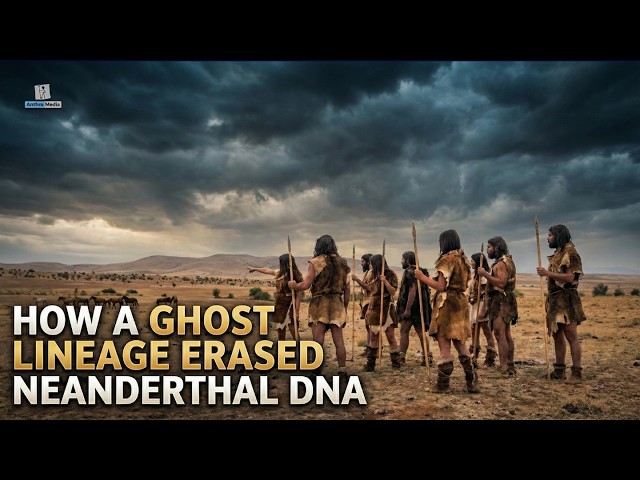
The story of the Basal Eurasians describes a "ghost population"—a lineage of ancient humans known through DNA analysis rather than physical fossils. This group is a fundamental pillar of human history, representing a branch of Homo sapiens that shaped the genetic makeup of billions today.
Here is a summary of the key findings regarding this lineage:
1. The "Ghost" Origins
Basal Eurasians split from the primary "Out of Africa" migration roughly 60,000 to 100,000 years ago. While the rest of the migrating humans (the "Hub" or "Common Eurasians") moved into the Persian Plateau and Central Asia, the Basal Eurasians remained isolated in "refugia"—likely the Arabian Peninsula or North Africa.
2. The Neanderthal Paradox
The most defining trait of Basal Eurasians is their lack of Neanderthal DNA.
The Isolation: Because they stayed south while other groups moved north into Neanderthal territory, they never interbred with them.
The Dilution Hypothesis: This explains why modern Europeans and Middle Easterners have less Neanderthal DNA than East Asians. When Basal Eurasians later mixed with other groups, they "diluted" the Neanderthal genetic percentage (like adding water to a sugary drink).
3. Impact on the Neolithic Revolution
For tens of thousands of years, this group lived in parallel to the rest of the world. However, as the Ice Age ended, they reunited and mixed with other lineages. This merger created the genetic foundation for the world's first farmers:
The Natufians, Ancient Levant hunter-gatherers, were nearly 50% Basal Eurasian.
Early Farmers: This DNA was carried by Neolithic farmers from Iran and Anatolia as they migrated into Europe and South Asia, spreading the genetic signature of this "ghost" population across continents.
Show More Show Less View Video Transcript
0:00
Imagine
0:06
a group of humans who lived tens of
0:07
thousands of years ago, fanned out
0:09
across the West Asia, and became the
0:11
ancestors of billions of people living
0:13
today. Yet, we have never found a single
0:16
one of their bones.
0:19
In the world of science, we call these
0:21
ghost populations. They aren't
0:23
supernatural. They're just lineages of
0:25
people that left a massive mark on our
0:27
genetic code without leaving a single
0:29
fossil for us to dig up. The most
0:32
important of these ghosts is a group
0:33
called the Basil Eurasians. Back in
0:36
2014, scientists noticed a missing link
0:38
in the human family tree. A group that
0:41
split off from everyone else before the
0:43
rest of the world's non-African
0:44
populations even existed. The discovery
0:47
of the Bassel Eurasian lineage is a
0:49
major breakthrough in paleogenetics,
0:51
changing how we understand the movement
0:53
and mixing of ancient humans. For a long
0:56
time, this group was considered a ghost
0:58
population as no physical fossils of
1:00
this specific group had been found.
1:03
By analyzing genetic material from
1:05
ancient remains and modern populations,
1:07
researchers have transformed this
1:09
theoretical idea into a well-defined
1:11
branch of the human family tree that
1:13
heavily influences the genetics of
1:15
people in the west. Asia, Europe, North
1:17
Africa, and South Asia. The primary
1:21
reason this group is so unique is that
1:22
they represent a branch of Homo sapiens
1:24
that stayed isolated while the rest of
1:27
the world's ancestors were migrating and
1:29
mixing. Most people who moved out of
1:31
Africa roughly 60,000 to 100,000 years
1:34
ago eventually encountered and interbred
1:36
with Neanderthalss. However, the Basil
1:38
Eurasians appear to have branched off
1:40
from the main human group before these
1:42
major Neanderthal interbreeding events
1:44
occurred. It is likely they remained in
1:46
isolated pockets such as the Arabian
1:48
Peninsula or North Africa during a
1:51
critical period of the late plea scene
1:53
epoch. Scientifically, the need for this
1:55
ghost ancestor became clear when older
1:58
theories about European history stopped
1:59
making sense. Originally, researchers
2:02
thought Europeans came from just two
2:04
groups, Western hunter gatherers and
2:06
Neareastern farmers. But as DNA
2:09
sequencing improved, a 2014 study by
2:12
Lazaritus revealed that the early
2:13
European farmers were more complex than
2:15
previously thought. They carried a
2:18
distinct genetic signature that didn't
2:19
match the hunter gatherers of the north.
2:22
This component was basil, meaning it
2:24
split off from the human family tree
2:26
earlier than the ancestors of all other
2:28
non-Africans, including East Asians and
2:30
Europeans. To identify this lineage
2:33
without having a specific fossil,
2:35
geneticists look for two specific clues.
2:38
First is deep divergence. Their
2:41
ancestors separated from other
2:42
non-Africans nearly 100,000 years ago
2:45
shortly after the primary migration out
2:47
of Africa. Second is their archaic
2:50
mixture profile because they were
2:52
geographically isolated.
2:55
Basal Eurasians have significantly less
2:58
and possibly zero Neanderthal DNA
3:01
compared to all other non-affrican
3:03
groups. When Basil Eurasians later mixed
3:06
back into the general population, they
3:08
effectively diluted the Neanderthal
3:09
ancestry in their descendants.
3:12
To prove this group existed, scientists
3:14
use advanced mathematical tools to track
3:17
genetic drift or the random changes in
3:20
genes over time. These models show that
3:22
you cannot explain the DNA of modern
3:25
West Asian populations without including
3:27
a large contribution from this basil
3:28
route. For example, ancient groups like
3:31
the Nufians who were early hunter
3:33
gatherers in the Levant are estimated as
3:36
being roughly 44 to 50% basal Eurasian.
3:39
While we still lack a pure basalurasian
3:42
skeleton, their genetic shadow is so
3:45
strong in groups like the Aberro
3:46
Marusians of North Africa and the
3:48
Zuduana hunter gatherers of the Caucuses
3:51
that their existence is now a
3:52
mathematical certainty. To understand
3:55
the basil Eurasian lineage, we have to
3:57
look at the very beginning of the human
3:59
journey out of Africa. Scientists
4:01
believe the successful migration that
4:03
populated the rest of the world happened
4:05
between 60,000 and 90,000 years ago. As
4:09
these early modern humans moved into
4:10
Southwest Asia, they didn't just spread
4:13
out evenly. Instead, they hit a pause
4:15
button and almost immediately a group
4:17
split off from the rest. This group, the
4:20
Basil Eurasians, became the first
4:22
sustained branch of humanity to exist
4:24
outside of Africa that was distinct from
4:26
the ancestors of everyone else. Think of
4:29
Basal Eurasians, as a sister lineage to
4:31
all other non-Africans. They aren't more
4:33
African than other groups. They are
4:35
fully part of the group that left Africa
4:37
and survived the initial population
4:38
bottleneck. However, they are unique
4:41
because they separated before the main
4:43
group, often called crown or common
4:45
Eurasians, developed the specific
4:47
genetic traits and mutations we see
4:49
today in people from Europe, Asia, and
4:52
the Americas. Essentially, they
4:54
represent a version of humanity that
4:56
branched off before the rest of the
4:57
world's family tree started to blossom.
5:00
This separation was likely caused by
5:02
geography. While the ancestors of most
5:04
modern people moved into the Persian
5:06
plateau in central Asia, the Bassil
5:08
Eurasians stayed behind in a refugeium,
5:11
a safe, isolated area properly located
5:14
in the Arabian Peninsula or North
5:16
Africa. Because they stayed put while
5:19
everyone else moved on, they spent tens
5:21
of thousands of years in isolation.
5:24
This long period of living apart meant
5:25
they became genetically different from
5:27
other Eurasians with the gap between
5:29
them being as large as the difference
5:31
between modern Europeans and East
5:32
Asians. We can actually see this
5:34
long-term isolation is visualized when
5:37
scientists plot the DNA of ancient
5:39
groups with high basel Eurasian ancestry
5:42
like the Nufian hunter gatherers. These
5:45
individuals appear in a unique spot on
5:47
the map. They are pulled away from the
5:49
cluster of European hunter gatherers and
5:51
shifted toward the African side of the
5:52
plot. This shift doesn't mean they are
5:55
part of the subsaharan African
5:56
population. Rather, it is the visual
5:59
proof of their deep divergence and the
6:01
fact that they missed out on the
6:03
Neanderthal DNA that the rest of the
6:05
non-affrican world picked up. One of the
6:08
most fascinating things about the Basil
6:10
Eurasian discovery is how it solves the
6:12
Neanderthal paradox. When scientists
6:15
first mapped the Neanderthal genome,
6:17
they noticed something strange. Even
6:19
though Neanderthalss lived mostly in
6:21
Europe and the West Asia, modern East
6:23
Asians actually have 10% to 20% more
6:26
Neanderthal DNA than modern Europeans.
6:29
This was a huge mystery because you
6:31
would expect the people living where the
6:32
Neanderthalss actually were to have the
6:34
most shared DNA. For a long time,
6:37
scientists tried to explain this by
6:39
suggesting that East Asians might have
6:40
met Neanderthalss a second time or that
6:43
Europeans somehow evolved to get rid of
6:46
Neanderthal DNA faster. However, the
6:49
basal Eurasian model provides a much
6:51
simpler explanation called the dilution
6:53
hypothesis. It suggests that everyone
6:56
outside of Africa originally started
6:57
with the same amount of Neanderthal DNA,
7:00
about 3% to 4%.
7:03
The difference occurred later because of
7:04
who the groups decided to mix with. The
7:07
logic works like a simple math equation
7:09
or mixing a drink. Imagine West
7:12
Eurasians as a glass of juice with 4%
7:14
Neanderthal sugar. Then a large group of
7:16
basil Eurasians who have 0% Neanderthal
7:19
DNA migrates and mixes with them. By
7:23
adding that 0% liquid, the overall
7:25
concentration of Neanderthal DNA drops.
7:28
Because East Asians remained isolated
7:30
from the basal Eurasians, their sugar
7:32
levels stayed high while West Eurasians
7:34
and Middle Easterners saw theirs diluted
7:36
to about 2%. This is confirmed by a
7:39
clear pattern in ancient skeletons. The
7:42
more basil Eurasian ancestry a skeleton
7:44
has, the less Neanderthal ancestry it
7:46
holds. For example, the Nufians living
7:49
in the Levant around 12,000 years ago
7:51
were about 50% baselian and possessed
7:54
about half the Neanderthal DNA of other
7:56
ancient groups. Recent studies confirm
7:59
this wasn't caused by natural selection
8:01
weeding out bad genes. It was simply two
8:04
different human groups blending. This
8:06
dilution isn't just a math trick. It
8:08
changed the biology of Western
8:10
populations. Neanderthal DNA affects
8:13
immune system, skin, and disease risk.
8:16
When basal Eurasians arrived, they
8:18
brought unique traits. In fact, genes
8:20
for lighter skin pigmentation common in
8:22
modern Europeans and Middle Easterners
8:24
may have originated from the basel
8:26
Eurasian lineage rather than European
8:28
hunter gatherers.
8:30
The Persian plateau, modernday Iran, has
8:33
been identified as a massive hub for
8:35
early humans. Between 60,000 and 45,000
8:39
years ago, this region served as a
8:41
waiting room for the ancestors of almost
8:43
everyone living outside Africa today.
8:46
Here, humans lived alongside
8:47
Neanderthalss, interbred with them, and
8:50
eventually split into the groups that
8:51
would become Europeans and East Asians.
8:54
While common Eurasians were in the hub,
8:57
Basal Eurasians lived in a completely
8:59
different focal area, scientists
9:01
identify the Arabian Peninsula,
9:03
specifically the Gulf Oasis, now the
9:06
floor of the Persian Gulf and parts of
9:08
North Africa as their likely home.
9:10
During the plea scene, lower sea levels
9:12
turned the Persian Gulf into a lush
9:14
river valley. Surrounding deserts acted
9:16
as natural barriers, keeping Basal
9:18
Eurasians isolated from Neanderthalss
9:21
and northern human groups. This
9:23
geography confirms that Basal Eurasians
9:25
and Hub Eurasians are sister lineages.
9:28
Both originated from the same group
9:30
leaving Africa but took different paths.
9:32
The hub path led through the Iranian
9:35
mountains where humans picked up
9:36
Neanderthal DNA before colonizing
9:38
Europe, Asia, and the Americas. The
9:42
Basil path led south into the Arabian
9:44
refugeium where the population remained
9:46
isolated and pure Homo sapiens, free of
9:49
Neanderthal mixing for tens of thousands
9:51
of years. The connection between these
9:54
sisters was restored during the late
9:56
pleaene and early holysine. As climates
9:58
changed and sea levels rose,
10:00
basalurasians expanded and mixed with
10:03
populations from the hub. This reunion
10:05
created the genetic foundation for
10:07
Neolithic farmers in Iran and the
10:09
Levant, explaining why these regions
10:11
today carry a genetic signature distinct
10:14
from both European hunter gatherers and
10:16
East Asians.
10:18
The relationship between the Basil
10:20
Eurasian lineage and North Africa has
10:22
been heavily debated. For years,
10:24
scientists suspected the Basil Eurasian
10:26
homeland might be in North Africa, a
10:28
theory bolstered by the discovery of
10:30
ancient North African ancestry. This
10:32
search led researchers to the Taffalt
10:34
cave in Morocco to sequence the DNA of
10:37
the Aberamusian culture from 15,000
10:40
years ago. The Toralt results were a
10:43
major breakthrough. These individuals
10:44
were a genetic mix about 63.5% related
10:48
to Middle Eastern Natufians and 36.5% to
10:52
subsaharan Africans. Geneticists now
10:55
believe the Natufian part is the best
10:57
ancient evidence for the Basil Eurasian
10:59
lineage. Essentially, the Aberamorusians
11:02
act as a proxy for the elusive basil
11:04
Eurasian ghost population showing their
11:06
genetic profile at the edge of North
11:07
Africa. Further evidence came from the
11:10
Takori rock shelter in Libya dating to
11:13
the green Sahara period 7,000 years ago.
11:17
These individuals had a genome diverging
11:19
from subsaharan Africans over 60,000
11:22
years ago, matching the original
11:24
migration out of Africa. Crucially, they
11:26
had 10 times less Neanderthal DNA than
11:29
early Middle Eastern farmers. This
11:32
extremely low level is the smoking gun
11:34
for the Bessel Eurasian profile, proving
11:37
these populations remained isolated from
11:39
the Neandthorich North. Today, many
11:41
experts believe ancient North African
11:44
and Basil Eurasian are essentially the
11:46
same family. They represent a group that
11:49
stayed on the southern edges while
11:50
others moved north. Whether they started
11:53
in the Arabian Peninsula and moved into
11:55
Africa or vice versa, the consensus is
11:58
clear. They were sisters. This deep
12:01
southern branch survived in isolation,
12:03
eventually reemerging to shape the
12:05
genetics of modern North Africans and
12:07
Middle Easterners. Although a pure Basil
12:10
Eurasian individual has not yet been
12:12
discovered in the fossil record, their
12:14
genetic influence is clearly visible in
12:16
ancient West Asian populations. By
12:19
examining different groups across time,
12:21
we can track how this ghost population
12:23
emerged from isolation to merge with
12:25
other human lineages. This process began
12:28
as early as 26,000 years ago in the
12:30
Caucusus region at Dudswana cave. The
12:33
people living there were a mix of
12:34
roughly 72% European-like hunter
12:37
gatherers and 28% Basal Eurasian. This
12:41
discovery proved that Basal Eurasians
12:43
were not trapped in Arabia during the
12:44
ice age. They were already moving north
12:46
and interacting with other groups much
12:48
earlier than previously thought. By
12:50
13,600 years ago, a similar story
12:53
appeared in central Anatolia with the
12:55
Aneratian hunter gatherers. Analysis of
12:58
remains from the Pinabasi site shows
13:00
they were an intermediate group carrying
13:02
about 25% basil Eurasian ancestry mixed
13:06
with 75% western hunter gatherer
13:08
ancestry. This group is historically
13:11
significant because they show a direct
13:13
genetic line to later Anatolian farmers.
13:16
This suggests farming wasn't brought to
13:17
Turkey by outsiders, but was adopted by
13:20
local populations who already carried
13:22
that unique basil ghost DNA.
13:25
The primary stronghold for basal
13:26
Eurasian DNA was found in the southern
13:28
Levant with the Nufians who lived about
13:31
12,000 years ago. They carry the highest
13:34
confirmed amount of this ancestry,
13:36
nearly 50%.
13:38
Scientists believe the Nufians formed
13:40
when northern huntergatherers moving
13:41
south during the ice age mixed with
13:43
indigenous basil Eurasians moving north
13:46
out of Arabia as the climate warmed.
13:49
This high percentage marks the Levant as
13:51
the primary contact zone where the ghost
13:53
population finally rejoined the broader
13:55
human family. The story has an eastern
13:58
wing in the Zagros mountains of Iran.
14:00
Around 10,000 years ago, early farmers
14:03
there carried even more massive amounts
14:04
of basal Eurasian ancestry, up to 66%.
14:09
However, while western groups mixed with
14:11
European-like hunter gatherers, these
14:13
eastern groups mixed with ancient north
14:15
Eurasians. This created a three-way
14:17
division of the ancient Middle East. The
14:19
Levant was a mix of basil and western
14:21
hunter gatherers. [music] Anatolia had a
14:23
smaller basil slice and Iran was a mix
14:26
of basil and ancient north Eurasians.
14:28
Together, these blends created the
14:30
diverse genetic foundation that
14:32
eventually spread throughout Europe,
14:34
South Asia, and Africa. The Neolithic
14:37
Revolution drove Basal Eurasian DNA out
14:39
of West Asia. As the world's first
14:42
farmers moved to find new land, they
14:44
carried this basler richch genetic
14:46
signature with them, turning an isolated
14:48
lineage into a foundational part of the
14:50
modern human genome. In Europe, this
14:53
spread began about 8,500 years ago with
14:56
the early European farmers. These
14:58
pioneers, direct descendants of
15:00
Anatolian farmers, carried about 44%
15:02
bustle Eurasian ancestry. As they moved
15:05
deeper into the continent, they mixed
15:07
with local western hunter gatherers who
15:09
had no basil DNA. This created a
15:13
gradient still visible today. Basil
15:15
Eurasian ancestry is highest in southern
15:17
Europe, especially in Sardinia and fades
15:20
toward the north and east.
15:22
To the east, Iranian Neolithic farmers
15:25
expanded into South Asia and mixed with
15:27
indigenous populations to create the
15:29
genetic foundation of the Indis Valley
15:31
civilization. Today, almost everyone in
15:34
South Asia carries this basal Eurasian
15:36
legacy. Though the amount varies
15:38
depending on how much Iranian farmer
15:40
ancestrious specific group inherited.
15:42
While these genes spread far, the
15:44
Arabian Peninsula remained the primary
15:46
reservoir for this lineage. Modern
15:48
populations in this region such as
15:50
Beduins and Yemenes show the highest
15:53
genetic continuity with the original
15:55
Basil Eurasians. Recent DNA studies in
15:58
2025 have found specific genetic markers
16:01
in Saudi Arabian populations, suggesting
16:04
their ancestors lived in isolation for
16:06
thousands of years as the refugeium
16:08
theory predicted. Today, the legacy of
16:11
this ancient ghost is everywhere. Modern
16:14
East Arabians still carry about 45%
16:17
Basel Eurasian ancestry while people in
16:19
the Levant carry about 32%. And southern
16:23
Europeans around 20 to 25%.
16:26
In contrast, groups like the Hanchinese
16:29
carry almost 0% because their ancestors
16:31
were on the other side of the hub and
16:33
never mixed with this southern branch.
16:35
This genetic gradient is a lasting map
16:37
of how a single isolated group
16:39
eventually helped shape the biology of
16:41
billions of people. While the basil
16:43
eurasian model is the current gold
16:45
standard, scientific rigor requires
16:48
looking at alternative theories. One
16:50
major question is whether this ghost is
16:52
a physical group or a statistical
16:54
artifact. Some researchers worry that
16:57
because modern African groups are used
16:58
as a baseline, unknown genetic changes
17:01
in those groups could create a false
17:03
basel signal. However, most recent
17:06
studies using extremely old African
17:08
skeletons have confirmed the signal,
17:10
suggesting the Basil Eurasians were
17:12
indeed a real distinct people. There is
17:15
also a debate regarding a North African
17:17
ghost versus the Bassil Eurasian.
17:20
In the past, some scientists wondered if
17:22
the mysterious ancestors of people in
17:24
North Africa like the ancient Guanches
17:26
of the Canary Islands were a totally
17:28
different group from the Basal Eurasians
17:30
of the Middle East. Today the consensus
17:33
is shifting toward a southern root
17:35
theory. This suggests that instead of
17:37
two separate groups, there was one
17:39
continuous population living across a
17:41
massive stretch of land from North
17:42
Africa all the way to Arabia, staying
17:45
distinct from the northern root groups
17:47
living on the Persian plateau. Finally,
17:50
scientists are still fine-tuning the
17:51
balance between selection and dilution.
17:54
While we know that mixing with basin
17:56
urasians is what primarily dropped the
17:58
Neanderthal levels in the west. Some
18:00
wonder if natural selection also played
18:02
a small role. It's possible that while
18:04
dilution did the heavy lifting, our
18:06
bodies also slowly weeded out certain
18:08
Neanderthal genes that were harmful over
18:10
tens of thousands of years. Still, the
18:12
fact that Neanderthal DNA levels have
18:14
stayed steady for the last 40,000 years
18:16
once you account for the basal mixing
18:19
strongly suggests that dilution is the
18:21
most accurate explanation for the
18:22
Neanderthal paradox. The identification
18:25
of the basal Eurasian lineage has
18:27
transformed our understanding of human
18:29
origins from a simple out of Africa
18:32
story into a much more complex drama of
18:35
separation, isolation, and reunion. This
18:38
group represents a population that
18:40
stayed behind in the ecological
18:42
sanctuaries of North Africa and the
18:44
Arabian Peninsula, effectively missing
18:47
the encounter with Neanderthalss that
18:48
define the genetic makeup of the rest of
18:50
the non-affrican world. The mixing of
18:53
basil eurasians with the sister lineage
18:55
with Neanderthal DNA in the Levant
18:57
provided the spark for the Neolithic
18:59
revolution, creating the specific
19:02
genetic diversity that fueled the great
19:04
civilizations of the fertile crescent,
19:06
Europe, and South Asia. Today, the ghost
19:09
of the Basel Eurasian is no longer a
19:11
phantom. It lives on, not just in the
19:14
mathematical models used by geneticists,
19:16
but in the physical DNA of billions of
19:18
people. Its legacy is written into the
19:21
traits and genetic architecture of
19:23
modern populations stretching all the
19:25
way from Dublin to Delhi.
19:28
[music]
#Archaeology