Up next in 10


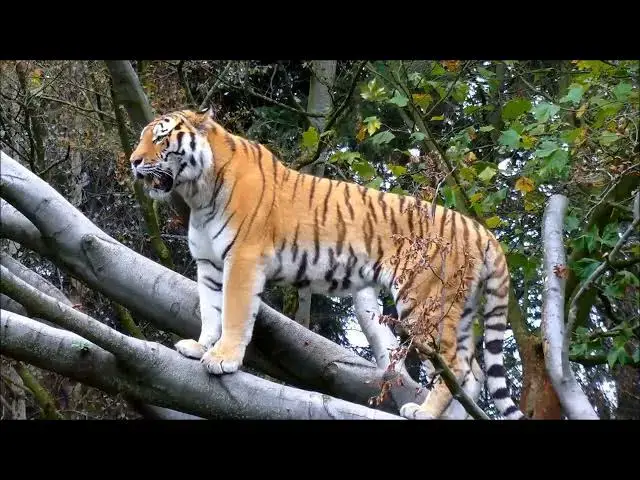
Discover the amazing adaptations that allow tigers to maintain their body temperature in environments ranging from freezing Siberian forests to sweltering tropical jungles. Learn about their specialized coats, skin features, and behavioral strategies that help these big cats thrive in diverse ecosystems across Asia.
Show More Show Less View Video Transcript
0:00
how Tigers regulate body temperature in
0:02
extreme
0:03
climate tigers are remarkable creatures
0:07
capable of thriving in a wide range of
0:10
environments from the snowy forests of
0:13
Russia to the sweltering jungles of
0:16
India but how do these magnificent big
0:19
cats maintain their body temperature in
0:22
such extreme
0:24
climates Tigers inhabit diverse
0:27
ecosystems across Asia faing ing
0:30
temperatures that can range from -40° C
0:33
in Siberia to over 40° C in tropical
0:38
regions this vast range of temperatures
0:42
presents significant challenges for
0:44
thermor
0:45
regulation yet tigers have evolved
0:47
numerous adaptations to cope with these
0:50
extremes one of the most visible
0:53
adaptations is the tiger's
0:55
coat their iconic orange and black
0:58
striped fur serve multiple purposes in
1:01
temperature
1:02
regulation in colder climates Tigers
1:05
develop a thick woy undercoat that
1:08
provides excellent
1:10
insulation this dense fur traps a layer
1:13
of warm air close to the skin helping to
1:17
maintain body heat conversely in warmer
1:21
regions tigers have a sleeker thinner
1:23
coat that allows for better heat
1:26
dissipation the Tiger's skin also plays
1:29
plays a crucial role in thermo
1:32
regulation like many mammals tigers have
1:35
numerous sweat glands particularly on
1:38
their por
1:39
pads these glands helped in cooling the
1:42
body through evaporation although Tigers
1:45
rely Less on sweating than some other
1:47
animals due to their fur
1:49
coverage behaviorally tigers are highly
1:53
adaptable in managing their body
1:56
temperature in hot climates they are
1:58
often more active during the cooler
2:00
parts of the day such as early morning
2:03
and late
2:04
evening during the heat of the day they
2:07
seek out shade or cool water
2:10
sources tigers are excellent swimmers
2:14
and will readily enter rivers or lakes
2:16
to cool off submerging their bodies to
2:19
rapidly lower their core
2:21
temperature in extreme heat Tigers
2:24
employ several cooling
2:27
mechanisms they pant much like dos do to
2:31
increase evaporative
2:33
cooling they also Gru themselves
2:36
frequently coating their fur with
2:39
saliva as this saliva evaporates it
2:42
helps to cool the Tiger's
2:45
skin additionally tigers in hot climates
2:48
often adopt a sprawled out posture when
2:51
resting maximizing the surface area
2:53
exposed to cooler air or
2:56
ground in cold climates tigers have
2:59
different strategies for heat
3:01
retention they become more active during
3:04
the day to take advantage of whatever
3:06
warmth the sun
3:08
provides their thick winter coat
3:11
combined with a layer of fat beneath the
3:13
skin provides excellent
3:16
insulations when resting Tigers curl up
3:19
tightly tucking their nose and pores
3:21
under their body to minimize heat gloss
3:25
from these less insulated
3:27
areas the Tiger's large body size also
3:30
AIDS in temperature
3:33
regulation this is an example of
3:35
bergman's rule which states that within
3:38
a species populations in colder regions
3:41
tend to be
3:42
larger a larger body has a lower surface
3:45
area to volume ratio which helps
3:47
conserve heat in cold
3:50
environments these diverse
3:53
adaptations allow Tigers to maintain
3:55
their body temperature efficiently
3:58
across a wide range of
4:00
climates from their adjustable coat
4:03
thickness to their behavioral
4:04
flexibility Tigers demonstrate
4:06
remarkable resilience in the face of
4:09
temperature
4:11
extremes this adaptability has been
4:14
crucial to their survival across such
4:16
varied habitats showcasing the
4:19
incredible ways in which nature equips
4:22
animals to thrive in challenging
4:24
environments
#Wildlife
#Wildlife
#Biological Sciences
#Ecology & Environment