Up next in 10


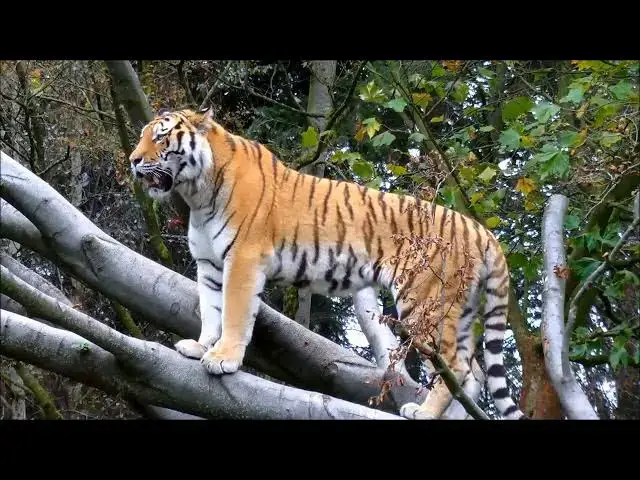
Discover how tigers influence the evolution of prey animals' coloration through natural selection. This video explores examples like the chital and hog deer, showing how their camouflage patterns have developed over time in response to tiger predation, highlighting the intricate relationships within ecosystems.
Show More Show Less View Video Transcript
0:00
how Tigers shape prey
0:02
Evolution the impact on animal
0:06
coloration tigers are not just
0:08
magnificent creatures to
0:10
behold they are also powerful agents of
0:13
evolutionary
0:15
change their hunting prowess has shaped
0:18
the very appearance of their prey over
0:21
countless
0:23
Generations today we explore how Tigers
0:27
influence the coloration of prey animals
0:30
over time a fascinating example of
0:32
natural selection at work at the heart
0:36
of this phenomenon lies the concept of
0:38
survival of the
0:40
fittest in the wild animals that are
0:43
better adapted to their environment are
0:45
more likely to survive and reproduce
0:48
passing on their beneficial traits to
0:50
Future
0:52
Generations when it comes to prey
0:54
animals living in areas with tiger
0:56
populations one of the most crucial
0:58
adaptations is the ability to avoid
1:02
detection consider the case of the
1:04
chital also known as the spotted
1:07
deer these animals inhabit many of the
1:10
same forests as Tigers across South and
1:12
Southeast Asia their distinctive coat
1:16
covered in white spots might seem
1:18
conspicuous at first
1:20
glance however this pattern serves a
1:24
vital
1:25
purpose when sunlight filters through
1:27
the forest canopy it creates a dappled
1:30
effect on the forest
1:32
floor the chah's spots mimic this
1:35
pattern helping the deer blend
1:37
seamlessly into its surroundings and
1:40
evade the Keen eyes of prowling
1:43
Tigers another example is the hog deer
1:46
found in the grasslands of South and
1:48
Southeast
1:50
Asia unlike the Chita the hog deer
1:53
Sports a more uniform reddish brown
1:56
coat this coloration allows it to blend
2:00
in with the dry grasses of its habitat
2:02
making it harder for Tigers to spot when
2:05
they're on the hunt over time tigers
2:08
have inadvertently acted as a selective
2:11
pressure on these prey
2:13
species animals with coloration that
2:16
provides better camouflage are more
2:18
likely to survive tiger attacks
2:20
reproduce and pass on their
2:23
genes gradually over many generations
2:27
the population as a whole shifts towards
2:30
more effective camouflage
2:32
patterns it's important to note that
2:35
this process of evolutionary change
2:37
doesn't happen
2:39
overnight the influence of tiger
2:41
predation on prey coloration occurs over
2:45
thousands if not millions of
2:49
years it's a slow dance of adaptation
2:52
and counter adaptation with both
2:55
predator and prey constantly evolving in
2:58
response to each other
3:00
this evolutionary arms race extends
3:03
Beyond just
3:05
coloration some prey animals have
3:07
developed behaviors to complement their
3:10
camouflage for instance many species
3:13
freeze in place when they sense danger
3:17
relying on their coloration to blend
3:19
into the background and avoid detection
3:21
by movement sensitive Tiger
3:24
Eyes the influence of tigers on prey
3:27
coloration is a prime example example of
3:30
how Predators can shape the evolution of
3:33
their
3:34
prey it demonstrates the intricate
3:37
connections within ecosystems and the
3:40
profound impact that one species can
3:43
have on
3:44
another as we continue to study and
3:48
understand these relationships we gain
3:50
valuable insights into the complex
3:53
tapestry of Life on our planet and the
3:55
ongoing process of evolution
#Wildlife
#Wildlife
#Biological Sciences
#Ecology & Environment