Up next in 10


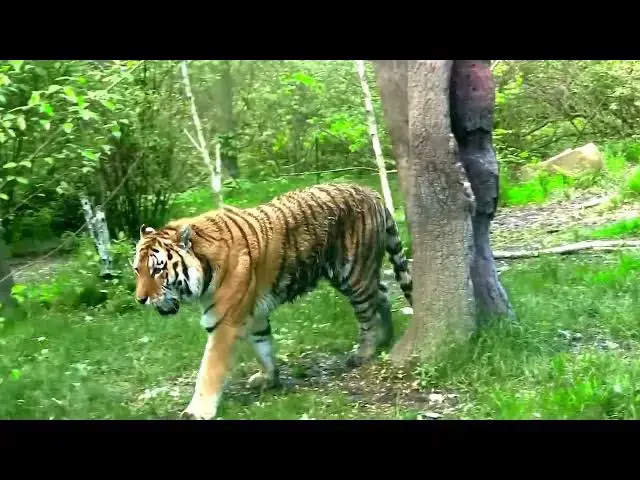
Explore how the moon's phases influence tiger activity, from hunting strategies to territorial patrols. Learn about the scientific reasons behind these lunar-influenced behaviors and their importance in tiger conservation efforts.
Show More Show Less View Video Transcript
0:00
tiger behavior and moon phases a
0:02
nocturnal
0:04
connection the night sky has long held
0:07
secrets about animal behavior and one of
0:09
the most intriguing involves our
0:12
planet's largest
0:14
felines
0:15
Tigers those Majestic striped Predators
0:19
have a fascinating relationship with the
0:21
everchanging face of the
0:24
Moon Moon phases are the different
0:27
appearances of the Moon as seen from
0:30
Earth these phases occur as the moon
0:33
orbits our planet with varying amounts
0:36
of its illuminated surface visible to us
0:40
from the dark new moon to the fully
0:43
illuminated full moon these Cycles play
0:46
a crucial role in Tiger
0:48
activity during the new moon when the
0:51
night sky is at its darkest tigers
0:54
become more
0:55
active the absence of moonlight provides
0:58
them with excellent cover for
1:01
hunting their striped coats blend
1:04
seamlessly into the Shadows making them
1:06
nearly invisible to their
1:08
prey this period often sees an increase
1:12
in successful hunts as tigers can
1:15
approach their targets
1:17
undetected as the moon waxes towards its
1:20
first quarter tiger activity remains
1:22
high but begins to
1:24
shift with some Moonlight Illuminating
1:27
the landscape Tigers adjust their
1:29
hunting techniqu techniques they rely
1:31
more on stealth and patience often
1:34
waiting in areas where prey animals feel
1:36
safe enough to venture out in the dim
1:39
light the full moon presents a different
1:42
scenario
1:43
altogether contrary to what one might
1:46
expect tiger activity doesn't cease
1:49
during this brightly lit
1:51
phase instead Tigers adapt their
1:55
behavior they may travel longer
1:57
distances taking advantage of the
1:59
increased visibility to patrol larger
2:02
areas of their
2:03
territory however their hunting success
2:06
rate typically decreases during this
2:08
time as prey animals can more easily
2:11
spot the approaching
2:13
Predators during the waning phases as
2:16
the moon's illumination decreases tiger
2:19
activity gradually returns to the
2:21
patterns observed during the new
2:24
moon this cycle of Behavioral changes
2:27
repeats monthly influencing not not only
2:30
hunting but also mating behaviors and
2:33
territorial
2:34
disputes the scientific reasons behind
2:37
these lunar influenced behaviors are
2:41
multifaceted primarily it's about the
2:43
balance between the Tiger's need for
2:45
concealment and its ability to see its
2:48
prey tigers have excellent night vision
2:52
but so do many of their prey
2:55
species the changing levels of moonlight
2:57
affect this Predator prey Dynamic
3:00
forcing Tigers to adjust their
3:02
strategies
3:04
continually moreover the moon's phases
3:08
influence the behavior of the Tiger's
3:10
prey
3:11
animals Hodor like deer may feel safer
3:15
foraging during brighter nights
3:17
inadvertently providing more
3:19
opportunities for Tigers to hunt
3:22
conversely on darker nights prey animals
3:25
might be more cautious leading Tigers to
3:28
employ different hunting te
3:31
techniques understanding how moon phases
3:34
affect tiger activity is crucial for
3:36
conservation
3:37
efforts this knowledge helps Wildlife
3:41
managers and researchers predict tiger
3:43
movements plan anti-poaching patrols and
3:47
design more effective protected
3:50
areas it also provides valuable insights
3:53
into the complex ecological
3:56
relationships in the habitats where
3:58
tigers live
4:00
the dance between tigers and the Moon is
4:03
a testament to the intricate Connections
4:05
in
4:05
nature as we continue to study and
4:08
understand these relationships we gain
4:10
not only scientific knowledge but also a
4:13
deeper appreciation for the delicate
4:15
balance of life in our world's
4:18
ecosystems
#Pets & Animals
#Wildlife
#Biological Sciences
#Ecology & Environment