Up next in 10


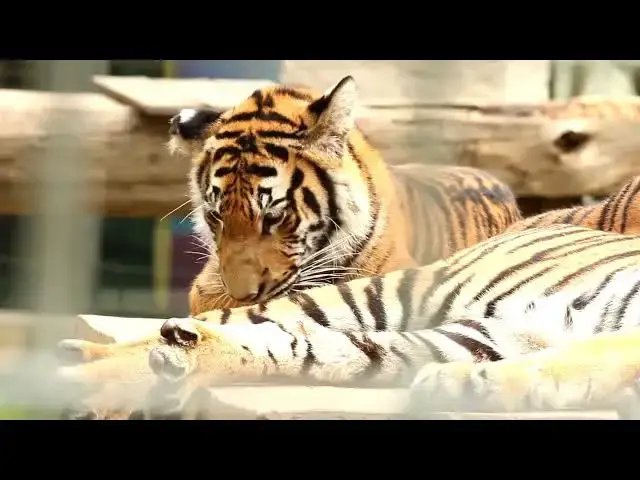
Discover how young animals establish social rankings within their groups. This video explores the factors influencing cub hierarchies, their importance in development, and examples from various species including lions, hyenas, wolves, and primates. Learn about the long-term effects of these early social structures on adult animal behavior and success.
Show More Show Less View Video Transcript
0:00
Cub social hierarchies early foundations
0:03
of Animal
0:04
Society in the animal kingdom even the
0:08
youngest members of a group engage in
0:10
complex social
0:12
dynamics today we're exploring how
0:15
social hierarchies are formed among cups
0:19
a fascinating process that shapes their
0:21
future roles in adult
0:23
Society social hierarchies are systems
0:27
of organization where individuals are
0:30
ranked based on their status or
0:32
dominance within a group for Cubs these
0:36
hierarchies begin to form early in life
0:39
and play a crucial role in their
0:41
development and
0:43
survival why are these hierarchies so
0:45
important for young
0:47
animals they help establish order within
0:50
the group reduce conflict and prepare
0:53
Cubs for their future roles as
0:56
adults these early social structures
0:59
also Al influence access to resources
1:02
mating opportunities and overall
1:05
Fitness several factors contribute to
1:08
the formation of C
1:10
hierarchies physical attributes such as
1:13
size strength and aggressiveness often
1:16
play a significant role Cubs that are
1:19
larger or more assertive tend to
1:21
dominate their
1:23
peers however other factors like age sex
1:28
and even maternal rank can also
1:30
influence a Cub's position in the
1:33
hierarchy genetic factors May predispose
1:36
some Cubs to be more dominant or
1:39
submissive Additionally the social
1:41
environment including the presence of
1:44
siblings and the behavior of adult
1:46
animals shapes how these hierarchies
1:49
develop let's look at some specific
1:51
examples of C hierarchies in different
1:55
species in Lion Prides Cubs born to the
1:59
same mother often form a mini hierarchy
2:02
among
2:03
themselves the older and stronger Cubs
2:06
typically dominate their younger
2:08
siblings getting Priority Access to milk
2:11
and maternal
2:13
care this early ranking can influence
2:16
their position in the pride as they grow
2:19
older among spotted hyena
2:23
CS the social structure is heavily
2:26
influenced by maternal rank the car
2:30
inherit their mother's status with
2:33
offspring of high ranking females
2:35
dominating those of lower ranking
2:38
mothers interestingly female hyena Cubs
2:42
are generally more dominant than males a
2:45
pattern that continues into
2:47
adulthood in wolf packs play Behavior
2:50
among Cubs serves as a way to establish
2:53
and reinforce social
2:56
hierarchies through wrestling chasing
2:59
and mock fights wolf pups learn their
3:03
place in the pack
3:05
structure the more assertive and
3:07
successful Cubs in these play sessions
3:10
often become higher ranking pack members
3:13
as
3:14
adults primate species such as baboons
3:17
and chimpanzees also exhibit early
3:20
hierarchical
3:22
behaviors infant primates often inherit
3:25
their mother's rank but as they grow
3:28
they may challenge this IAL position
3:30
through social interactions and displays
3:33
of strength or
3:35
intelligence these early hierarchies
3:38
have significant impacts on adult
3:40
behavior and
3:42
success Cubs that established dominance
3:45
early on often maintain higher ranks as
3:48
adults which can lead to better access
3:50
to resources and meeting
3:53
opportunities however hierarchies can be
3:56
dynamic and some animals May improve
3:59
their rank over a time through social
4:01
skills alliances or physical
4:04
development understanding how social
4:06
hierarchies form among cups provides
4:09
valuable insights into animal behavior
4:12
and social
4:14
structures this knowledge not only
4:17
enhances our comprehension of the
4:19
natural world but also offers potential
4:22
applications in animal conservation and
4:25
management by recognizing the importance
4:27
of early social experience is we can
4:30
better support the healthy development
4:32
of young animals in both wild and
4:35
captive environments
#Pets & Animals
#Pets & Animals
#Dogs
#Rabbits & Rodents
#Wildlife
#Biological Sciences
#Ecology & Environment