Up next in 10


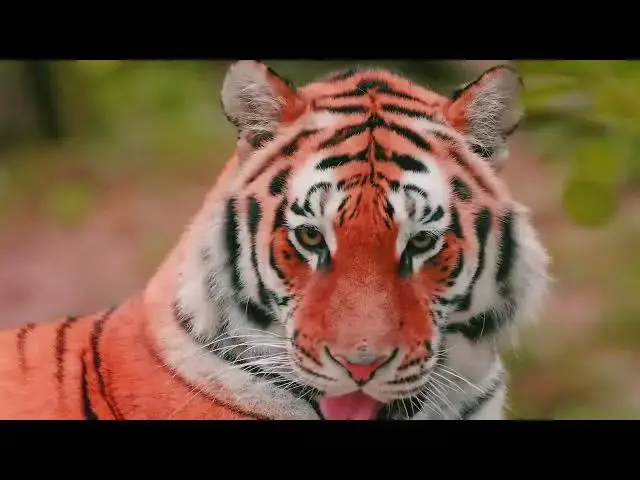
Discover how the distinctive orange and black striped coat of tigers serves as effective camouflage in their natural habitats. Learn about disruptive coloration, habitat adaptations, and the survival advantages this unique pattern provides to these magnificent big cats.
Show More Show Less View Video Transcript
0:00
why tigers have stripes Nature's perfect
0:05
camouflage tigers are renowned for their
0:07
striking orange and black striped
0:10
coats have you ever wondered why they
0:13
sport such a distinctive
0:15
pattern the color and pattern of a
0:18
tiger's coat play a crucial role in its
0:21
survival and today we will explore
0:24
exactly how this
0:27
works a tiger's coat typically consist
0:29
conss of a vibrant orange background
0:33
covered with dark often black
0:36
stripes this color combination might
0:38
seem conspicuous to human eyes but in
0:41
the wild it serves as highly effective
0:44
camouflage the orange coloration of a
0:47
tiger's fur closely matches the reddish
0:50
brown Hues of the forest floor
0:53
especially in the dapple sunlight that
0:54
filters through the
0:56
trees the black stripes on a tiger's
1:00
coat break up its outline making it
1:02
harder for prey and predators alike to
1:05
detect the Tiger's
1:07
shape this phenomenon is known as
1:10
disruptive
1:12
coloration it works by creating visual
1:16
confusion as the stripes blend with the
1:18
vertical lines of Tree Trunks and tall
1:21
grasses in the tiger's
1:23
habitat this camouflage is so effective
1:26
that a stationary tiger can be nearly
1:29
invisible in its natural
1:32
surroundings in different habitats the
1:35
Tiger's coat color adapts to provide
1:38
optimal
1:39
camouflage for instance Tigers living in
1:42
more arid regions tend to have paler
1:45
orange coats while those in dense darker
1:48
forests often have deeper orange
1:52
fur this variation allows Tigers to
1:55
blend seamlessly into their specific
1:58
environments enhancing their chances of
2:01
successful hunting and avoiding
2:04
detection interestingly there are rare
2:07
color variations in Tiger coats such as
2:10
white
2:11
tigers while these tigers are striking
2:13
in appearance their unusual coloration
2:16
actually puts them at a disadvantage in
2:18
the
2:19
wild white tigers lack the camouflage
2:23
benefits of their orange counterparts
2:26
making it more difficult for them to
2:27
hunt and survive in their natur natur
2:30
habitats the effectiveness of a tiger's
2:33
coat color in aiding survival cannot be
2:37
overstated it allows these big cats to
2:39
stalk their prey undetected often
2:42
getting within Striking Distance before
2:45
the prey even realizes the tiger is
2:48
present this camouflage is particularly
2:51
important because tigers are Ambush
2:54
Predators relying on the element of
2:56
surprise to catch their
2:58
meals moreover the camouflage provided
3:02
by their coat color helps Tigers avoid
3:04
conflicts with other predators and
3:08
humans in areas where tigers coexist
3:11
with human populations their ability to
3:14
remain hidden can be crucial for their
3:17
survival the color of a tiger's coat is
3:20
a prime example of Nature's Ingenuity in
3:24
adaptation through countless generations
3:27
of natural selection tigers have
3:29
developed velop this Perfect Blend of
3:31
colors and patterns that allows them to
3:34
thrive in their
3:36
environments it is a testament to the
3:38
intricate relationship between an
3:40
animal's physical characteristics and
3:43
its survival in the wild
#Pets & Animals
#Wildlife
#Biological Sciences
#Ecology & Environment