Up next in 10


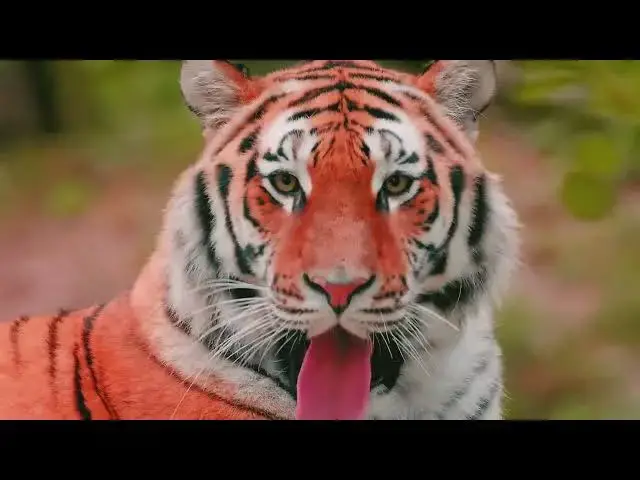
Explore how tigers react to artificial light in their forest habitats. Learn about the impact on their behavior, hunting patterns, and habitat use. Discover the implications for conservation efforts and human-wildlife conflict management.
Show More Show Less View Video Transcript
0:00
tiger Behavior how artificial light
0:03
affects Forest
0:05
predators in the depths of lush forests
0:08
Majestic Tigers roam under the cover of
0:11
Darkness but what happens when
0:14
artificial light pierces through their
0:16
shadowy
0:17
domain the reaction of tigers to
0:20
artificial light in forests is a crucial
0:24
Topic in wildlife conservation and human
0:27
Wildlife conflict management
0:30
tigers are primarily nocturnal Predators
0:34
evolved to hunt and thrive in low light
0:38
conditions their eyes with a reflective
0:42
layer called the tetum lucidum allow
0:46
them to see clearly in the dark this
0:50
natural adaptation has served them well
0:53
for Millennia in their Forest
0:56
habitats however as human development
0:59
encroaches on tiger territories
1:01
artificial light is becoming
1:03
increasingly common in and around
1:06
forests this light can come from various
1:10
sources such as Vehicles settlements or
1:13
even conservation efforts using camera
1:15
traps with
1:17
flashes so how do tigers react to this
1:21
unnatural
1:23
illumination Studies have shown that
1:25
Tigers generally exhibit cautious
1:27
behavior when exposed to artif icial
1:30
light they often become more alert and
1:33
may temporarily freeze or Retreat from
1:36
the light
1:37
source this reaction is likely a
1:40
combination of their natural weariness
1:43
and the disruption of their night
1:45
vision in some cases Tigers May avoid
1:48
areas with frequent artificial light
1:50
potentially altering their movement
1:52
patterns and hunting
1:54
behaviors this avoidance can lead to
1:56
changes in their habitat use possibly
1:59
pushing into less suitable areas or
2:02
increasing conflicts with humans in
2:04
Darker
2:05
zones however the reaction is not always
2:09
negative some research suggests that
2:12
tigers can become habituated to certain
2:14
types of artificial light especially if
2:17
it's consistent and
2:19
non-threatening for example Tigers near
2:22
human settlements May learn to tolerate
2:24
street lights or vehicle headlights to
2:26
some
2:27
extent interestingly the age and
2:30
experience of the tiger also play a role
2:33
in their
2:34
reaction
2:36
younger less experienced Tigers tend to
2:39
be more wary of artificial light while
2:42
older Tigers May show more tolerance if
2:46
they've had repeated non-threatening
2:50
exposures understanding these reactions
2:52
is vital for Tiger conservation
2:55
efforts it helps Wildlife managers
2:58
design better strategies for monitoring
3:01
tiger populations with minimal
3:04
disturbance for instance using infrared
3:07
cameras instead of flash photography can
3:09
reduce the impact on tiger behavior
3:12
during population
3:13
surveys moreover this knowledge is
3:16
crucial in managing human tiger
3:20
conflicts by understanding how Tigers
3:22
react to light conservationists can
3:25
develop more effective deterrent systems
3:28
to keep tigers away from human
3:30
settlements reducing potential
3:34
conflicts the impact of artificial light
3:37
on Tigers also highlights the broader
3:40
issue of light pollution in natural
3:43
habitats it serves as a reminder of the
3:46
need to balance human development with
3:49
the preservation of natural darkness in
3:51
forest
3:53
ecosystems in conclusion Tiger's
3:56
reactions to artificial light in forests
3:58
are complex and
4:00
Vary while they generally show CAU
4:03
factors such as the type of light
4:05
frequency of exposure and individual TIG
4:09
characteristics all play a role this
4:12
knowledge is a powerful tool in our
4:16
ongoing efforts to protect these
4:18
magnificent creatures and ensure their
4:21
survival in an increasingly illuminated
4:23
world
#Wildlife
#Biological Sciences
#Biological Sciences
#Ecology & Environment