Up next in 10


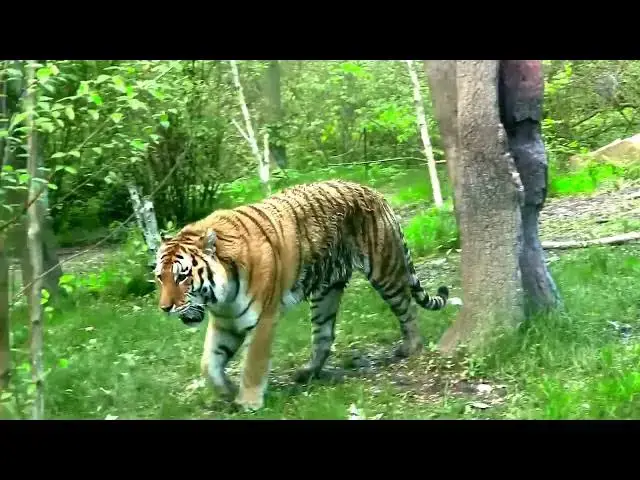
Discover how tigers use their keen senses and intelligence to interpret the behavior of other animals. Learn about their exceptional vision, smell, and hearing abilities, and how these skills aid in hunting and survival. This video explores the unique adaptations that make tigers expert behavior interpreters in the animal kingdom.
Show More Show Less View Video Transcript
0:00
tiger intelligence how they interpret
0:02
animal
0:03
behavior tigers are not just powerful
0:06
Predators they are also astute observers
0:09
of their
0:11
environment these magnificent big cats
0:14
have developed an impressive ability to
0:16
interpret the behavior of other animals
0:19
a skill crucial for their survival in
0:22
the
0:23
wild at the core of a tiger's ability to
0:26
interpret behavior is its Keen sense of
0:29
sight
0:30
Tigers possess excellent Vision with
0:33
eyes six times more sensitive to light
0:36
than human
0:37
eyes this allows them to pick up on
0:40
subtle visual cues from other animals
0:43
even in low likee
0:45
conditions they observe body language
0:48
movements and postures to gauge the
0:51
emotional state and intentions of
0:54
potential prey or
0:56
competitors for instance a tiger can
1:00
discern whether a deer is alert and
1:02
ready to free or relaxed and unaware of
1:05
danger this information helps the tiger
1:08
decide when to initiate a hunt and how
1:12
to approach its
1:13
prey similarly tigers can interpret the
1:16
aggressive or submissive postures of
1:18
other Predators which is vital for
1:21
avoiding unnecessary
1:23
conflicts but vision is not the only
1:26
sense Tigers rely on for Behavior
1:29
interpretation
1:31
their sense of smell plays a crucial
1:33
role as well tigers have an organ called
1:37
The Jacobson organ in the roof of their
1:39
mouth which allows them to analyze sense
1:42
with remarkable
1:44
Precision by detecting and interpreting
1:47
pheromones and other chemical signals
1:50
tigers can gather information about the
1:53
health reproductive status and emotional
1:56
state of other
1:58
animals this old factory prowess enables
2:03
Tigers to determine if a potential mate
2:06
is receptive if a prey animal is sick or
2:09
injured or if another Predator has
2:12
recently passed through their
2:14
territory all of this information
2:17
contributes to their understanding of
2:19
the behavior and status of animals
2:21
around them vocalizations are another
2:25
important aspect of how Tigers interpret
2:28
animal behavior
2:30
tigers have excellent hearing and can
2:33
distinguish between different types of
2:34
calls and sounds made by various
2:38
species they can interpret the meaning
2:41
behind alarm calls of prey animals
2:44
mating calls of potential competitors
2:47
and even the subtle sounds of animals
2:49
moving through the
2:51
undergrowth for example a tiger might
2:54
hear the alarm call of a monkey and
2:56
interpret it as a sign that a leopard
2:58
another big cat is in the
3:01
vicinity this information allows the
3:04
tiger to either avoid the area or
3:07
prepare for a potential
3:10
confrontation Tigers use their behavior
3:12
interpretation skills primarily for
3:14
hunting and
3:16
survival by accurately reading the
3:19
intentions and emotional states of prey
3:21
animals tigers can time their attacks
3:24
for maximum
3:26
efficiency they can also avoid dangerous
3:29
situations by correctly interpreting the
3:31
aggressive signals of other Predators or
3:34
larger animals like
3:36
elephants compared to other big cats
3:39
tigers are particularly Adept in
3:42
Behavior
3:44
interpretation while all big cats have
3:47
evolved similar abilities Tiger's
3:50
solitary nature and diverse habitats
3:53
have honed their skills to a fine
3:56
Edge unlike Lions which Ry more on group
4:01
dynamics Tigers must be self-sufficient
4:04
in reading and reacting to the behavior
4:07
of animals around them the ability of
4:10
tigers to interpret the behavior of
4:11
other animals is a testament to their
4:14
intelligence and
4:16
adaptability this skill refined over
4:19
Millennia of evolution allows them to
4:22
navigate complex ecosystems avoid
4:25
dangers and succeed as apex predators
4:30
as we continue to study and understand
4:32
these magnificent creatures we gain
4:34
deeper insights into the intricate web
4:37
of communication and interpretation that
4:40
exists in the natural world
#Reptiles & Amphibians
#Wildlife
#Biological Sciences
#Ecology & Environment