Up next in 10


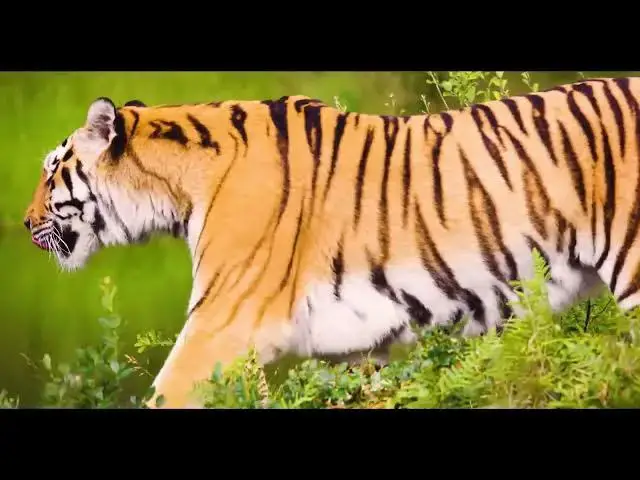
Explore the differences between ancient and modern tigers, from their size and behavior to habitat and distribution. Learn how these magnificent creatures have evolved over millions of years and why this knowledge is crucial for tiger conservation today.
Show More Show Less View Video Transcript
0:00
ancient V's modern Tigers how these big
0:04
cats have
0:05
changed tigers have captivated human
0:08
imagination for Millennia but have you
0:10
ever wondered how the Tigers of the past
0:13
differed from those we see
0:16
today this fascinating Journey Through
0:19
Time Will Reveal the surprising ways
0:22
ancient Tigers stood apart from their
0:25
modern
0:27
counterparts Tigers first appeared on
0:29
Earth
0:30
approximately 2 million years ago
0:33
evolving from earlier big cat
0:36
species these ancient Tigers known as
0:41
anthera Dani or the longan Tiger roamed
0:45
across Asia during the early Pline
0:48
EPO they were the ancestors of all
0:51
modern tiger subspecies we know
0:54
today ancient Tigers were generally
0:58
larger and more robust than the modern
1:01
descendants fossil evidence suggests
1:04
that some individuals could reach
1:06
lengths of up to 3 and A2 M from nose to
1:09
tail tip and way up to 300
1:12
kg their skulls were broader and more
1:16
powerful with longer K9 teeth that could
1:19
grow up to 15 cm in length these
1:23
impressive physical attributes made them
1:26
formidable predators in their
1:27
prehistoric ecosystems
1:30
the behavior of ancient Tigers likely
1:33
differed from Modern tigers in several
1:36
ways their larger size and more powerful
1:39
build suggests they may have been
1:41
capable of taking down larger prey
1:44
possibly including some of the mega fora
1:47
that existed during the plastic scene
1:50
they might have had different hunting
1:51
strategies and social structures adapted
1:54
to the unique challenges of their
1:56
time the habitat and distribution of
1:59
ancient tigers were also quite different
2:01
from what we see
2:03
today fossil records indicate that these
2:06
big cats once roamed across a much
2:09
larger range extending from Eastern Asia
2:13
all the way to Western Europe they
2:16
inhabited a variety of environments from
2:19
dense forests to open grasslands
2:22
adapting to the diverse Landscapes of
2:24
the pl to scene comparing ancient Tigers
2:28
to their modern counterparts reveals
2:30
several key
2:32
differences modern tigers are generally
2:35
smaller and more streamlined with adult
2:38
males typically weighing between 180 to
2:42
250
2:44
kg this reduction in size may be an
2:48
adaptation to changes in prey
2:50
availability and environmental
2:53
conditions over time behaviorally modern
2:57
tigers have evolved to be highly adapted
2:59
able Predators capable of thriving in a
3:02
range of habitats from tropical
3:04
rainforests to snowy
3:07
tiger they are primarily solitary
3:09
animals coming together only for
3:12
mating this social structure may have
3:15
developed as a response to changes in
3:17
prey density and distribution compared
3:20
to ancient
3:21
times the habitat and distribution of
3:24
modern tigers have drastically shrunk
3:27
compared to their ancient ancestors
3:31
today tigers are found only in isolated
3:34
pockets across Asia having disappeared
3:37
entirely from their former ranges in
3:40
Western Asia and Europe This reduction
3:43
is largely due to human activities such
3:46
as habitat destruction and
3:48
hunting several factors have contributed
3:51
to the evolution of tigers over
3:54
time climate change at the end of the
3:56
plene LED to shifts in vegetation and
3:59
prey species forcing Tigers to adapt or
4:03
perish the emergence of human
4:06
civilizations and the subsequent
4:08
alteration of Landscapes have also
4:10
played a significant role in shaping
4:13
modern tiger
4:15
populations understanding the
4:16
differences between ancient and modern
4:19
Tigers is not just an academic
4:22
exercise it provides valuable insights
4:25
into the adaptability and resilience of
4:28
these magnificent creatures
4:31
this knowledge is crucial for
4:33
conservation efforts helping us to
4:35
better protect and preserve the
4:37
remaining tiger populations in our
4:39
rapidly changing World by learning from
4:43
the past we can work towards ensuring a
4:45
future where tigers continue to thrive
4:49
echoing the legacy of their ancient
4:51
ancestors
#Pets & Animals
#Wildlife
#Biological Sciences
#Ecology & Environment