Up next in 10


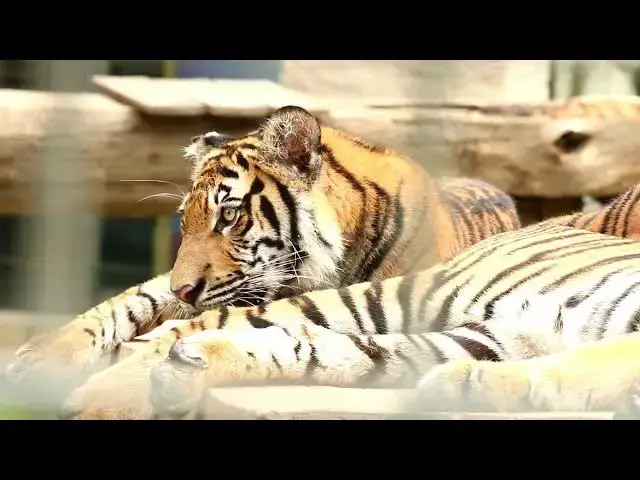
Discover how a tiger's coat changes from birth to adulthood. Learn about the fuzzy fur of newborn cubs, the development of their iconic stripes, and the factors that influence a tiger's appearance throughout its life.
Show More Show Less View Video Transcript
0:00
the life cycle of a tiger's coat from
0:03
Cub to
0:04
adult tigers are known for their
0:07
striking orange and black stripes but
0:09
did you know that a tiger's coat undergo
0:12
significant changes throughout its life
0:15
from fuzzy Cubs to Majestic adults the
0:18
transformation of a tiger's coat is a
0:20
fascinating
0:22
Journey when tiger cubs are born they
0:25
look quite different from their adult
0:28
counterparts newborn t have a softt
0:31
woolly coat that is covered in fuzzy
0:34
fur this coat is usually a lighter shade
0:38
of orange or even reddish brown with
0:41
less distinct
0:43
stripes the fuzzy texture of their fur
0:46
helps to keep the Cubs warm and provides
0:49
camouflage in their den during the first
0:52
year of Life a tiger Cub's coat begins
0:55
to change
0:57
dramatically the fuzzy fur starts to
0:59
shed revealing a smoother sleeker coat
1:03
underneath the orange color becomes more
1:06
vibrant and the black stripes begin to
1:08
appear more clearly
1:10
defined this transition helps young
1:13
Tigers blend in better with their
1:15
surroundings as they start to venture
1:17
out of the den and learn to
1:19
hunt as Tigers enter adolescence
1:23
typically around 18 months to 2 years
1:25
old their coats continue to develop the
1:29
fur becomes denser and more lustrous and
1:32
the stripe pattern becomes even more
1:35
pronounced the orange base color deepens
1:38
creating a striking contrast with the
1:41
black
1:42
stripes this is when the Tiger's iconic
1:45
appearance really starts to take shape
1:49
adult Tigers boast the most recognizable
1:52
and impressive
1:53
coats fur is thick glossy and richly
1:57
colored with the characteristic Orange
2:00
background and bold black
2:02
stripes each Tiger's stripe pattern is
2:05
unique like a fingerprint and remains
2:08
consistent throughout its adult life the
2:12
adult coat serves multiple purposes
2:15
including camouflage in their natural
2:17
habitats temperature regulation and even
2:20
as a form of communication with other
2:22
Tigers it's important to note that the
2:25
exact appearance of a tiger's coat can
2:28
vary depending on several
2:30
factors genetics play a significant role
2:34
in determining the shade of orange and
2:36
the pattern of
2:38
Stripes additionally environmental
2:41
factors such as diet habitat and overall
2:43
health can influence the quality and
2:46
vibrancy of a tiger's
2:48
coat as Tigers age their coats May
2:52
undergo subtle
2:53
changes some older Tigers might
2:56
experience a slight fading of their
2:58
orange coloration or a thinning of their
3:01
fur however the overall strike pattern
3:04
remains constant throughout their
3:06
lives the evolution of a tiger's coat
3:09
from birth to adulthood is a remarkable
3:13
process from the soft fuzzy fur of
3:16
newborn cubs to the Striking
3:18
well-defined coats of adult Tigers these
3:22
changes reflect the animals growth and
3:24
adaptation to its
3:26
environment this transformation not only
3:29
en en ances the Tiger survival skills
3:32
but also contributes to the a inspiring
3:35
beauty that makes these big cats one of
3:38
Nature's most magnificent creatures
#Pets & Animals
#Wildlife
#Biological Sciences